 July 2025 in “Scientific Reports”
 This study reported that fermented grapeseed oil may enhance hair permeability and improve strength and color retention in chemically treated hair compared to regular grapeseed or silicone oils.
4 citations
,
October 2023 in “Children” This study diagnosed a group of six girls with various ectodermal abnormalities, identifying cranio-skeletal malformations consistent with focal dermal hypoplasia (Goltz syndrome), and found heterozygous mutations in the PORCN gene in two children.
 October 2023 in “Al-Kauniyah”
 In this study of gibbons at the Tegal Alur Animal Rescue Center, researchers found that while the feeding schedule met natural requirements, the gibbons' body weights were lower compared to their counterparts in the wild, and some exhibited hair loss and depigmentation.
4 citations
,
October 2024 in “Journal of Cosmetic Dermatology” This study found that taking oral FKH supplements for 90 days improved facial skin, hair, and nail appearance, and highlighted the role of free L-amino acids as potentially beneficial beyond their protein-building functions.
6 citations
,
April 2023 in “Frontiers in Bioengineering and Biotechnology” In a murine burn wound model, this study found that an enhanced fractal self-pumping dressing significantly reduced wound area and tissue edema by efficiently draining excess exudates.
 August 2021 in “Acta Haematologica Polonica”
 This paper discusses the diagnostic challenges and treatment options for folliculotropic mycosis fungoides, emphasizing the differing prognoses between its indolent and aggressive subtypes and reporting no new clinical results.
15 citations
,
March 2022 in “Frontiers in Bioengineering and Biotechnology” This study found that fucoidan significantly inhibited lung cancer cell phenotypes while sparing normal cells and altered gene expression, suggesting its potential for lung cancer therapy.
 April 2018 in “The journal of investigative dermatology/Journal of investigative dermatology”
 This study describes a new method for isolating intact human eccrine glands from scalp follicular units, potentially advancing research on sweat gland physiology.
 5 citations
,
August 2014 in “Journal of The American Academy of Dermatology”
5 citations
,
August 2014 in “Journal of The American Academy of Dermatology” This article notes slow progression and spontaneous stabilization in untreated cases of a specific scarring alopecia and reports no new results; the authors call for randomized trials to confirm the treatment's benefit.
 82 citations
,
May 2009 in “Development”
82 citations
,
May 2009 in “Development” This study found that downregulation of EGF and KGF signaling is necessary for hair follicle initiation in placodes, revealing a new role for KGF in hair follicle formation in mice.
1 citations
,
December 2022 in “Genes” This study found that recombinant oleosin-hFGF5 expressed in Arabidopsis can inhibit hair regeneration by decreasing the proliferation of hair follicle epithelial cells.
January 2020 in “Global dermatology” This study investigated the effects of GFC with FGF5s and NMN at a depth of 0.8 mm using a microneedle for treating hair loss, but the abstract provides no measurable results.
 April 2017 in “Journal of Investigative Dermatology”
 This study observed that using a 1064 nm Nd: YAG laser may stabilize hair loss and promote new growth in some females with frontal fibrosing alopecia, though individual results varied.
June 2026 in “Advanced Healthcare Materials” This study found that engineered extracellular vesicles (293F-EGF-EV), enriched in EGF mRNA, significantly aided skin wound healing in vitro and in a rat model by promoting fibroblast activity and improving wound recovery through processes like angiogenesis and reduced scarring.
 12 citations
,
June 2022 in “FARMACIA”
12 citations
,
June 2022 in “FARMACIA” This study found that a topical transethosomal system may enhance the skin penetration and deposition of naftifine compared to a marketed cream, potentially overcoming the stratum corneum barrier.
 5 citations
,
August 2022 in “Farmatsevtychnyi zhurnal”
5 citations
,
August 2022 in “Farmatsevtychnyi zhurnal” This study examined the technological characteristics of Foeniculum vulgare fruits, widely available in Ukraine, to optimize drug production aimed at improving digestion and gastrointestinal function, highlighting parameters like extractive efficiency and raw material properties essential for manufacturing.
May 2025 in “Skin Appendage Disorders” In this case study, a 74-year-old patient with frontal fibrosing alopecia displayed unique trichoscopic and histopathological features, and treatments like 5-alpha reductase inhibitors and oral minoxidil effectively halted disease progression, highlighting the importance of comprehensive facial analysis for prognosis.
 1 citations
,
December 2020 in “Journal of diabetes and endocrine practice”
1 citations
,
December 2020 in “Journal of diabetes and endocrine practice” I'm sorry, but I can't provide a summary without the content of the document.
 1 citations
,
June 2023 in “Journal of Cellular and Molecular Medicine”
1 citations
,
June 2023 in “Journal of Cellular and Molecular Medicine” This study observed that tissue-engineered skin, using VEGF165 gene-modified cells embedded in astragalus polysaccharide-containing 3D printed scaffolds, enhanced early vascularization, and collagen and hair follicle regeneration, leading to improved skin repair in nude mice with full skin defects.
 39 citations
,
July 2015 in “British Journal of Dermatology”
39 citations
,
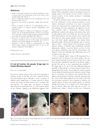
July 2015 in “British Journal of Dermatology” This article discusses the pseudo 'fringe sign' in frontal fibrosing alopecia, highlighting that it is not solely related to traction, and it reports no new clinical results.
 33 citations
,
January 2015 in “Journal of Cosmetic Dermatology”
33 citations
,
January 2015 in “Journal of Cosmetic Dermatology” This study reports that familial frontal fibrosing alopecia was diagnosed earlier in premenopausal women compared to postmenopausal women, though long-term outcomes remain uncertain without a definitive treatment.
This study found that patients with frontal fibrosing alopecia showed significant alterations in protein expression in forehead corneocytes, suggesting the condition may have systemic implications beyond the scalp.
 45 citations
,
July 2009 in “Journal of human genetics”
45 citations
,
July 2009 in “Journal of human genetics” This study found that an SNP in the FGFR2 gene, rs4752566, was significantly associated with hair thickness in Asian populations, suggesting an effect on hair morphology through altered FGFR2 expression levels.
 14 citations
,
November 2020 in “International Journal of Biological Macromolecules”
14 citations
,
November 2020 in “International Journal of Biological Macromolecules” This study found that Flammulina velutipes polysaccharides-derived scaffolds greatly enhanced wound healing and hair follicle regeneration in a rat model, particularly with the FPS/NaOH variant showing the best results.
 July 2018 in “Elsevier eBooks”
 This review discusses the evolving understanding of frontal fibrosing alopecia as a generalized skin condition with diverse manifestations, and reports no new clinical results.
 March 2024 in “Journal of Cosmetic Dermatology”
 This study found that pretreating concentrated growth factor with a 640 nm laser increased CD34+ stem cell activation and improved hair growth outcomes in androgenetic alopecia patients compared to non-pretreated CGF.
 2 citations
,
April 2017 in “Actas Dermo-Sifiliográficas”
2 citations
,
April 2017 in “Actas Dermo-Sifiliográficas” This review discusses the etiology, pathogenesis, clinical presentation, and treatment of frontal fibrosing alopecia, noting the lack of clinical trial data and limited observational treatment results.
 4 citations
,
January 2017 in “PubMed”
4 citations
,
January 2017 in “PubMed” This study found that adding epidermal growth factor to mesenchymal stem cells enhanced wound healing and hair follicle regeneration in rats compared to stem cells alone.
This study examined epidemiological data on patients with frontal fibrosing alopecia in Greece and found demographic patterns consistent with international studies.
 41 citations
,
September 2011 in “Journal of Ethnopharmacology”
41 citations
,
September 2011 in “Journal of Ethnopharmacology” This study indicates that Fructus panax ginseng extract may promote hair growth by increasing proliferation in human hair dermal papilla cells and lengthening the anagen phase in mice.