 May 2026 in “Scholars Journal of Medical Case Reports”
 In this report, researchers described a 36-year-old woman with frontal fibrosing alopecia resistant to standard treatments, who showed significant improvement after six months on a combination of intralesional betamethasone and oral hydroxychloroquine, suggesting potential benefits of this therapy approach in managing the condition.
 89 citations
,
February 2002 in “Australasian journal of dermatology”
89 citations
,
February 2002 in “Australasian journal of dermatology” This case report describes the first known instance of fibrosing alopecia associated with cutaneous lichen planus, suggesting fibrosing alopecia may be a variant of lichen planopilaris.
4 citations
,
December 2020 This case report describes a woman with frontal fibrosing alopecia who did not improve with hydroxychloroquine and topical minoxidil but achieved clinical stabilization with methotrexate monotherapy.
 9 citations
,
July 2020 in “Journal of Dermatology”
9 citations
,
July 2020 in “Journal of Dermatology” This study found that diffuse and pseudo-fringe sign patterns are common in Asian patients with frontal fibrosing alopecia, and that treatments combining antiandrogens or antimalarials with topical therapy are effective.
 31 citations
,
April 2010 in “British journal of dermatology/British journal of dermatology, Supplement”
31 citations
,
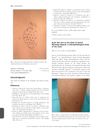
April 2010 in “British journal of dermatology/British journal of dermatology, Supplement” This report describes two patients with frontal fibrosing alopecia who developed acute hair loss on their limbs, revealing that the limb alopecia had similar histological features to scalp alopecia.

According to this review, frontal fibrosing alopecia in men exhibits unique clinical features and is often misdiagnosed, underscoring the need for validated diagnostic criteria and treatment evaluation.
May 2025 in “Skin Appendage Disorders” In this case study, a 74-year-old patient with frontal fibrosing alopecia displayed unique trichoscopic and histopathological features, and treatments like 5-alpha reductase inhibitors and oral minoxidil effectively halted disease progression, highlighting the importance of comprehensive facial analysis for prognosis.
September 2023 in “JEADV Clinical Practice” This study identified key dermoscopic features in folliculotropic mycosis fungoides patients, showing that dilation of follicular openings and spiky follicular keratosis are specific indicators of follicular involvement, potentially aiding in diagnosis, classification, and treatment decisions.
 26 citations
,
October 2018 in “British Journal of Dermatology”
26 citations
,
October 2018 in “British Journal of Dermatology” This study found that high frequency use of sunscreen is associated with frontal fibrosing alopecia among women attending a specialist hair clinic in Australia.
31 citations
,
January 2016 in “Skin Appendage Disorders” This study observed two cases of frontal fibrosing alopecia developing on preexisting vitiligo, suggesting a potential causal link between the two conditions.
3 citations
,
May 2024 in “International Journal of Women’s Dermatology” This article discusses the connection between product use, contact dermatitis, and frontal fibrosing alopecia and reports no new findings; the authors emphasize the need for more research to improve patient outcomes.
 41 citations
,
July 2017 in “Journal of The American Academy of Dermatology”
41 citations
,
July 2017 in “Journal of The American Academy of Dermatology” This study observed that frontal fibrosing alopecia also occurs in men, with clinical features and areas of involvement similar to those seen in women, but often affecting sideburns and facial hair.
1 citations
,
January 2024 in “Journal of personalized medicine” This narrative review suggests a strong association between abrupt hormonal imbalances and frontal fibrosing alopecia in women, especially related to reduced fertile years and certain hormonal therapies.
 August 2019 in “Journal of The American Academy of Dermatology”
 This study found that a bleach bath treatment with 0.005% HOCI reduced the expression of certain serine proteases in cultured keratinocytes and lowered skin pH in atopic dermatitis patients, potentially improving symptoms by modulating the NF-kB pathway.
 6 citations
,
June 2016 in “Experimental Dermatology”
6 citations
,
June 2016 in “Experimental Dermatology” This article reviews the pathogenesis of frontal fibrosing alopecia, highlighting the potential genetic and environmental contributions, particularly the use of sunscreens, and calls for further research into effective treatments.
 December 2025 in “PubMed”
 In this study, researchers found that a propylene glycol-free and alcohol-reduced topical foam containing minoxidil and finasteride remained chemically, physically, and microbially stable for 180 days when stored properly at room temperature in light-resistant containers.
 March 2023 in “Journal of clinical review & case reports”
 This study observed that in Mexico, Frontal Fibrosing Alopecia predominantly affects postmenopausal women, with an increased incidence in recent years, and highlights the challenge of early diagnosis to prevent irreversible hair loss.
15 citations
,
June 2019 in “Biochemical Journal” This study identified a heterozygous de novo mutation in the ODC1 gene causing a new disorder characterized by overgrowth and developmental delay, and suggests that DFMO treatment may help manage elevated ODC activity and putrescine levels.
 17 citations
,
January 2015 in “International Journal of Trichology”
17 citations
,
January 2015 in “International Journal of Trichology” This case report suggests that frontal fibrosing alopecia with nail involvement may be associated with lichen planus and improved with oral dutasteride due to an inflammatory reaction related to androgenetic alopecia.
June 2025 in “British Journal of Dermatology” This report describes two unusual cases of frontal fibrosing alopecia in men, highlighting potential vaccine-related immune triggers and genetic factors, especially regarding the pronounced facial papular phenotype observed.
 38 citations
,
January 2019 in “International Journal of Women's Dermatology”
38 citations
,
January 2019 in “International Journal of Women's Dermatology” This review discusses potential therapeutic options for frontal fibrosing alopecia by exploring distinct signaling pathways and cellular players, but reports no new clinical findings and emphasizes the need for further trials.
7 citations
,
August 2019 in “American Journal of Dermatopathology” This study found that limb hair loss in frontal fibrosing alopecia is inflammatory and permanent, but lacks the classic scarring features seen in scalp alopecia, prompting potential misdiagnosis as alopecia areata.
28 citations
,
June 1995 in “The Journal of Dermatology” This study reports that flaky skin mice exhibit skin and nail features that closely resemble human psoriasis vulgaris, suggesting they may serve as a natural model for this condition.
 1 citations
,
August 2022 in “International journal of women’s dermatology”
1 citations
,
August 2022 in “International journal of women’s dermatology” This case report suggests that intradermal botulinum toxin type A may alleviate pruritus and reduce papules in Fox-Fordyce disease, improving quality of life without serious adverse effects for at least six months.
 April 2018 in “Journal of Investigative Dermatology”
 This study identified the osteopontin-derived peptide, FOL-005, as a potential inhibitor of unwanted human hair growth by promoting catagen development without reducing stem cell numbers or showing toxicity.
92 citations
,
May 2004 in “Journal of Investigative Dermatology” 1 citations
,
July 2016 in “PubMed” This study found that 5% minoxidil topical foam used once daily for 24 weeks was well tolerated and significantly improved hair regrowth and scalp coverage in women with female pattern hair loss compared to vehicle foam.
 September 2017 in “Journal of Dermatology & Cosmetology”
 This study reports a case of frontal fibrosing alopecia associated with hepatitis C treatment involving interferon and ribavirin.
 April 2017 in “Journal of Investigative Dermatology”
 This study observed that using a 1064 nm Nd: YAG laser may stabilize hair loss and promote new growth in some females with frontal fibrosing alopecia, though individual results varied.
23 citations
,
May 2017 in “Journal of the American Academy of Dermatology” This study found that patients with frontal fibrosing alopecia had lower epidermal melanocyte counts and reduced epidermal thickness compared to lichen planopilaris patients and controls, suggesting a link with hypopigmentation.