 1 citations
,
May 2014 in “European Journal of Inflammation”
1 citations
,
May 2014 in “European Journal of Inflammation” This study found that a topical lotion containing minoxidil, hydrocortisone butyrate, and 17α-estradiol improved or stabilized frontal fibrosing alopecia in 35 out of 40 women over 36 months.
 April 2026 in “Zenodo (CERN European Organization for Nuclear Research)”
 In this study, Dodatek A operationalizes the Functional Androgen Axis framework by defining three system-level indices and an efficiency metric to describe androgen function, incorporating key methodological improvements and acknowledging significant limitations for future empirical validation.
 26 citations
,
June 2018 in “Australasian Journal of Dermatology”
26 citations
,
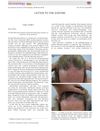
June 2018 in “Australasian Journal of Dermatology” Stopping sunscreen use on the forehead led to hair regrowth in a woman with frontal fibrosing alopecia.
 16 citations
,
February 2010 in “Journal of the European Academy of Dermatology and Venereology”
16 citations
,
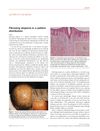
February 2010 in “Journal of the European Academy of Dermatology and Venereology” This article is a letter to the editor about fibrosing alopecia in a pattern distribution and reports no new research findings.
31 citations
,
January 2016 in “Skin Appendage Disorders” This study observed two cases of frontal fibrosing alopecia developing on preexisting vitiligo, suggesting a potential causal link between the two conditions.
 January 2020 in “Revista da Sociedade Portuguesa de Dermatologia e Venereologia”
 This study reports that frontal fibrosing alopecia in Brazilian patients is common in postmenopausal women and often associated with hypothyroidism and facial irritation from cosmetic products.
 March 2026 in “Dermatology Reports”
 This study found that frontal fibrosing alopecia had higher long-term remission rates compared to lichen planopilaris, highlighting differences in their clinical presentations and outcomes.
 April 2026 in “Zenodo (CERN European Organization for Nuclear Research)”
 This research presents the Dodatek A model, elaborating on androgen function through new mathematical indices and methodological improvements, shifting focus from serum hormone concentrations to system interactions to better describe androgen activity comprehensively.
April 2024 in “Journal of clinical medicine” This review discusses various therapeutic options for frontal fibrosing alopecia and highlights the need for more research, as existing data are largely retrospective and lack precise treatment guidelines.
 6 citations
,
January 2013 in “Case reports in endocrinology”
6 citations
,
January 2013 in “Case reports in endocrinology” This article reviews acromegaloid facial appearance syndrome and presents a case in a 57-year-old woman, emphasizing the need for more cases to understand its clinical features and inheritance patterns.
 December 2024 in “Brazilian Journal of Health Review”
 This article reviews the general, pathophysiological, diagnostic, and therapeutic aspects of alopecia frontal fibrosante, highlighting its irreversible nature and the importance of early diagnosis, but it reports no new clinical results.
 July 2018 in “European Medical Journal”
 This meeting review discusses recent advances in systemic psoriasis treatments, emphasizing the impact of dimethylfumarate monotherapy on understanding psoriasis and treatment strategies; it reports no new clinical results.
April 2022 in “Actas Dermo-Sifiliográficas” This article discusses the case of a 59-year-old woman with a history of progressive facial hyperpigmentation and explores potential connections between her condition and her family history, but reports no clinical findings.
 September 2023 in “International Journal of Dermatology”
 In this study, FAPD was characterized in a Chinese population by perifollicular mast cell infiltration, suggesting young individuals may be at higher risk than previously thought.
 17 citations
,
June 2016 in “Australasian Journal of Dermatology”
17 citations
,
June 2016 in “Australasian Journal of Dermatology” In this case report, a 46-year-old woman with familial frontal fibrosis alopecia experienced initial stabilization of hair loss with dutasteride and minoxidil, but artificial hair transplantation led to implant folliculitis, requiring removal of the fibers.
 2 citations
,
January 2019 in “Skin appendage disorders”
2 citations
,
January 2019 in “Skin appendage disorders” This study observed that women with higher educational levels and social status are diagnosed with frontal fibrosing alopecia earlier, resulting in better therapeutic responses.
 6 citations
,
June 2019 in “International Journal of Dermatology”
6 citations
,
June 2019 in “International Journal of Dermatology” This article discusses familial frontal fibrosing alopecia in two male families and reports no new clinical findings.
 36 citations
,
December 2017 in “Journal of the American Academy of Dermatology”
36 citations
,
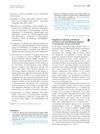
December 2017 in “Journal of the American Academy of Dermatology” This study observed that 70.7% of patients with frontal fibrosing alopecia stabilized with treatment, and patients using 0.3% tacrolimus were more likely to stabilize in 3 months compared to other treatments.
 September 2021 in “CRC Press eBooks”
 This review discusses fibrosing alopecia in a pattern distribution and highlights diagnostic features, but reports no new clinical results; the authors emphasize the value of trichoscopy and histology in diagnosis.
November 2021 in “International Journal of Trichology” This study found that trichoscopy can confirm the diagnosis and assess the clinical severity of female androgenetic alopecia, correlating specific features with different severity grades.
 December 2015 in “Actas Dermo-Sifiliográficas”
 This review addresses the challenges in treating frontal fibrosing alopecia, highlighting the limited effectiveness of medical treatments and the demand for hair transplantation despite its risks, but it reports no new clinical results.
12 citations
,
January 2016 in “Skin Appendage Disorders” This study reports an association between frontal fibrosing alopecia and lupus erythematosus, noting progressive alopecia in the frontotemporal hairline despite treatment with hydroxychloroquine.
28 citations
,
June 1995 in “The Journal of Dermatology” This study reports that flaky skin mice exhibit skin and nail features that closely resemble human psoriasis vulgaris, suggesting they may serve as a natural model for this condition.
 January 2021 in “Türkiye klinikleri dermatoloji dergisi”
 This study found that eyebrow involvement in frontal fibrosing alopecia was more common among postmenopausal females with comorbidities, without a significant link to age or disease duration.
August 2020 in “Benha Journal of Applied Sciences” This study observed that patients with androgenetic alopecia had significantly higher serum FABP4 levels compared to healthy controls, suggesting FABP4 may be involved in the condition's pathogenesis.
 13 citations
,
September 2017 in “Skin appendage disorders”
13 citations
,
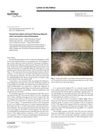
September 2017 in “Skin appendage disorders” Some women with Frontal Fibrosing Alopecia also have Lichen Planopilaris, which can lead to more symptoms and affect hair outside the scalp.
5 citations
,
January 2016 in “Skin appendage disorders” This case report describes frontal fibrosing alopecia in a woman with primary biliary cirrhosis and polymyalgia rheumatica, suggesting a possible autoimmune link to this form of hair loss.
This study found that the Arabidopsis thaliana protein Formin 2 localizes to plasmodesmata and is crucial for regulating their permeability by anchoring actin filaments, which affects virus susceptibility.
This study found that patients with frontal fibrosing alopecia showed significant alterations in protein expression in forehead corneocytes, suggesting the condition may have systemic implications beyond the scalp.
 September 2017 in “Journal of Investigative Dermatology”
 This study found that certain circulating miRNAs in skin and plasma may serve as potential biomarkers for distinguishing frontal fibrosing alopecia from control cases, highlighting the need for further validation in larger cohorts.