 36 citations
,
December 2017 in “Journal of the American Academy of Dermatology”
36 citations
,
December 2017 in “Journal of the American Academy of Dermatology” This study observed that 70.7% of patients with frontal fibrosing alopecia stabilized with treatment, and patients using 0.3% tacrolimus were more likely to stabilize in 3 months compared to other treatments.
 September 2017 in “Journal of Investigative Dermatology”
 This study found that certain circulating miRNAs in skin and plasma may serve as potential biomarkers for distinguishing frontal fibrosing alopecia from control cases, highlighting the need for further validation in larger cohorts.
 December 2015 in “Actas Dermo-Sifiliográficas”
 This review addresses the challenges in treating frontal fibrosing alopecia, highlighting the limited effectiveness of medical treatments and the demand for hair transplantation despite its risks, but it reports no new clinical results.
 2 citations
,
January 2019 in “Skin appendage disorders”
2 citations
,
January 2019 in “Skin appendage disorders” This study observed that women with higher educational levels and social status are diagnosed with frontal fibrosing alopecia earlier, resulting in better therapeutic responses.
 6 citations
,
January 2020 in “Czech Journal of Animal Science”
6 citations
,
January 2020 in “Czech Journal of Animal Science” This study found that specific SNPs in the sheep FAT1 gene are significantly associated with wool quality traits, suggesting potential markers for improving wool crimp, fibre length, and fibre diameter in breeding.
 1 citations
,
November 2020 in “Journal of The American Academy of Dermatology”
1 citations
,
November 2020 in “Journal of The American Academy of Dermatology” The commentary suggests that certain hair and skin care products may be linked to frontal fibrosing alopecia, but not sunscreens, and calls for more thorough research on the causes.
 September 2017 in “Journal of Investigative Dermatology”
 This study found that infrared thermography might be a useful non-invasive tool to help diagnose frontal fibrosing alopecia by identifying active phases of the disease.
5 citations
,
November 2013 in “Case reports in dermatology” This case report details a 57-year-old woman with frontal fibrosing alopecia who developed hyperpigmentation after treatment with dutasteride and pimecrolimus, highlighting no previously reported hyperpigmentation association with this combination.
 May 2025 in “Journal of Investigative Medicine”
 This study concluded that the Free Androgen Index (FAI) could serve as a reliable biomarker for hyperandrogenism in women with androgenetic alopecia, showing more predictive value than testosterone or SHBG alone.
 May 2026 in “Scholars Journal of Medical Case Reports”
 In this report, researchers described a 36-year-old woman with frontal fibrosing alopecia resistant to standard treatments, who showed significant improvement after six months on a combination of intralesional betamethasone and oral hydroxychloroquine, suggesting potential benefits of this therapy approach in managing the condition.
 May 2022 in “Journal of Cosmetic Dermatology”
 This review discusses the characteristics and diagnostic challenges of fibrosing alopecia pattern distribution, proposing an algorithm for hair transplantation, but reports no new clinical results.
 September 2019 in “The journal of investigative dermatology/Journal of investigative dermatology”
 This study reported that while eyebrow hair transplantation in patients with frontal fibrosing alopecia achieves satisfactory short-term results, most patients experience significant hair graft loss within 3-4 years.
 43 citations
,
November 2019 in “American Journal of Clinical Dermatology”
43 citations
,
November 2019 in “American Journal of Clinical Dermatology” This review discusses female androgenetic alopecia, highlighting its diagnostic challenges and management strategies, but it reports no new results.
 12 citations
,
March 2018 in “Anais brasileiros de dermatologia/Anais Brasileiros de Dermatologia”
12 citations
,
March 2018 in “Anais brasileiros de dermatologia/Anais Brasileiros de Dermatologia” This article describes a case of frontal fibrosing alopecia in a patient with chronic lichenoid lupus erythematosus and notes the lack of similar documented cases in existing literature.
17 citations
,
July 2022 in “BMC Genomics” This study found that overexpression of the FA2H gene in cashmere goats' hair follicle cells may enhance hair proliferation and regulate genes affecting cashmere fineness.
 24 citations
,
March 2017 in “Journal of The European Academy of Dermatology and Venereology”
24 citations
,
March 2017 in “Journal of The European Academy of Dermatology and Venereology” This study reported a significant increase in the reporting of sexual dysfunction associated with finasteride use, especially in individuals aged 31-45.

In this observational study, dutasteride treatment was associated with statistically significant stabilization of frontal fibrosing alopecia compared to other systemic therapies, with a dose-dependent effect observed across the frontal and bilateral temporal hairlines.
 April 2026 in “Zenodo (CERN European Organization for Nuclear Research)”
 This research presents the Dodatek A model, elaborating on androgen function through new mathematical indices and methodological improvements, shifting focus from serum hormone concentrations to system interactions to better describe androgen activity comprehensively.
2 citations
,
January 2021 in “Journal of The American Academy of Dermatology” This pilot study found that examining changes in scalp scales after scraping may effectively distinguish seborrheic dermatitis associated with androgenetic alopecia from fibrosing alopecia in a pattern distribution.
 40 citations
,
June 2011 in “Journal of biological chemistry/The Journal of biological chemistry”
40 citations
,
June 2011 in “Journal of biological chemistry/The Journal of biological chemistry” This study revealed that deficiency in the enzyme FA2H in mice affected sebaceous gland function, altered sebum composition, and caused cycling alopecia, highlighting FA2H's role in hair follicle homeostasis.
2 citations
,
January 2023 in “Skin Appendage Disorders” This study suggests a potential role for systematic scalp examinations in first-degree relatives of patients with pattern cicatricial alopecia.
 March 2026 in “Dermatology Reports”
 This study found that frontal fibrosing alopecia had higher long-term remission rates compared to lichen planopilaris, highlighting differences in their clinical presentations and outcomes.
October 2021 in “Scholarworks (University of Massachusetts Amherst)” This dissertation demonstrates that FERONIA regulates essential plant functions such as RAC/ROP signaling, pollen tube reception, cell wall integrity, and sugar signaling as a cell surface receptor kinase.
 August 2024 in “JEADV Clinical Practice”
 In this clinical trial, 16 women with frontal fibrosing alopecia experienced significant improvements in hair density, vellus hair count, and quality of life after monthly intralesional dutasteride treatments, though larger and longer-term studies are needed to confirm these findings.
 September 2022 in “The American journal of dermatopathology/American journal of dermatopathology”
 In this pilot study, researchers found no sunscreen particles in the hair follicle units of patients with frontal fibrosing alopecia, suggesting no direct link between sunscreen use and the condition.
 January 2026 in “Frontiers in Medicine”
 This article questions whether frontal fibrosing alopecia and fibrosing androgeneic patterned hair loss are overlapping conditions or stages of the same process, calling for further research to clarify their underlying factors.
 April 2023 in “Journal of Investigative Dermatology”
 This study reports distinctive clinical, trichoscopic, and histopathological features of fibrosing alopecia in a pattern distribution among Chinese patients, suggesting possible racial differences compared to previous studies primarily involving Caucasians.
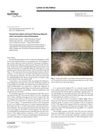 13 citations
,
September 2017 in “Skin appendage disorders”
13 citations
,
September 2017 in “Skin appendage disorders” Some women with Frontal Fibrosing Alopecia also have Lichen Planopilaris, which can lead to more symptoms and affect hair outside the scalp.
 May 2024 in “JAMA Dermatology”
 In this study, researchers identified genetic factors associated with frontal fibrosing alopecia, noting a protective effect of a specific CYP1B1 gene variant, which may offer insights into the disease's pathogenesis and future risk mitigation strategies.

In this narrative review, researchers evaluated existing literature on the treatment of frontal fibrosing alopecia, finding that while no curative treatment exists, clinical improvements can be achieved through personalized and combined therapy approaches.