January 2026 in “Plastic & Reconstructive Surgery Global Open” This study reported that applying stem cell serum daily resulted in eyebrow hair regrowth in a patient with chronic secondary cicatricial alopecia, and prevented hair loss in another patient with acute eyebrow trauma, suggesting it as a noninvasive treatment alternative.
 November 2024 in “Journal of Cosmetic Dermatology”
 This study evaluated eyebrow mesotherapy with a growth factor-based cocktail in 32 women with thin eyebrows, finding high satisfaction rates (90.6%) with significant improvements in density and appearance, low pain levels, and unanimous willingness to recommend the treatment.
November 2025 in “Dermatological Reviews” This study found that eyebrow mesotherapy with a growth factor-based serum improved eyebrow width, length, density, and psychosocial outcomes such as social engagement, quality of life, confidence, and mood in individuals with sparse or weakened eyebrows.
January 2022 in “Clinical Cases in Dermatology” This paper reviews treatment options for alopecia in hypothyroidism, noting that while hormone replacement can restore hair growth, additional treatments like PRP and oral minoxidil may help, though further research is needed.
 September 2024 in “Journal of the American Academy of Dermatology”
 This study found that phenoxyethanol is the most common contact allergen in over-the-counter hair loss products, but its role in the development or exacerbation of frontal fibrosing alopecia remains unclear.
 70 citations
,
April 2016 in “Experimental Dermatology”
70 citations
,
April 2016 in “Experimental Dermatology” In this study, oral tofacitinib treatment led to significant hair regrowth and changes in skin and blood biomarkers in a patient with alopecia areata.
 August 2023 in “International Ayurvedic medical journal”
 This case study describes the successful treatment of a 7-year-old girl with alopecia areata using Ayurvedic approaches targeting skin and autoimmune issues, suggesting a potential alternative to long-term oral corticosteroids, which can cause undesirable side effects.
23 citations
,
January 1964 in “Archives of Dermatology” This report describes a child with ulerythema ophryogenes marked by eyebrow hair absence and progressive skin atrophy, whose condition did not improve despite elevated vitamin A levels via injections.
 January 2023 in “Journal of The American Academy of Dermatology”
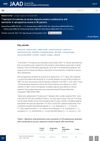
 This study found that 79% of adolescents with moderate-to-severe alopecia areata treated with baricitinib experienced significant scalp hair regrowth, although further research is needed to confirm these results.
12 citations
,
September 1981 in “Acta Dermato Venereologica” This case study reports that oral zinc therapy improved hair growth and pigmentation in a young girl with sucrase deficiency and low zinc levels.
 32 citations
,
March 2021 in “Journal of cosmetic dermatology (Print)”
32 citations
,
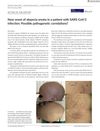
March 2021 in “Journal of cosmetic dermatology (Print)” This letter to the editor discusses a potential link between new onset alopecia areata and SARS-CoV-2 infection, but reports no new clinical results.
 January 2019 in “Przegląd Dermatologiczny”
 This report presents a case of a 57-year-old woman with APS-4, generalized alopecia, and rheumatoid arthritis, emphasizing the need to screen for other autoimmune disorders in patients with a single organ-specific autoimmune disease.
 11 citations
,
November 2018 in “Journal of the American Academy of Dermatology”
11 citations
,
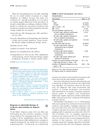
November 2018 in “Journal of the American Academy of Dermatology” This study found that among patients with alopecia areata treated with the JAK inhibitor tofacitinib, 34% achieved complete regrowth of eyebrows and 39% achieved complete regrowth of eyelashes, highlighting differences in treatment responses across hair-bearing sites.
 September 2019 in “The journal of investigative dermatology/Journal of investigative dermatology”
 This study reported that while eyebrow hair transplantation in patients with frontal fibrosing alopecia achieves satisfactory short-term results, most patients experience significant hair graft loss within 3-4 years.
 1 citations
,
March 2013 in “International Society of Hair Restoration Surgery”
1 citations
,
March 2013 in “International Society of Hair Restoration Surgery” This case report describes a patient who experienced recalcitrant folliculitis leading to atrophic scarring following eyebrow transplantation.
 May 2026 in “International Journal of Versatile Research and Analysis”
 In this study, a polyherbal hair serum containing extracts of hibiscus petals and amla fruits showed significant antifungal activity against Candida albicans and exhibited satisfactory stability, physicochemical properties, and potential for improving hair health and reducing dandruff.
 29 citations
,
January 2007 in “American Journal of Clinical Dermatology”
29 citations
,
January 2007 in “American Journal of Clinical Dermatology” This article reviews the social and functional impact of eyebrow loss and highlights the limited treatment options compared to scalp alopecia, but reports no new clinical results.
 December 2025 in “Dermatological Health”
 This case report describes how a 23-year-old woman experienced eyebrow thinning and hair loss linked to cosmetic use, with diagnostic tests confirming follicular damage. Discontinuing the product led to eyebrow regrowth, highlighting potential risks from cosmetics and the value of non-invasive diagnostics for evaluation.
 July 2022 in “Al-Mağallaẗ al-ʻirāqiyyaẗ li-l-ṣaydalaẗ”
 In this study, patients with alopecia areata had significantly lower serum zinc levels compared to healthy controls, with an inverse relationship between zinc levels and disease severity.
 January 2021 in “Türkiye klinikleri dermatoloji dergisi”
 This study found that eyebrow involvement in frontal fibrosing alopecia was more common among postmenopausal females with comorbidities, without a significant link to age or disease duration.
 June 2020 in “Journal of cosmetic medicine”
 This abstract reviews eyebrow transplantation techniques, highlighting that follicular unit extraction prevents scarring at the donor site, unlike strip harvesting, and reports no new clinical results.
 11 citations
,
August 2010 in “Journal of Dermatology”
11 citations
,
August 2010 in “Journal of Dermatology” This case report describes occipital hair transplantation for therapy-resistant alopecia areata in eyebrows, observing 80% hair re-growth two years post-surgery and suggesting surgical options may be useful for stable cases.
 6 citations
,
October 2022 in “American journal of clinical dermatology”
6 citations
,
October 2022 in “American journal of clinical dermatology” This review provides an updated overview of the symptomatology, diagnosis, trichoscopy findings, and treatment options for eyebrow and eyelash alopecia, but it reports no new experimental results.
 January 2023 in “Pakistan Armed Forces Medical Journal”
 This study found no significant association between serum vitamin D levels and Alopecia areata when compared to healthy controls.
 January 2022 in “The Egyptian Journal of Hospital Medicine”
 This study found that higher serum IL-21 levels may serve as a promising diagnostic and prognostic marker for alopecia areata, strongly correlating with disease activity.
 October 2021 in “Dermatology Reports”
 This study found that serum IL-17A levels were significantly higher in patients with alopecia areata compared to healthy controls and correlated with disease severity and activity.
 January 2012 in “Current Therapy In Oral and Maxillofacial Surgery”
 Endoscopic forehead and brow lifting safely and consistently improves aged eyebrows, but may have complications.
 2 citations
,
April 2019 in “Acta medica Philippina/Acta Medica Philippina”
2 citations
,
April 2019 in “Acta medica Philippina/Acta Medica Philippina” This study observed that patients with alopecia areata had significantly lower serum 25-hydroxyvitamin D levels than healthy controls, with a trend toward even lower levels in more severe cases.
 April 2025 in “Egyptian journal of Immunology”
 In this study, researchers reported significantly higher serum calprotectin levels in alopecia areata patients compared to controls and that these levels were associated with the disease's severity, type, duration, and nail involvement, suggesting calprotectin as a potential marker for inflammation in these patients.
 June 2024 in “International Journal of Pharmaceutical Research and Applications”
 In this overview, researchers highlighted the potential for using traditional knowledge from Ayurveda and other systems to identify plant compounds for herbal cosmetics, emphasizing a hair serum that hydrates the scalp and promotes hair growth as an area of interest. Results were not reported.