 42 citations
,
January 1998 in “BioDrugs”
42 citations
,
January 1998 in “BioDrugs” Azathioprine's effectiveness and safety require careful monitoring and more research, especially regarding its use with corticosteroids and the role of TPMT status in patients.
 29 citations
,
May 2020 in “npj Regenerative Medicine”
29 citations
,
May 2020 in “npj Regenerative Medicine” This review discusses the role of the immune niche in hair follicle regeneration and its impact on different forms of alopecia, highlighting research gaps and potential therapeutic strategies.
 12 citations
,
April 2015 in “InTech eBooks”
12 citations
,
April 2015 in “InTech eBooks” Platelet Rich Plasma (PRP) shows promise for tissue repair and immune response, but more research is needed to fully understand it and optimize its use.
 9 citations
,
August 2017 in “Journal of comparative pathology”
9 citations
,
August 2017 in “Journal of comparative pathology” This study suggests that uncontrolled embryonic trichogenesis may play a role in the development of trichoblastoma in rabbits.
 9 citations
,
July 2010 in “British Journal of Dermatology”
9 citations
,
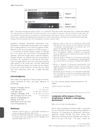
July 2010 in “British Journal of Dermatology” This article reports on lentiginosis observed within plaques of linear atrophoderma of Moulin and discusses its potential classification as a twin-spotting phenomenon but provides no new clinical research results.
 2 citations
,
March 2005 in “Cancer biology & therapy”
2 citations
,
March 2005 in “Cancer biology & therapy” This study found that 95% of untreated advanced-stage follicular lymphoma patients responded to a single course of the Bexxar regimen, with 75% achieving complete remission and remaining disease-free for years.
 1 citations
,
January 2022 in “Open Access Macedonian Journal of Medical Sciences”
1 citations
,
January 2022 in “Open Access Macedonian Journal of Medical Sciences” This case report highlights that healthcare providers should consider the possibility of systemic lupus erythematosus in children with immune thrombocytopenia.
 January 2018 in “Turkiye Klinikleri Journal of Dermatology”
 This review discusses the use of stem cell therapies for hair diseases, highlighting promising results but reporting no new clinical findings.
 February 2011 in “Journal of Investigative Dermatology”
 New findings suggest targeting IL-23 could treat psoriasis, skin cells can adapt to new roles, direct conversion of skin cells to blood cells may aid cell therapy, removing certain tumor cells could boost cancer immunotherapy, and melanoma may have many tumorigenic cells, not just cancer stem cells.
 June 2017 in “International Journal of Periodontics & Restorative Dentistry”
 This study found that using retroauricular full-thickness skin grafts in vestibuloplasty contributed to successful cosmetic and functional outcomes in dental implant rehabilitation for patients with mandibular gunshot injuries.
 March 2014 in “Journal of The American Academy of Dermatology”
 The document lists various dermatology topics, treatments, and diagnostic methods.
 1 citations
,
August 2014 in “Asian-Australasian Journal of Animal Sciences”
1 citations
,
August 2014 in “Asian-Australasian Journal of Animal Sciences” In this study, recombinant goat VEGF164 increased hair growth when applied to the skin of shaved mice.
 343 citations
,
December 2008 in “Endocrine Reviews”
343 citations
,
December 2008 in “Endocrine Reviews” This review discusses the various evidence-based and potential applications of metformin in treating and preventing symptoms and complications associated with polycystic ovary syndrome but reports no new clinical results.
 33 citations
,
April 1990 in “Dermatologic Clinics”
33 citations
,
April 1990 in “Dermatologic Clinics” Minoxidil effectively treats hair loss, with better results in women.

This study utilized polarized light microscopy to examine hair shafts in ten children with rare genetic disorders, such as Netherton syndrome and ectodermal dysplasia, providing valuable diagnostic insights into hair thickness, composition, and structural irregularities associated with these conditions.
 April 2024 in “Frontiers in pharmacology”
 This review of Cynoglossum amabile, a traditional Chinese and ethnomedicine, provides insights into its uses, chemical components, biological activities, and toxicity. Highlighting its market potential, the study underscores the importance of indigenous knowledge in drug development despite noted hepatotoxic risk linked to its pyrrolizidine alkaloids.
 1308 citations
,
March 1998 in “Journal of bone and mineral research”
1308 citations
,
March 1998 in “Journal of bone and mineral research” This review discusses the molecular role of the vitamin D receptor in regulating various biological actions such as bone mineralization and reports no new clinical results, highlighting the complexity of vitamin D's function in multiple tissues.
 1160 citations
,
November 2018 in “Physiological Reviews”
1160 citations
,
November 2018 in “Physiological Reviews” This review discusses the potential of single cell technologies to improve understanding and treatment of impaired wound healing and reports no new clinical results.
 480 citations
,
August 2014 in “Nature Biotechnology”
480 citations
,
August 2014 in “Nature Biotechnology” This review discusses manipulating the stem cell niche as a strategy in regenerative medicine to repair damaged tissues, highlighting the potential benefits and challenges but reporting no new results.
 301 citations
,
February 2019 in “Nature Communications”
301 citations
,
February 2019 in “Nature Communications” In this study, researchers found that wound healing in mouse skin recruits diverse fibroblasts, including myeloid-derived cells, which contribute to regenerating adipocytes.
 262 citations
,
May 2017 in “Nanomedicine”
262 citations
,
May 2017 in “Nanomedicine” This review examines recent advancements in electrospun nanofibers for wound healing applications, but reports no new experimental results, highlighting their potential in sutures, dressings, and skin regeneration.
 253 citations
,
March 1994 in “Developmental dynamics”
253 citations
,
March 1994 in “Developmental dynamics” This study suggests that programmed cell death plays a crucial role in shaping the structure of the human epidermis and its appendages during development.
 202 citations
,
August 2007 in “Biomaterials”
202 citations
,
August 2007 in “Biomaterials” This review discusses advancements in artificial skin for wound treatment and reports no new clinical findings; the authors highlight the potential of new biomaterials to enhance future skin replacement therapies.
 185 citations
,
February 2018 in “Journal of Investigative Dermatology”
185 citations
,
February 2018 in “Journal of Investigative Dermatology” This review discusses melatonin's potential in dermatology, highlighting its antioxidative, immunomodulatory, and DNA repair properties, but reports no new clinical results.
 178 citations
,
August 2016 in “Advances in wound care”
178 citations
,
August 2016 in “Advances in wound care” This article discusses advancements in understanding how skin stem cells and fibroblasts contribute to scar formation, highlighting current and potential therapies aimed at preventing or reducing scarring, yet notes that effective treatments without significant side effects are still lacking.
 159 citations
,
July 2006 in “Endocrine Reviews”
159 citations
,
July 2006 in “Endocrine Reviews” This article discusses the influence of estrogens on hair follicle growth and metabolism, suggesting a significant role alongside androgens in hair growth control but reports no new clinical results.
 150 citations
,
January 2018 in “Burns & Trauma”
150 citations
,
January 2018 in “Burns & Trauma” This review discusses strategies and advances in bioprinting for skin wound healing, concluding that bioprinting could offer promising solutions for skin regeneration despite existing challenges.
 124 citations
,
February 2018 in “Nature Reviews Genetics”
124 citations
,
February 2018 in “Nature Reviews Genetics” This review covers recent findings on stem cell plasticity under normal and cancerous conditions but presents no new experimental results, highlighting implications for regenerative medicine and cancer treatments.
 93 citations
,
June 2011 in “Journal of Neuroscience”
93 citations
,
June 2011 in “Journal of Neuroscience” This study found that the transcription factor p63 is crucial for horizontal basal cell differentiation in the olfactory epithelium, suggesting a p63-dependent mechanism activates reserve stem cells after injury.
 82 citations
,
March 2016 in “Cell”
82 citations
,
March 2016 in “Cell” This review highlights various methods of stem cell communication that reflect the unique organization and function of different tissues and reports no new results.