 January 2016 in “Dermatology Online Journal”
 This case report describes a pregnant woman who developed bullous impetigo, which resolved after treatment with clindamycin, suggesting that this condition should be considered in similar blisters in pregnant women.
 May 2011 in “British Journal of Dermatology”
 The 1891 epidemic skin disease was likely caused by arsenic poisoning, possibly from beer or fish.
This reference compilation details potential adverse skin reactions and other side effects associated with the antihypertensive drug Quinazil, including rare cases of skin angioedema and other dermatological reactions.
 May 2026 in “Repository of the University of Ljubljana (University of Ljubljana)”
 This study analyzed the composition and cost of 50 cosmetic body scrubs for keratosis pilaris, finding that chemical exfoliants with glycolic acid may reduce symptoms by enhancing skin shedding and reducing water loss, but further clinical studies are needed to confirm their effectiveness.
 15 citations
,
February 2016 in “Dermatologic Surgery”
15 citations
,
February 2016 in “Dermatologic Surgery” This study concluded that dermatology has made the most significant contributions to noninvasive and minimally invasive cosmetic procedures, while other specialties have also provided important literature in this field.
 7 citations
,
April 2011 in “Expert review of dermatology”
7 citations
,
April 2011 in “Expert review of dermatology” This article reviews practical approaches for managing dermatologic conditions in patients with skin of color and reports no new clinical findings.
5 citations
,
September 2008 in “Journal of the Chinese Medical Association” This case report describes a renal transplant patient with tinea capitis, revealing a fungal infection from Microsporum canis linked to her dogs, which resolved after treatment for both the patient and animals.
 1 citations
,
February 2022 in “Terapevtičeskij arhiv”
1 citations
,
February 2022 in “Terapevtičeskij arhiv” This case report describes severe liver injury in a young patient after prolonged overuse of vitamin A, which resolved after cessation.
 June 2026 in “Zenodo (CERN European Organization for Nuclear Research)”
 In this study, researchers formulated a herbal shampoo using rice water and willow bark extract, finding that it could effectively cleanse and nourish hair while protecting the scalp without harsh chemicals.
 February 2026 in “Trials”
 The Exfoliate-Dissolve-Repair skincare approach may effectively treat keratosis pilaris and reduce the need for corticosteroids.
 February 2026 in “Frontiers in Immunology”
 In this study analyzing FDA data, researchers found that tralokinumab was associated with higher reports of conjunctivitis and keratitis compared to dupilumab, while dupilumab had more frequent injection site reactions, highlighting potential risks for clinical monitoring in atopic dermatitis treatments.
 October 2020 in “Our Dermatology Online”
 This report presents two cases where dermatologists identified internal malignancies—small cell lung cancer and stage IIB cervical cancer—through paraneoplastic skin manifestations.

Tailored nonsurgical cosmetic procedures are crucial for safely treating diverse skin types, especially skin of color.
May 2002 in “Journal of Investigative Dermatology” New findings on hair keratin, wound healing, and skin blistering were presented.
105 citations
,
December 2003 in “Veterinary Dermatology” This review discusses the association between cutaneous paraneoplastic syndromes and internal malignancies, noting that recognition of these skin disorders may help detect underlying cancers, but reports no new research findings.
 41 citations
,
August 1988 in “Journal of The American Academy of Dermatology”
41 citations
,
August 1988 in “Journal of The American Academy of Dermatology” In this case report, a patient with subacute cutaneous lupus erythematosus and exfoliative erythroderma achieved complete remission with systemic corticosteroids and long-term hydroxychloroquine.
 2 citations
,
March 2019 in “Veterinary dermatology”
2 citations
,
March 2019 in “Veterinary dermatology” The authors concluded that thymoma-associated paraneoplastic syndrome in cats may manifest as noninflammatory alopecia instead of exfoliative dermatitis, and should be considered when diagnosing multifocal noninflammatory alopecia.
 13 citations
,
December 2008 in “Veterinary dermatology”
13 citations
,
December 2008 in “Veterinary dermatology” This study found that a combination of ciclosporin and Miglyol 812 was effective in treating sebaceous adenitis in rabbits, with significant improvement in skin condition and hair regrowth.
December 2019 in “Saintika Medika” This case report describes a rare instance of a 23-year-old woman with both Epidermolysis Bullosa Acquisita and aggressive systemic lupus erythematosus, suggesting a potential immunogenetic link through HLA-DR2.
 48 citations
,
November 1992 in “International Journal of Dermatology”
48 citations
,
November 1992 in “International Journal of Dermatology” This article discusses the history and terminology of toxic epidermal necrolysis but reports no new clinical results.
74 citations
,
November 2000 in “Archives of Dermatology” In this study, application of salicylic acid solution on mouse skin showed histologic changes without causing wounds or inflammation, observed immediately and up to 48 hours after treatment.
July 2024 in “Medical alphabet” The authors concluded that "burning scalp" syndrome lacks general treatment recommendations, but therapeutic cosmetics showing antipruritic and anti-inflammatory effects may offer promise for long-term management and prevention.
August 2020 in “Prosiding Farmasi” This study reviewed existing literature and reported that 1% Zinc pyrithione in anti-dandruff shampoo effectively inhibits the growth of fungi responsible for dandruff, aligning with the regulatory limits set by Indonesian health authorities.
 64 citations
,
January 2002 in “American Journal of Clinical Dermatology”
64 citations
,
January 2002 in “American Journal of Clinical Dermatology” This review examines the adverse skin reactions associated with antipsychotic medications and reports no new clinical findings, but suggests discussing management strategies to improve patient compliance.
 1 citations
,
April 2025 in “JOJ Dermatology & Cosmetics”
1 citations
,
April 2025 in “JOJ Dermatology & Cosmetics” In this study, researchers evaluated the efficacy of a collagen booster used alongside CO2 fractional laser treatment for skin aging, finding that the combination treatment affected the vascularization and healing process of the skin on a healthy adult's forearm.
 September 2024 in “Skin Research and Technology”
 This study used atomic force microscopy to identify significant morphological differences in hair from patients with lichen planopilaris compared to healthy controls, noting more scratches, uneven edges, and pitted scales in affected hair, which may aid future research on the condition.
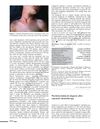
This abstract discusses pellagra as a nutritional disorder characterized by a known set of symptoms but reports no new clinical findings; the authors review existing knowledge and suggest further research.
 4 citations
,
January 2016 in “Postepy Dermatologii I Alergologii”
4 citations
,
January 2016 in “Postepy Dermatologii I Alergologii” This article discusses various hair diseases and emphasizes their significant impact despite affecting a small area, but does not report new clinical findings.
 47 citations
,
January 2003 in “American Journal of Clinical Dermatology”
47 citations
,
January 2003 in “American Journal of Clinical Dermatology” This article discusses the potential for severe adverse cutaneous drug reactions with mood-stabilizing agents, emphasizing the importance of monitoring and patient communication, but reports no new clinical findings.
 44 citations
,
January 2002 in “American Journal of Clinical Dermatology”
44 citations
,
January 2002 in “American Journal of Clinical Dermatology” This review discusses adverse cutaneous drug reactions associated with antidepressants and provides guidance on managing these reactions, but it reports no new clinical findings; the authors recommend cautious use and alternative treatment if reactions occur.