106 citations
,
December 2015 in “Biomacromolecules” This study describes a method to create keratin hydrogels with adjustable erosion rates by mixing different ratios of keratose and kerateine, enabling controlled release of therapeutic agents like insulin-like growth factor 1.
169 citations
,
September 2002 in “British journal of dermatology/British journal of dermatology, Supplement” This study reports that ZD1839 (Iressa), an anticancer drug, was associated with acneiform eruptions and hair growth abnormalities due to its inhibition of epidermal growth factor receptor signaling in the skin.
 45 citations
,
December 1991 in “Annals of the New York Academy of Sciences”
45 citations
,
December 1991 in “Annals of the New York Academy of Sciences” This article discusses the distribution of extracellular matrix molecules in human hair follicles and reports no new results.
2 citations
,
May 2020 in “JAAD case reports” This review discusses the potential role of JAK inhibitors, like ruxolitinib, as emerging therapeutic agents in dermatology, but reports no new clinical results.
 June 2022 in “bioRxiv (Cold Spring Harbor Laboratory)”
 This study found that MAPK/ERK signaling plays a key role in driving tissue regeneration in spiny mice and suggests potential for reversing fibrosis to promote regeneration in mammals.
15 citations
,
April 2011 in “Biological Chemistry” This study found that Cathepsin E plays a crucial role in keratinocyte terminal differentiation, affecting epidermis formation and homeostasis in mice.
306 citations
,
August 2011 in “Journal of cachexia, sarcopenia and muscle” This study found that GTx-024 significantly increased total lean body mass and improved physical function in healthy elderly men and postmenopausal women, suggesting potential use for muscle wasting conditions.
3 citations
,
January 2019 in “Indian Journal of Drugs in Dermatology” This study reports two cases of PRIDE complex in nonsmall cell lung cancer patients treated with erlotinib and gefitinib, highlighting cutaneous reactions like papulopustules and paronychia.
 April 2026 in “Microsystems & Nanoengineering”
 This study developed HA-gel-dex hydrogels with enhanced ECM-like properties and functionality, showing promise for 3D bioprinting, tissue repair, and as wound dressings due to improved cell interaction, cytocompatibility, antimicrobial synergy, and wound healing in mice compared to traditional ECM bio-inks.
2 citations
,
May 2021 in “Neuropathology & applied neurobiology/Neuropathology and applied neurobiology” This correspondence reports the case of a young woman with severe lipid storage myopathy due to a rare mutation, who showed significant temporary improvement with plasmapheresis and immunoglobulin treatment before stabilizing with riboflavin and coenzyme Q10 supplementation, challenging the initial assumption of an immune-mediated condition.
3 citations
,
September 2022 in “European Journal of Dermatology” This report identifies a novel splice-site variant in the LAMB3 gene linked to junctional epidermolysis bullosa, emphasizing the need for gene sequencing in diagnosing the disease.
 April 2023 in “Journal of Investigative Dermatology”
 In this study, recombinant type III collagen was found to promote fibroblast proliferation and migration, suggesting potential anti-aging and repairing effects, although it was only effective in significantly inhibiting IL-6, not TNF-α, secretion.
 14 citations
,
July 2012 in “Journal of the American Academy of Dermatology”
14 citations
,
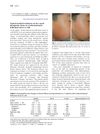
July 2012 in “Journal of the American Academy of Dermatology” This study found that topical tacalcitol improved roughness and scaling in erythromelanosis follicularis faciei et colli, although it was less effective for facial erythema.
7 citations
,
May 2025 in “Stem Cell Research & Therapy” This review compiles EV proteomics data and reports that while MSC-derived EVs show promise in skin therapeutics, variability in protein cargo highlights the need for standardized methodologies in understanding process impacts.
 February 2026 in “Cosmetics”
 This review examines the clinicopathologic features of perifollicular elastolysis and indicates that, while its presentation is consistent, there is a lack of high-certainty evidence for effective treatments.
 191 citations
,
November 1959 in “Annals of the New York Academy of Sciences”
191 citations
,
November 1959 in “Annals of the New York Academy of Sciences” This article reports electron microscope studies on the structure of hair and wool, but it does not present new clinical findings.
December 2025 in “Pharmaceutics” This review highlights the potential of drug-loaded extracellular vesicles as a promising drug delivery platform but notes that clinical translation faces challenges due to variability in methods and the need for standardization and safety evaluation.
 39 citations
,
January 2015 in “Annals of dermatology/Annals of Dermatology”
39 citations
,
January 2015 in “Annals of dermatology/Annals of Dermatology” This review discusses three newly identified forms of epidermolysis bullosa related to mutations in DST-e, EXPH5, and ITGA3, offering insights into their genetic and clinical characteristics but reports no new clinical results.

This phase Ib study found that combining pegylated liposomal doxorubicin and pembrolizumab was well-tolerated and effective, with durable antitumor responses and a median survival of over two years in heavily pretreated ER-positive metastatic breast cancer patients.
44 citations
,
January 2017 in “Journal of Investigative Dermatology” This study identified KLHL24 as a new gene linked to a subtype of epidermolysis bullosa simplex, highlighting its role in unresolved cases by involving a degradation-resistant truncated protein impacting keratin turnover.
45 citations
,
August 1992 in “PubMed” In this study, researchers found that changes in the extracellular matrix components, particularly fibronectin, laminin, and type IV collagen, during the rat vibrissa follicle growth cycle, suggest dynamic remodeling related to dermal-epidermal signaling.
December 2015 in “OPAL (Open@LaTrobe) (La Trobe University)” In human hair follicle keratinocytes, this study found that treatment with the pharmacological inhibitor QLT0267 led to a strong inhibition of proliferation and migration and induced nearly 100% apoptosis.
 April 2023 in “The journal of investigative dermatology/Journal of investigative dermatology”
 This study found that deleting Ube2n in adult mouse skin leads to inflammation and other skin changes, and identifies IRAK1/4 as potential treatment targets for inflammatory skin disorders.
 24 citations
,
November 2023 in “Nature”
24 citations
,
November 2023 in “Nature” In this study, researchers demonstrated that the expression of the oncogene SmoM2 leads to basal cell carcinoma in the ear epidermis of mice but not in the back skin, with differences in susceptibility linked to the composition of the extracellular matrix.
May 2006 in “The Journal of Cell Biology” In this study, researchers at Johns Hopkins University found that Keratin 17 plays a signaling role in cell growth during a wound response by aiding mTOR pathway activation, beyond its structural functions.
 16 citations
,
May 2000 in “Endocrinology”
16 citations
,
May 2000 in “Endocrinology” This study identified a new gene, mrp4, in mice, which suggests it may have a unique role in the growth and development of hair follicles in the ears and tails.
May 2023 in “Journal of Scientific Research” This study found that bursts of ERK activation in the epidermis of mice were linked to cell division, supporting synchronized cell proliferation and transient ERK activity in living tissues.
 April 2017 in “The journal of investigative dermatology/Journal of investigative dermatology”
 This study suggests a connection between the unfolded protein response and upregulation of NKG2D ligands in stressed hair follicles, highlighting a potential role of PRDX5 in alopecia areata pathogenesis.
 37 citations
,
September 2018 in “Journal of the American Academy of Dermatology”
37 citations
,
September 2018 in “Journal of the American Academy of Dermatology” This letter reports a series of cases where the use of ruxolitinib at a lower dose than previously studied led to hair regrowth in patients with severe alopecia areata.