 1 citations
,
September 2019 in “Journal of Investigative Dermatology”
1 citations
,
September 2019 in “Journal of Investigative Dermatology” In this study, researchers used a CRISPR-based method to correct mutations in the COL7A1 gene in stem cells from RDEB patients, restoring normal collagen expression in engineered skin grafts in mice.
 77 citations
,
April 2004 in “Gene expression patterns”
77 citations
,
April 2004 in “Gene expression patterns” This study observed specific expression patterns of three zebrafish estrogen receptor genes during development, highlighting robust co-expression of esr2a and esr2b in primary neuromasts, branchial arches, and other tissues.
4 citations
,
January 2017 in “Acta dermato-venereologica” A new EDA gene mutation was found in a Chinese family with a specific skin disorder.

This study identified a missense variant in the EDA gene of a male cat, which likely caused hypohidrotic ectodermal dysplasia, characterized by hair and teeth abnormalities; this represents the first report of such a genetic condition in cats.
208 citations
,
November 2000 in “Development” This study found that while Eda and Edar proteins interact in vitro, their roles in dental development differ, with downless mutant mice showing distinct tooth defects compared to tabby mutants.
March 2026 in “Experimental Dermatology” This study developed an in vitro model using NTERT keratinocytes expressing AEC-related TP63 mutations, which replicated skin defects observed in AEC patients and offers a valuable tool for understanding the disorder and developing new treatments.
 59 citations
,
April 2016 in “Cell Reports”
59 citations
,
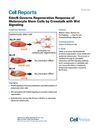
April 2016 in “Cell Reports” This study demonstrated that EdnrB signaling promotes melanocyte stem cell proliferation and differentiation, enhancing hair and epidermal melanocyte regeneration, especially under conditions of active Wnt signaling.
24 citations
,
February 2011 in “The American journal of pathology” This study found that AIRE, a usually nuclear protein, is expressed in the cytoplasm of human epidermal and follicular keratinocytes and associates with the intermediate filament protein cytokeratin 17, potentially impacting ectodermal abnormalities in APECED syndrome.
 4 citations
,
July 2020 in “Biochemical and Biophysical Research Communications”
4 citations
,
July 2020 in “Biochemical and Biophysical Research Communications” This study suggests that EDA-A2 induces apoptosis in hair follicles by increasing DKK-1 expression, implicating EDA2R signaling as a potential therapeutic target for androgenetic alopecia.
 37 citations
,
April 2010 in “FEBS Letters”
37 citations
,
April 2010 in “FEBS Letters” In this study, researchers reported that the activation of EDA2R by p53 leads to p53-dependent cell death in cancer cells and is involved in chemotherapy-induced hair loss.
 11 citations
,
September 2021 in “Journal of molecular endocrinology”
11 citations
,
September 2021 in “Journal of molecular endocrinology” This review discusses differences in ERβ signaling between rodents and humans and reports no new clinical results; the authors highlight the need for further research in humans before using ERβ agonists clinically.
This study found that fibroblasts from Emery-Dreifuss muscular dystrophy patients with certain genetic mutations overexpress markers of fibrosis, and gene correction techniques reduced fibrogenic molecule expression in cell models, suggesting potential therapeutic applications.
71 citations
,
November 2005 in “The journal of investigative dermatology. Symposium proceedings/The Journal of investigative dermatology symposium proceedings” This review discusses the role of Edar signaling in hair follicle development and cycling, emphasizing its impact on cell fate, differentiation, and interactions with other pathways, but reports no new results.
January 2013 in “International Journal of Biological Sciences” This study demonstrates that the CRISPR-Cas9 system can be used to successfully edit genes in large mammals, such as Cashmere goats, creating a valuable model for research on EDAR gene-related phenotypes.
 March 2026 in “Calcified Tissue International”
 This review discusses the complex role of the EDA pathway in vertebrate skeletal development, emphasizing its interaction with other morphogenic pathways to influence skeletal diversity, but reports no new experimental results.
 9 citations
,
March 2012 in “Experimental dermatology”
9 citations
,
March 2012 in “Experimental dermatology” This meeting report discusses the first symposium on natural gene therapy for skin, preceding the 41st annual meeting of the European Society for Dermatological Research, and reports no new experimental findings.
June 2023 in “bioRxiv (Cold Spring Harbor Laboratory)” This study developed new immortalized keratinocyte cell lines lacking COL7A1 using CRISPR/Cas9 technology, providing a valuable model to explore the biology and treatment options for recessive dystrophic epidermolysis bullosa.
 April 2023 in “bioRxiv (Cold Spring Harbor Laboratory)”
 This study identifies key transcriptomic features and a necessary dermal niche for eccrine gland development, advancing potential regenerative approaches for these vital skin appendages.
 76 citations
,
May 2011 in “Cell death and differentiation”
76 citations
,
May 2011 in “Cell death and differentiation” This study found that the enzyme A20 helps regulate EDAR-induced NF-κB signaling in mice, preventing ectodermal abnormalities like disheveled hair and assuring proper skin and appendage development.
 4 citations
,
May 2021 in “The journal of investigative dermatology/Journal of investigative dermatology”
4 citations
,
May 2021 in “The journal of investigative dermatology/Journal of investigative dermatology” This study reported that ELL is crucial for maintaining the proliferative capacity of the basal layer in human epidermal keratinocytes by stabilizing RNA polymerase II at the transcription start site.
4 citations
,
January 2006 in “PubMed” This study found that finasteride-induced DHT deficiency altered estrogen receptor expression in the epididymis, potentially destabilizing its function.
18 citations
,
February 2006 in “Genomics” A new genetic mutation in mice causes permanent hair loss and skin wrinkling.
 January 2018 in “bioRxiv (Cold Spring Harbor Laboratory)”
 This study identified a new cis-regulatory element in the mouse Hr gene that influences its expression in skin and brain cells, highlighting a complex molecular network involved in hair follicle formation.
 April 2023 in “The journal of investigative dermatology/Journal of investigative dermatology”
 In this study, researchers found that the loss of SETDB1 in epidermal keratinocytes led to altered chromatin states, increased ERV expression, and activation of immune responses, while inhibiting these effects with certain antiviral drugs reduced skin inflammation and hair loss in a mouse model.
9 citations
,
August 2021 in “Biomedicines” This study found that 17β-estradiol was the most powerful hormone for inducing APE1/Ref-1 secretion in cultured vascular endothelial cells, with secretion occurring through exosomes dependent on estrogen receptors and intracellular calcium.
 109 citations
,
October 2007 in “American Journal of Human Genetics”
109 citations
,
October 2007 in “American Journal of Human Genetics” This study found that postnatal treatment with recombinant EDA normalized adult teeth, improved sweating, and restored normal lacrimation in dogs with XLHED, suggesting its potential as a treatment for the condition.
 12 citations
,
February 2021 in “Translational Psychiatry”
12 citations
,
February 2021 in “Translational Psychiatry” This study identified two novel genetic variants associated with Alzheimer's disease in APOE ε4 non-carriers, revealing insights into the disease's underlying regulatory mechanisms.
November 2025 in “Indian Journal of Dermatology” This study reports a rare cluster of four patients with ectodermal dysplasia, highlighting its typical dental and dermatological manifestations and the necessity of multidisciplinary management.
125 citations
,
August 2003 in “Development” In this study, mice engineered to express human EGFR showed tissue-specific growth defects and neurodegeneration rescue, but developed severe heart issues and accelerated bone cell differentiation.
May 2025 in “Experimental Dermatology” In this study, researchers developed a novel genetic tool using Wif1-CreER knock-in mice for precise labeling and manipulation of dermal papilla cells, which could enhance understanding of hair biology and aid in developing targeted therapies for hair-related disorders.