1 citations
,
June 2025 in “Journal of Veterinary Internal Medicine” In this case study, a miniature donkey with multisystemic eosinophilic epitheliotropic disease was euthanized due to laminitis despite treatment for pruritus, inappetence, hypertriglyceridemia, and alopecia.
This article discusses the inflammation process in dissecting cellulitis and folliculitis keloidalis, noting the role of follicular rupture and hair fragments while reporting no new results; the authors highlight differences in bacterial presence and pathogenesis understanding.
68 citations
,
April 2012 in “Digestive and Liver Disease” This study found that both Elental and 6-mercaptopurine were effective for maintaining remission in Crohn's disease, without a significant difference between them over 24 months.
June 2024 in “Poster presentations” This study found that Janus kinase inhibitors were effective in inducing clinical and biochemical remission in patients with Ulcerative Colitis while exhibiting an expected safety profile, though 30% discontinued treatment due to adverse events or lack of efficacy.
22 citations
,
February 2004 in “Journal of pediatric gastroenterology and nutrition” This study found that nutritional deficiencies and gastrointestinal abnormalities are uncommon in children with ichthyosis and growth failure, suggesting chronic hypovolemia may be more prevalent in this group.
 July 2026 in “Nature Communications”
 In this study, researchers used patient-derived organoids to model metastasis in colorectal cancer and discovered that cancer cells temporarily switch to a wound-healing program, orchestrated by reduced EZH2 activity and YAP signaling, before spreading to new organs.
 1 citations
,
December 2019 in “Acta Medica Medianae”
1 citations
,
December 2019 in “Acta Medica Medianae” This article discusses connubial contact dermatitis, emphasizing its frequent misrecognition and the importance of identifying and eliminating the underlying causes for effective treatment.
This study found that IL18 signaling plays a crucial role in the homing and retention of mature regulatory T cells in the mouse thymus, primarily by upregulating the chemokine receptor CCR6.

Infliximab was effective in treating a scalp condition that did not respond to other treatments.
January 2007 in “Bristol Research (University of Bristol)” This study diagnosed epidermolysis bullosa in eight calves across four UK farms, characterized by skin lesions and excluding mutations in keratin genes as the cause.
 6 citations
,
October 2017 in “Oncotarget”
6 citations
,
October 2017 in “Oncotarget” In this study, NIH hairless mice showed increased susceptibility to Listeria monocytogenes infection compared to NIH mice, potentially due to differences in gut microbiota and monocyte levels.
 35 citations
,
May 2008 in “Journal of Clinical Oncology”
35 citations
,
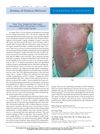
May 2008 in “Journal of Clinical Oncology” A cancer patient died from a severe skin reaction after taking the drug cetuximab.
53 citations
,
August 2014 in “Cochrane library” This review found no evidence supporting the efficacy of methotrexate for inducing remission in active ulcerative colitis compared to placebo or active comparators.
 5 citations
,
June 2014 in “Gastroenterology report”
5 citations
,
June 2014 in “Gastroenterology report” This report describes a case of colonic adenomatous polyposis in a patient with Cronkhite-Canada syndrome, highlighting a deviation from the typically hamartomatous polyps and suggesting a need for further study.
January 2026 in “Romanian Journal of Military Medicine” This study found that both Lactobacillus casei extract and Newcastle disease virus significantly reduced cell viability and induced apoptosis in human colorectal cancer cells, suggesting these agents could complement standard chemotherapy and radiotherapy after further clinical trials.
 411 citations
,
April 2010 in “Gastroenterology”
411 citations
,
April 2010 in “Gastroenterology” This review explores various theories of colorectal cancer stem cell biology and highlights the need for better identification and targeting of these cells to advance treatment strategies, but reports no new clinical findings.
September 2023 in “Journal of the American Academy of Dermatology” This study found that patients receiving immune checkpoint inhibitors who have a history of psoriasis are at a higher risk for developing gastrointestinal and endocrine toxicities within one year compared to those without psoriasis.
 April 2023 in “The journal of investigative dermatology/Journal of investigative dermatology”
 This study found that deleting Ube2n in adult mouse skin leads to inflammation and other skin changes, and identifies IRAK1/4 as potential treatment targets for inflammatory skin disorders.
July 2022 in “British Journal of Dermatology” This study found that epidermal growth factor receptor inhibitors used in cancer treatment induce a distinct inflammatory response in hair follicles, marked by immune privilege collapse and upregulation of inflammatory pathways.
 April 2017 in “Journal of Investigative Dermatology”
 This study found that sulfated CCK octapeptide reduces psoriasis-like skin inflammation in mice, suggesting a new pathophysiological role for CCK in regulating epidermal inflammation.
1 citations
,
September 2019 This article discusses the diagnosis and management of severe infections occurring alongside lupus flares in various patients but reports no new clinical results; the authors highlight the challenges and need for careful treatment strategies.
 February 2026 in “Frontiers in Pediatrics”
 This case report describes a 7-year-old girl initially misdiagnosed with SMA syndrome, but later found to have a gastric trichobezoar via EGD, highlighting the diagnostic challenges in children with nonspecific symptoms.
 60 citations
,
September 2013 in “Alimentary Pharmacology & Therapeutics”
60 citations
,
September 2013 in “Alimentary Pharmacology & Therapeutics” This review discusses the dermatological adverse events from immunosuppressive and anti-TNF therapy in IBD, finding increased risks of non-melanoma skin cancer and other skin conditions, and recommends regular cancer screening.
2 citations
,
January 2016 in “Journal of clinical & experimental dermatology research” This case report describes a child with acrodermatitis enteropathica showing dramatic improvement with oral zinc therapy, highlighting the importance of early diagnosis and treatment to prevent severe outcomes.
April 2025 in “Cermin Dunia Kedokteran” This review discusses the challenges in diagnosing and managing gastroesophageal reflux in children, particularly in primary care settings, emphasizing the need for appropriate treatment and referral when necessary.
 October 2021 in “Journal of Investigative Dermatology”
 This study found no significant difference in the seroconversion rate of SARS-CoV2 IgG between patients with Immune Mediated Inflammatory diseases undergoing Targeted Immune-Modulating Therapies and those on conventional systemic treatment.
2 citations
,
October 2023 in “Animals” Lacto-fermentation changes amino acid profiles in bovine colostrum, but results are inconsistent.
 5 citations
,
March 2013 in “International journal of surgical pathology”
5 citations
,
March 2013 in “International journal of surgical pathology” This case report illustrates that a diagnosis of Cronkhite-Canada syndrome can be made without the presence of polyps, as demonstrated by resolving symptoms with steroid treatment.
In this study, researchers identified IL18R+ thymus-resident regulatory T cells in mice, demonstrating their unique molecular features and resistance to age- and stress-induced thymus involution, highlighting IL18 signaling's role in Treg migration and retention.
December 2025 in “JGH Open” In this case study, a 78-year-old Japanese woman with Cronkhite-Canada syndrome experienced mesenteric lymphadenopathy, which reduced in size after treatment with the corticosteroid prednisolone. This suggests that mesenteric lymphadenopathy, though uncommon in CCS, may respond to steroid therapy.