5 citations
,
August 2024 in “Frontiers in Immunology” In this study, upadacitinib was reported as effective in rapidly treating psoriasiform eczema in five male patients and showed varying degrees of effectiveness on other immune-mediated comorbidities like alopecia areata, vitiligo, ulcerative colitis, and hidradenitis suppurativa.
 February 2024 in “Journal of the European Academy of Dermatology and Venereology”
 In this study, baricitinib for severe alopecia areata showed sustained efficacy over 104 weeks, with most Week-52 responders maintaining significant hair regrowth and some mixed responders improving further with long-term treatment.

In this case report, a patient with ankylosing spondylitis and alopecia areata who used a combination of baricitinib and golimumab experienced hair regrowth without adverse effects, but the efficacy of this treatment combination remains unestablished according to the researchers.
July 2024 in “Journal of Investigative Dermatology” ATR04-484 ointment shows promise for treating skin issues from cancer therapies.
 January 2025 in “Geneesmiddelenbulletin”
 This 104-week follow-up trial found that baricitinib is effective and safe for treating severe alopecia areata but requires continuous use to sustain hair regrowth. The drug is included in the NVDV guidelines and reimbursed by Dutch insurers for this purpose.
November 2024 in “Journal of Investigative Dermatology” Bimekizumab quickly improves psoriasis symptoms and skin at the molecular level.
This study, involving patients with early rheumatoid arthritis, found that treatment regimens combining methotrexate and glucocorticoids, with or without initial high-dose methylprednisolone, showed higher remission rates over one year compared to methotrexate or leflunomide alone, and all regimens were generally well-tolerated.
10 citations
,
August 2019 in “European Journal of Dermatology” This abstract provides no new clinical results; it discusses the role of surgery and interventional radiotherapy in treating cutaneous squamous cell carcinoma.
1 citations
,
October 2018 in “PubMed” In a mouse model of infected burns, this study found that treatment with recombinant fusion peptide EK significantly decreased Pseudomonas aeruginosa colony count and improved wound healing rates compared to controls.
This case report describes how anifrolumab, used beyond trial-eligible populations, led to significant clinical and serological recovery in a 45-year-old woman with organ-threatening systemic lupus erythematosus complicated by infection and resistant to conventional treatments like cyclophosphamide and rituximab.
 18 citations
,
May 2013 in “Cutaneous and Ocular Toxicology”
18 citations
,
May 2013 in “Cutaneous and Ocular Toxicology” This study suggests that cutaneous adverse reactions to bortezomib and lenalidomide are more frequent than reported, impacting patients' quality of life and may require dermatological consultation for proper management.
 May 2025 in “The Journal of Rheumatology”
 In this case report, researchers detailed the clinical management and positive outcome of a 62-year-old woman with catastrophic antiphospholipid syndrome associated with systemic lupus erythematosus, highlighting the potential effectiveness of Eculizumab in achieving disease remission and maintaining stability over 18 months.
February 2023 in “Reactions Weekly” 4 citations
,
August 2024 in “International Journal of Molecular Sciences” This study found that a combination of natural compounds (escin, bromelain, ginkgo biloba, and sage miltiorrhiza) reduced platelet adhesion to activated endothelium in laboratory settings by inhibiting adhesion molecule transcription and reducing pro-inflammatory cytokines, potentially preventing initial steps of the coagulation cascade.
 2 citations
,
March 2022 in “Modern Rheumatology Case Reports”
2 citations
,
March 2022 in “Modern Rheumatology Case Reports” In this study, a case of a patient with dermatomyositis and alopecia universalis showed successful treatment with tofacitinib, suggesting potential responsiveness to janus kinase inhibitors.
April 2025 in “Anais Brasileiros de Dermatologia” Abrocitinib effectively treats severe alopecia areata with significant improvement and no side effects.
19 citations
,
January 2012 in “Dermatology” This study describes three cases of acneiform eruptions from EGFR inhibitors that improved with topical recombinant human EGF, suggesting its potential as a treatment option for this side effect.
26 citations
,
October 2019 in “JNCI Cancer Spectrum” This clinical study observed that in patients with advanced breast cancer and BRCA1/2 mutations, talazoparib provided significantly better progression-free survival, objective response, clinical benefit, and patient-reported outcomes compared to physician’s choice chemotherapy, despite common side effects like anemia and fatigue.
 May 2022 in “Research Square (Research Square)”
 This study found that the newly developed transdermal oil body microgel emulsion (OBEME) improved wound healing in mice by enhancing skin permeability, reducing inflammation, and promoting new blood vessel formation and re-epithelialization.
September 2025 in “Journal of Skin and Stem Cell” This narrative review reports that baricitinib, a first-generation JAK inhibitor, has shown effectiveness in treating alopecia areata and atopic dermatitis and holds promise for other chronic dermatoses, marking a significant advancement in dermatological immunotherapy according to the summarized findings.
June 2017 in “Journal of the American Academy of Dermatology” The new cream is safe and effective for mild to moderate atopic dermatitis.
 June 2022 in “C&EN global enterprise”
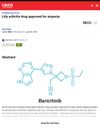
 This source notes that Olumiant (baricitinib), a rheumatoid arthritis drug by Eli Lilly and Company, has been approved as the first systemic treatment for severe alopecia areata.
 5 citations
,
February 1977 in “Archives of Dermatology”
5 citations
,
February 1977 in “Archives of Dermatology” This study reports that 14 of 19 patients with erythema nodosum leprosum had C3 deposits in vessel walls when examined using direct immunofluorescence.
 1 citations
,
January 2023 in “Cutis”
1 citations
,
January 2023 in “Cutis” This report discusses two cases where patients continued EGFR inhibitor therapy while receiving topical treatments for SDRIFE, highlighting the importance of dermatologists in managing such cutaneous adverse events without stopping cancer treatment.
 1 citations
,
August 2021 in “Journal of The American Academy of Dermatology”
1 citations
,
August 2021 in “Journal of The American Academy of Dermatology” This study evaluates the effectiveness and safety of 2-mg and 4-mg doses of baricitinib in patients with alopecia areata who have lost at least 50% of their scalp hair, comparing outcomes between those with early and late onset of the disease.
7 citations
,
December 2022 in “Skin Appendage Disorders” This study found that among anti-TNF-α agents, certolizumab is the least likely to cause paradoxical reactions such as psoriatic alopecia and appears to be an effective and safe option for managing psoriasis and PsA while minimizing these risks.
October 2025 in “Frontiers in Medicine” This study confirmed known adverse events and identified new ones related to ixekizumab, offering preliminary safety insights for its clinical use, but noted limitations such as potential underreporting and confounding factors in the spontaneous adverse event reporting systems.
 April 2026 in “Frontiers in Medicine”
 In this case report, a female patient with both psoriasis and lichen planus initially responded to acitretin and topical mometasone but experienced a relapse after stopping the treatment. The authors reported marked improvement within 3 months after switching to upadacitinib, aiming to guide clinical decision-making.
 May 2026 in “Frontiers in Immunology”
 This case report documents the first use of bimekizumab as monotherapy for dissecting cellulitis of the scalp, where a 27-year-old man experienced significant symptom relief without adverse effects after failing standard treatments.