 23 citations
,
April 1999 in “Dermatologic Clinics”
23 citations
,
April 1999 in “Dermatologic Clinics” This study found that the Epilight multiple wavelength pulsed-intense light source was effective for long-lasting hair removal, particularly in individuals with dark hair and light skin.
7 citations
,
June 2025 in “Nano Energy” This study reports that triboelectro-responsive DNA hydrogels, enhanced with conductive polymers and triboelectric stimulation, effectively accelerate wound healing and exhibit strong anti-bacterial and anti-inflammatory properties, achieving 99.8% closure of bacterium-infected diabetic wounds in 14 days.
 1 citations
,
July 2023 in “Journal of Cutaneous and Aesthetic Surgery”
1 citations
,
July 2023 in “Journal of Cutaneous and Aesthetic Surgery” This review highlights the advantages of a new "Multi-Wave Punch" for follicular unit extraction in hair transplantation, noting its design reduces follicular damage and improves graft quality by effectively separating hair follicles from surrounding tissue.
December 2024 in “Frontiers in Surgery” This systematic review found no existing studies evaluating the effectiveness of waxing and mechanical epilation as methods of preoperative hair removal to reduce surgical site infections, highlighting a potential area for future research.
 1 citations
,
February 2023 in “International journal of research - granthaalayah”
1 citations
,
February 2023 in “International journal of research - granthaalayah” This study reports that electromagnetic energy from a hydrocolloid wound dressing paste adversely affected human skin lipid droplets in vitro, but the implications, including potential cancer links, are unknown.
 June 1995 in “International Journal of Gynecology & Obstetrics”
 This article lacks an abstract and reports no new findings.
 June 2005 in “British Journal of Oral & Maxillofacial Surgery”
 This study found that two years after treatment, the continuous-wave Sharplan 40C SilkTouch laser system led to better collagen organization compared to the pulsed Coherent 5000C UltraPulse system in patients who underwent skin resurfacing.
January 2020 in “Integrative Medicine Research”  January 2012 in “Yearbook of Dermatology and Dermatologic Surgery”
 Electric current quickly reduces hand sweating but the effect doesn't last long.
 November 2025 in “Indian Journal of Plastic Surgery”
 In this study, researchers found that using the FUE method, performed by surgeons instead of technicians, allows for more precise follicular unit extraction than the traditional FUT method, potentially improving outcomes and donor area utilization in hair transplantation.
December 2005 in “Dermatologic surgery” This study found that while Er:YAG laser therapy can initially improve the appearance of eruptive vellus hair cysts, it was ineffective in preventing early recurrences due to limitations in ablation depth.
33 citations
,
May 2016 in “Translational andrology and urology” This review examines hair removal practices prior to genital gender affirming surgery, noting current variations and offering a practical laser hair removal approach, but reports no new clinical results.
47 citations
,
March 1987 in “The Journal of dermatologic surgery and oncology” Carbon dioxide laser treatment effectively removed facial hair cysts without scarring or them coming back.
1 citations
,
May 2024 in “International journal of medicine and psychology.” In this study, researchers found that using electromagnetic radiation in the EHF range enhanced the engraftment of skin flaps in rats by improving microcirculation and reducing necrosis, with greater effects observed when paired with systemic ozone therapy.
 1 citations
,
January 2019 in “Elsevier eBooks”
1 citations
,
January 2019 in “Elsevier eBooks” This chapter reviews the use of electrospun matrices in creating tissue-engineered skin substitutes and reports no new clinical results; it emphasizes the need for a cell-friendly microenvironment.
 1 citations
,
November 2009 in “Cambridge University Press eBooks”
1 citations
,
November 2009 in “Cambridge University Press eBooks” This article reports that follicular unit extraction is a minimally invasive hair restoration technique that avoids linear scarring and reduces donor-site pain compared to traditional strip harvesting methods.
 1 citations
,
November 2020 in “Journal of Cosmetic Dermatology”
1 citations
,
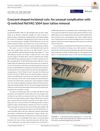
November 2020 in “Journal of Cosmetic Dermatology” This letter to the editor discusses an unusual complication, crescent-shaped incisional cuts, observed with Q-switched Nd:YAG 1064 laser tattoo removal and reports no new clinical results.

Hair properties change under electromagnetic fields and are influenced by individual characteristics and the environment.
19 citations
,
August 2018 in “Journal of the American Academy of Dermatology” In this study, the researchers found that the picosecond pulsed alexandrite laser (PSAL) may be as effective and safe as the Q-switched alexandrite laser (QSAL) for treating freckles in Chinese patients.
 73 citations
,
April 1999 in “Dermatologic Clinics”
73 citations
,
April 1999 in “Dermatologic Clinics” This article reviews patient selection and treatment protocols for various light-based hair removal systems but presents no new clinical results.
13 citations
,
December 2005 in “Dermatologic surgery” In this study, Er:YAG laser therapy initially improved the appearance of eruptive vellus hair cysts but was ultimately ineffective due to early recurrence and concerns about atrophy or scarring.
85 citations
,
January 2002 in “Dermatologic Clinics” This article reviews the use of light-based technologies for hair removal, detailing different laser systems and treatment protocols, but reports no new clinical results.
 207 citations
,
January 2011 in “Dermatologic Therapy”
207 citations
,
January 2011 in “Dermatologic Therapy” This article discusses the factors involved in optimizing laser hair removal, emphasizing patient selection, laser safety, and understanding laser–tissue interactions, but presents no new clinical findings.
August 2024 in “BENTHAM SCIENCE PUBLISHERS eBooks” September 1998 in “Journal of the European Academy of Dermatology and Venereology” This chapter reviews when to perform linear-strip excision vs. follicular unit excision for hair loss surgery, noting their respective advantages and disadvantages, without presenting new clinical findings.
 April 2026 in “SHILAP Revista de lepidopterología”
 This study reviews the therapeutic applications and evidence around punch-based dermatologic techniques, highlighting their varying effectiveness and precision across different conditions, but emphasizes the need for further standardized research.
61 citations
,
April 2023 in “Advanced Materials” This study introduced a viscoelastic dry electrode that successfully reduces motion artifacts in EP monitoring on hairy skin, maintaining stable performance for up to 48 days.
 23 citations
,
December 2001 in “Lasers in Surgery and Medicine”
23 citations
,
December 2001 in “Lasers in Surgery and Medicine” This article discusses the extended theory of selective photothermolysis and does not report new clinical results; the authors explore potential applications in hair removal techniques.
3 citations
,
March 2013 in “QScience Connect” This study found that low power He:Ne laser and methylene blue successfully damaged hair follicles in mice while preserving the epidermis, suggesting a potential for improved long-term hair removal options.