 6 citations
,
January 2011 in “Journal of pediatric endocrinology & metabolism/Journal of pediatric endocrinology and metabolism”
6 citations
,
January 2011 in “Journal of pediatric endocrinology & metabolism/Journal of pediatric endocrinology and metabolism” This report details the case of an 11-year-old girl with APECED syndrome carrying a unique homozygous mutation in the AIRE gene, the first of its kind documented.
 January 2025 in “JCEM Case Reports”
 This report describes a 27-year-old patient with Ehler-Danlos syndrome who also presented with hypophosphatasia and mastocytosis, and suggests enzyme replacement therapy might alleviate symptoms in such overlapping genetic conditions.
 20 citations
,
February 2019 in “Genes”
20 citations
,
February 2019 in “Genes” This study identifies a likely pathogenic homozygous missense variant in the AEBP1 gene in a patient with symptoms of classical Ehlers-Danlos syndrome, suggesting new perspectives for EDS classification and research.
 May 2026 in “International Journal of Drug Delivery Technology”
 This case study highlights Erythromelanosis follicularis faciei et colli as an easily overlooked pigmentary disorder characterized by a distinctive triad requiring precise diagnosis for effective patient counseling and cosmetic management.
 1 citations
,
June 2019 in “Current developments in nutrition”
1 citations
,
June 2019 in “Current developments in nutrition” This case study reports that pancreatic enzyme replacement and fatty acid supplementation improved symptoms of fat malabsorption and essential fatty acid deficiency in a patient with EDS-4.
 4 citations
,
December 2020 in “Dermatologic Therapy”
4 citations
,
December 2020 in “Dermatologic Therapy” This study reports a case of Ellis van Creveld syndrome in a 40-year-old Iranian woman, highlighting uncommon features such as pectus excavatum, Phrygian cap gallbladder, liver hemangioma, polycystic ovarian disease, and breast fibrocystic cysts.
 1 citations
,
April 2023 in “Frontiers in Genetics”
1 citations
,
April 2023 in “Frontiers in Genetics” This report on individuals with AEBP1-related classical-like EDS confirmed previous findings and identified hair loss as a potential characteristic feature of this rare condition for the first time. Additionally, cardiovascular complications observed in some individuals suggest that cardiovascular monitoring may be necessary.
25 citations
,
April 2008 in “Clinical and experimental dermatology” This case series describes Erythromelanosis follicularis faciei et colli in five Indian patients, suggesting it may be more common than currently reported.
 2 citations
,
January 2014 in “Elsevier eBooks”
2 citations
,
January 2014 in “Elsevier eBooks” This review discusses drug-induced hypersensitivity syndrome and drug reaction with eosinophilia and systemic symptoms, highlighting clinical features, potential viral reactivations, and treatment, but reports no new clinical findings.
 May 2024 in “Animal genetics”
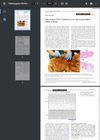
 The researchers investigated a Maine Coon cat with suspected classical Ehlers-Danlos Syndrome and discovered a heterozygous deletion in the COL5A1 gene, underscoring the value of whole-genome sequencing for precise veterinary diagnostics.
 July 2023 in “British journal of dermatology/British journal of dermatology, Supplement”
 In this study, researchers analyzed skin tumors from patients with CYLD cutaneous syndrome and found that loss of CYLD function is linked to changes in cellular signaling pathways, particularly NF-κB signaling, and leads to increased secretion of specific extracellular matrix proteins.
3 citations
,
August 2017 in “Clinical case reports” A rare skin condition causes red and dark patches on the face and limbs.
24 citations
,
February 2011 in “The American journal of pathology” This study found that AIRE, a usually nuclear protein, is expressed in the cytoplasm of human epidermal and follicular keratinocytes and associates with the intermediate filament protein cytokeratin 17, potentially impacting ectodermal abnormalities in APECED syndrome.
4 citations
,
November 2020 in “Case reports in dermatology” This report summarizes recent cases of the rare condition erythromelanosis follicularis faciei et colli to illustrate its varied clinical presentations.
16 citations
,
November 2008 in “Journal of the American Academy of Dermatology” This case report describes a patient with a hepatitis C diagnosis whose acral rash, initially unresponsive to psoriasis treatment, showed significant improvement with oral zinc sulfate, suggesting a diagnosis of necrolytic acral erythema.
September 2006 in “Pediatrics in Review” This case report highlights a 16-year-old girl with primary amenorrhea diagnosed with complete androgen insensitivity syndrome after chromosomal analysis revealed a 46,XY karyotype.
9 citations
,
August 2002 in “British journal of ophthalmology” This case report describes a young man diagnosed with encephalocraniocutaneous lipomatosis who had unique bilateral optic disc colobomas, a previously unreported association with this syndrome.
November 2025 in “Indian Journal of Dermatology” This study reports a rare cluster of four patients with ectodermal dysplasia, highlighting its typical dental and dermatological manifestations and the necessity of multidisciplinary management.
 January 2023 in “Indian dermatology online journal”
 This case report describes a novel NECTIN4 gene mutation linked to ED-syndactyly syndrome 1 in a young girl, contributing to the understanding of this rare ectodermal dysplasia.
July 2021 in “British Journal of Dermatology” This report describes a boy with ectodermal dysplasias who was genetically diagnosed due to newly discovered TSPEAR gene variants, which have now been associated with this condition.
164 citations
,
December 1984 in “Proceedings of the National Academy of Sciences” This study found that TCDD significantly reduced EGF receptor binding in various animal models, linked to toxic symptoms like weight loss and developmental delays, with receptor phosphorylation persisting several days.
January 2017 in “Murdoch Research Repository (Murdoch University)” This study identified the novel genetic variant rs143321413 within the EEF2K gene, which may play a role in the development of polycystic ovary syndrome.
36 citations
,
September 2015 in “Orphanet Journal of Rare Diseases” This review discusses ichthyosis with confetti, highlighting its genetic basis, clinical features, diagnostic criteria, and current treatment options but reports no new clinical results.
 August 2025 in “BMC Pregnancy and Childbirth”
 In this study, prenatal ultrasonography was found to be a valuable tool for screening ectodermal dysplasia during pregnancy, and a new EDA gene variant associated with X-linked hypohidrotic ectodermal dysplasia was identified, aiding in more accurate diagnoses and reproductive decision-making.
90 citations
,
August 2006 in “British Journal of Dermatology” This paper describes the PRIDE syndrome associated with epidermal growth factor receptor inhibitors but reports no new clinical results.
 26 citations
,
June 2018 in “The journal of immunology/The Journal of immunology”
26 citations
,
June 2018 in “The journal of immunology/The Journal of immunology” This study demonstrated that AIRE-deficient rats exhibit key symptoms of APECED, making them a relevant model for exploring potential treatments.
November 2022 in “Indian Journal of Dermatology” This case report describes a 52-year-old woman with erythema annulare centrifugum after using topical luliconazole and oral itraconazole, suggesting a drug-induced reaction confirmed by a positive rechallenge test.
 17 citations
,
August 2012 in “Journal of Medical Genetics”
17 citations
,
August 2012 in “Journal of Medical Genetics” This article reviews the genetic mutations associated with hypohidrotic ectodermal dysplasia and reports no new clinical results; the authors highlight the roles of EDA gene isoforms and related receptors.
May 2015 in “European Journal of Paediatric Neurology” This study describes three additional cases of encephalocraniocutaneous lipomatosis, emphasizing the importance of examining patients with ocular and ipsilateral skin lesions for this rare neurocutaneous disorder.
September 2021 in “Pediatrics in review” This case study describes a 7-month-old boy diagnosed with keratitis-ichthyosis-deafness syndrome due to a de novo GJB2 gene mutation, highlighting the challenges in treatment and eventual fatal outcome due to severe complications.