July 2022 in “European Journal of Dermatology” In this study, researchers found that patients with psoriasis had a higher probability of achieving and maintaining a clinical response using brodalumab compared to ustekinumab over 52 weeks, as measured by a multistate modelling approach based on absolute PASI scores.
 3 citations
,
January 2008 in “Journal of the American Academy of Dermatology”
3 citations
,
January 2008 in “Journal of the American Academy of Dermatology” A patient's skin rash did not affect the area where a previous viral rash was healing, suggesting a rare immune response.
2 citations
,
January 2016 in “Journal of clinical & experimental dermatology research” This case report describes a child with acrodermatitis enteropathica showing dramatic improvement with oral zinc therapy, highlighting the importance of early diagnosis and treatment to prevent severe outcomes.
 2 citations
,
June 2021 in “PubMed”
2 citations
,
June 2021 in “PubMed” In this study, researchers re-evaluated biopsies from elderly patients with erosive pustular dermatosis of the scalp and identified plasma cell and lymphocyte infiltrates as key histological indicators for diagnosis, observing that high-potency topical steroids effectively healed the lesions.
 January 2025 in “Clinical Dermatology Review”
 In this case report, a 16-year-old female with Netherton syndrome, a rare genetic disorder, exhibited symptoms such as skin issues, hair abnormalities, and elevated serum IgE levels. The diagnosis was supported by skin biopsy, and treatment included topical therapies, NB-UVB, and infliximab.
 May 2023 in “Frontiers in veterinary science”
 This study describes the successful treatment of erythema multiforme in a young Central American tapir with a combination of wound care, silver sulfadiazine cream, and oral prednisolone, emphasizing the importance of diagnostic testing for vesicular dermatitis syndromes in tapirs.
 3 citations
,
May 2013 in “Pediatric Dermatology”
3 citations
,
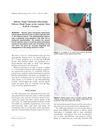
May 2013 in “Pediatric Dermatology” This case report documents the second known instance of a salivary gland choristoma on the chest wall of a newborn, highlighting its benign nature and the importance of accurate diagnosis.
 July 2026 in “Biomedical Papers”
 This study observed that moderate to severe atopic dermatitis patients showed a higher prevalence of keratoconus compared to the general population, with 6.7% having manifest KC and 20% subclinical KC, highlighting the need for increased awareness among dermatologists.
 4 citations
,
January 2017 in “Ciência Rural”
4 citations
,
January 2017 in “Ciência Rural” This case report highlights that equine multisystemic eosinophilic epitheliotropic disease should be considered in horses presenting with skin lesions and gastrointestinal symptoms, as illustrated by the progression in a 5-year-old horse despite treatment.
75 citations
,
September 1985 in “Archives of dermatology” This report of ichthyosis follicularis in two boys discusses the challenges of distinguishing it from similar disorders, noting its rarity and unclear inheritance pattern without providing new clinical results.
10 citations
,
November 1964 in “Zentralblatt für Veterinärmedizin Reihe A” This study describes three types of benign epithelial tumors in dog skin, commonly found in the subcutis, which do not metastasize and rarely recur.
 June 2026 in “Frontiers in Immunology”
 This review discusses the role of epithelial–mesenchymal transition in cutaneous fibrotic disorders and highlights potential molecular targets for therapy, but reports no new clinical results.
 16 citations
,
December 2006 in “International Journal of Dermatology”
16 citations
,
December 2006 in “International Journal of Dermatology” This clinical case study describes an aggressive squamous cell carcinoma developing within a giant epidermal cyst on the abdomen.

This chapter reviews various fungal skin diseases affecting cattle but does not report new research findings; it focuses on rare, inherited, and congenital conditions like follicular dysplasia and cutaneous asthenia.
June 2026 in “Indian Journal of Case Reports” This source reports a rare case of a 10-year-old child developing periorbital milia as an unusual cutaneous manifestation of chronic graft-versus-host disease following allogeneic stem cell transplantation, suggesting that immune-mediated epidermal disruption may lead to milia formation.
 6 citations
,
July 2015 in “International Journal of Dermatology”
6 citations
,
July 2015 in “International Journal of Dermatology” This study observed that multiple familial trichoepitheliomas commonly presented with a cribriform histopathological tumor pattern, differentiating them from solitary trichoepitheliomas.
1 citations
,
January 1986 in “PubMed” This case report describes a young patient with a unique combination of dysmorphism, bullous eruption, skin and muscle atrophy, and hyperpigmentation that doesn't fit existing nosological categories.
August 2020 in “SKIN The Journal of Cutaneous Medicine” This case report describes a 70-year-old man's development of residual hidrocystomas and milia after resolving an acneiform eruption induced by cetuximab, marking a novel observation of this sequence.
14 citations
,
January 1998 in “Dermatology” This study found evidence that polythelia pilosa, previously excluded from classification, should be reintroduced as it marks true aberrant mammary structures in men and hirsute women.
 June 2026 in “Barind Medical College Journal”
 In this study, researchers examined 1,000 South Asian patients misusing topical corticosteroids for dermatophytosis and found that this misuse resulted in atypical, chronic, and recurrent fungal infections called steroid-modified dermatophytosis, often involving extensive and atypical skin presentations.
34 citations
,
December 1984 in “Journal of Cutaneous Pathology” This study observed that the thinning and structural abnormalities in monilethrix-affected hair occur at the internodes due to possible periodic dysfunction of the hair matrix, particularly in the cortex.
 6 citations
,
June 2008 in “Journal of the European Academy of Dermatology and Venereology”
6 citations
,
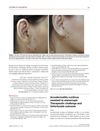
June 2008 in “Journal of the European Academy of Dermatology and Venereology” This paper discusses a case of acrodermatitis continua that was resistant to treatment with etanercept, highlighting the therapeutic challenges faced, but reports no new research results.
97 citations
,
May 2019 in “Frontiers in Cell and Developmental Biology” This review examines the interaction between the extracellular matrix and immune cells in skin diseases and evaluates advanced therapies that target involved molecular mechanisms, reporting no new clinical findings.
 10 citations
,
January 2011 in “Annals of Dermatology”
10 citations
,
January 2011 in “Annals of Dermatology” This case study describes a unique instance of warty dyskeratoma involving two adjacent hair follicles within one lesion.
 7 citations
,
June 2019 in “Australasian Journal of Dermatology”
7 citations
,
June 2019 in “Australasian Journal of Dermatology” This study presented a case series of erosive pustular dermatosis on the scalps of elderly patients, noting unusual presentation with hypergranulation tissue and unique dermoscopic vascular patterns, diverging from typical manifestations.
 27 citations
,
August 2014 in “Wiley interdisciplinary reviews. Developmental biology”
27 citations
,
August 2014 in “Wiley interdisciplinary reviews. Developmental biology” This review highlights similarities in the development of thymus and skin epidermis, reporting no new results; the authors emphasize shared molecular mechanisms despite different embryonic origins.
 17 citations
,
January 2009 in “Nippon Ishinkin Gakkai Zasshi”
17 citations
,
January 2009 in “Nippon Ishinkin Gakkai Zasshi” This case report details a 10-year-old boy diagnosed with kerion celsi caused by Microsporum gypseum, successfully treated with itraconazole over 4.5 months.
July 2011 in “Journal of Pediatric and Adolescent Gynecology” This report discusses a teenager with blistering of localized epidermolysis bullosa simplex—Weber Cockayne type, recommending referral to dermatology, and includes no new clinical trials or broader conclusions.
 May 2024 in “Australasian journal of dermatology”
 This study reports on a unique clinical presentation of folliculotropic mycosis fungoides in a 60-year-old man, highlighting complexities in diagnosis due to dense histiocytic infiltration, which led to xanthoma formation before treatment, and obscured lymphomatous features.
 January 2024 in “Brazilian Journal of Veterinary Pathology”
 In this case report, veterinarians observed a 16-year-old mare with symptoms including chronic weight loss, pruritus, muscle atrophy, and lameness, which gradually progressed to neurological issues despite initial treatment.