 January 2009 in “Springer eBooks”
 The document concludes that treating skin conditions should include psychological care and a multidisciplinary approach is essential for effective management.
 1 citations
,
August 2018 in “bioRxiv (Cold Spring Harbor Laboratory)”
1 citations
,
August 2018 in “bioRxiv (Cold Spring Harbor Laboratory)” This study reports that a novel gain-of-function mutation in TMEM173, combined with polymorphisms in TMEM173 and IFIH1, results in a distinct clinical phenotype with features of SAVI, including alopecia and photosensitivity.
 2 citations
,
January 2020 in “Skin appendage disorders”
2 citations
,
January 2020 in “Skin appendage disorders” This study in Mexican patients with alopecia areata found that body hair involvement was linked to disease progression, while treatment adherence was associated with both remission and progression.
 1 citations
,
January 2017 in “Current Dermatology Reports”
1 citations
,
January 2017 in “Current Dermatology Reports” This review discusses how hair and nail manifestations can indicate systemic diseases, emphasizing the importance of these appendageal clues in physical diagnosis, but reports no new findings.
5 citations
,
March 2025 in “Pediatric Dermatology” This study found that alopecia areata is linked to genetic factors, specifically HLA haplotypes on chromosome 6, and involves immune privilege collapse at hair follicles which is mediated by the JAK-STAT pathway and pro-inflammatory cytokines like IFN-γ.
114 citations
,
August 2002 in “Journal of Investigative Dermatology” Alopecia areata is caused by an immune response, and targeting immune cells might help treat it.
This review analyzed literature on primary cutaneous lymphomas involving the scalp, finding that scalp involvement in these cases often leads to non-scarring focal alopecia and may indicate more aggressive disease.
148 citations
,
September 2003 in “Journal of Investigative Dermatology Symposium Proceedings” Alopecia areata is an autoimmune disorder causing hair loss, linked to specific hair follicle antigens and genetic factors.
2 citations
,
June 2021 in “Sultan Qaboos University medical journal” This case report presents three sisters with familial frontal fibrosing alopecia, making it the 25th documented familial case, with treatment results observed in one sister.
 21 citations
,
February 2012 in “Journal of the European Academy of Dermatology and Venereology”
21 citations
,
February 2012 in “Journal of the European Academy of Dermatology and Venereology” This study found that late-onset alopecia areata is more common in women and tends to present with milder symptoms, with some patients achieving complete hair regrowth in mild cases.
 2 citations
,
March 2023 in “Journal of Nepal Medical Association”
2 citations
,
March 2023 in “Journal of Nepal Medical Association” This study found that 40.42% of undergraduate medical students aged under 25 had early canities, with grade I being the most common.
 7 citations
,
January 2017 in “Dermatology”
7 citations
,
January 2017 in “Dermatology” In this study, late-onset alopecia areata in Israeli patients was predominantly observed in females with mild disease, showing a high rate of complete hair regrowth but frequent relapses.
 July 2024 in “International Journal of Dermatology Venereology and Leprosy Sciences”
 This study reported that surgical treatments for vitiligo, including tissue and cellular grafting methods, are safe and effective in selected patients, although specific advantages and disadvantages vary by technique.
 53 citations
,
August 2019 in “American journal of human genetics”
53 citations
,
August 2019 in “American journal of human genetics” This study found that FOXN1 haploinsufficiency is a significant genetic factor causing T cell lymphopenia at birth, linked to reduced thymic function in both humans and mice.
 1 citations
,
January 2014 in “Elsevier eBooks”
1 citations
,
January 2014 in “Elsevier eBooks” This review discusses melanocytes' role in pigmentation, their clinical significance in conditions like vitiligo and hair graying, and highlights current research on hair follicle regeneration without reporting new clinical results.
 22 citations
,
June 2013 in “Australasian Journal of Dermatology”
22 citations
,
June 2013 in “Australasian Journal of Dermatology” Early stage bald spots are linked to skin inflammation and damage to the upper part of the hair follicle.
 December 2025 in “Cosmoderma”
 This study reviewed evidence suggesting that systemic corticosteroids, particularly in pulse regimens like dexamethasone and betamethasone oral mini-pulse, effectively slow vitiligo progression and support repigmentation, while offering a favorable safety profile compared to continuous therapy.
 December 2024 in “Clinical Cosmetic and Investigational Dermatology”
 This case report presented a 64-year-old Thai woman diagnosed with late-onset eruptive clear cell syringoma, and the authors highlighted a potential link between this condition and glucose metabolism abnormalities, suggesting the need for metabolic screening in similar elderly patients.
 May 2020 in “International journal of biology, pharmacy and allied sciences”
 This review discusses the correlation between vitiligo and various autoimmune, systemic, and dermatological diseases, highlighting the need to increase awareness of these comorbidities.
 21 citations
,
January 2005 in “Pediatric Dermatology”
21 citations
,
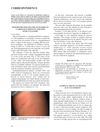
January 2005 in “Pediatric Dermatology” An 8-year-old girl with vitiligo developed extra hair growth on her knee after using tacrolimus ointment.
 2 citations
,
January 2017 in “Journal of Pigmentary Disorders”
2 citations
,
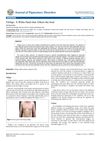
January 2017 in “Journal of Pigmentary Disorders” This article discusses vitiligo, reviewing its symptoms, possible causes, and classification, but reports no new clinical findings.
 281 citations
,
January 2013 in “British Journal of Dermatology”
281 citations
,
January 2013 in “British Journal of Dermatology” Manage vitiligo with treatments, address emotions, and use camouflage techniques.
 4 citations
,
October 2020 in “JAAD Case Reports”
4 citations
,
October 2020 in “JAAD Case Reports” This article discusses the potential use of platelet-rich plasma as a treatment for vitiligo, but reports no new clinical results; further investigation is needed.
 79 citations
,
March 2017 in “Dermatologic clinics”
79 citations
,
March 2017 in “Dermatologic clinics” This review discusses the complex systemic nature of vitiligo and its associations with autoimmune conditions, emphasizing the need for increased understanding and awareness of related comorbidities and psychological effects.
 11 citations
,
July 2017 in “Expert Opinion on Investigational Drugs”
11 citations
,
July 2017 in “Expert Opinion on Investigational Drugs” This review discusses current and emerging therapeutic strategies for androgenetic alopecia, noting limited evidence but suggesting areas such as prostaglandin analogs, PRP, and progenitor cell therapies as promising future directions.
This chapter reviews recent developments in vitiligo research, highlighting the role of melanocyte stem cell differentiation and oxidative stress in its management, but reports no new clinical results.
 January 2026 in “Clinical Cosmetic and Investigational Dermatology”
 This study found that among patients with alopecia areata, 82% reported experiencing at least one significant life event perceived as strainful in the two years before disease onset, suggesting an association between perceived stress and the onset of this condition.
 7 citations
,
October 2024 in “Frontiers in Immunology”
7 citations
,
October 2024 in “Frontiers in Immunology” In this study, researchers prepared a humanized CXCL12 antibody for alopecia areata treatment, finding it significantly delayed disease onset in mice and reduced immune cell activation, suggesting potential as an immune modulatory therapy.
 5 citations
,
October 2018 in “American Journal of Clinical Dermatology”
5 citations
,
October 2018 in “American Journal of Clinical Dermatology” This review discusses major dermatologic conditions occurring in the early post-hematopoietic stem cell transplant period and reports no new clinical results; it underscores dermatologists' role in recognizing critical complications.
 June 2026 in “Frontiers in Immunology”
 In this case report, a 57-year-old man with severe atopic dermatitis, vitiligo, and alopecia areata showed rapid and significant improvement after treatment with the JAK1 inhibitor upadacitinib, suggesting its potential as an effective monotherapy for these co-existing conditions when conventional therapies fail.