This chapter reviews surgical management techniques for leukotrichia in vitiligo and presents no new clinical findings; it highlights various grafting and epilation methods.
6 citations
,
January 2021 in “Journal of Cosmetic Dermatology” This study found that combining follicular unit extraction with topical calcipotriol betamethasone dipropionate showed the best repigmentation results in treating stable nonsegmental vitiligo.
 3 citations
,
December 2018 in “Journal of Pakistan Association of Dermatology”
3 citations
,
December 2018 in “Journal of Pakistan Association of Dermatology” This study found that patients with alopecia areata often presented with multilocular patches, common scalp involvement, and associated conditions like atopic dermatitis; the disease predominantly affected younger individuals.
January 2024 in “Biomedicines” This review discussed the cutaneous manifestations of APECED, highlighting chronic mucocutaneous candidiasis, alopecia areata, and vitiligo, while emphasizing the importance of early detection and monitoring for accurate diagnosis and patient care in various populations.
2 citations
,
December 2024 in “Children” The authors of this review explore the link between thyroid disorders and skin conditions in children, highlighting how conditions like chronic urticaria, vitiligo, and alopecia may signal underlying thyroid issues and emphasizing the importance of early detection for timely diagnosis and personalized treatment.
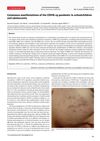 January 2023 in “Acta dermatovenerologica Alpina, Pannonica et Adriatica (Tiskana izd.)”
 This review details skin conditions in children and adolescents related to the SARS-CoV-2 pandemic, emphasizing mask-related acne and various cutaneous manifestations linked to infection and vaccination, with most being mild or nonspecific.
 January 2023 in “World Journal of Clinical & Medical Images”
 This report discusses a late-onset case of Cronkhite-Canada syndrome that improved with prednisone treatment, highlighting the importance of early diagnosis to reduce life-threatening complications.
 January 2020 in “Medpulse International Journal of General Medicine/Medpulse International Journal of Medicine”
 In this study, among 50 patients with premature hair graying, the combination of biotin, zinc, and calcium pantothenate showed no significant efficacy in treating the condition, and the researchers observed associations with other disorders such as anemia, alopecia areata, thyroid disorder, and vitiligo.
 63 citations
,
April 2018 in “Journal of the American Academy of Dermatology”
63 citations
,
April 2018 in “Journal of the American Academy of Dermatology” This review discusses the efficacy and safety of topical JAK inhibitors for inflammatory skin conditions, reporting modest benefits in psoriasis and atopic dermatitis but mixed results for vitiligo and inconclusive data for alopecia areata.
 7 citations
,
March 2018 in “Journal of The American Academy of Dermatology”
7 citations
,
March 2018 in “Journal of The American Academy of Dermatology” This study found that pediatric HSCT recipients, especially those with chronic graft-versus-host disease, are at risk for developing various nonmalignant late cutaneous changes such as vitiligo, psoriasis, alopecia, and nail changes.
 7 citations
,
May 1978 in “International Journal of Dermatology”
7 citations
,
May 1978 in “International Journal of Dermatology” Recent hair loss research shows some progress, especially in understanding male pattern baldness, but effective treatments for many types of hair loss are still lacking.
 April 2026 in “International Journal of Homoeopathic Sciences”
 This narrative review found a strong association between alopecia areata and autoimmune thyroid diseases, suggesting routine thyroid function and autoantibody screening could be beneficial for certain patients with extensive, recurrent, or early-onset alopecia areata.
 23 citations
,
November 2018 in “Journal of the European Academy of Dermatology and Venereology”
23 citations
,
November 2018 in “Journal of the European Academy of Dermatology and Venereology” This study observed that frontal fibrosing alopecia is increasingly diagnosed in Italian Caucasian females, often showing premenopausal onset and eyebrow alopecia as an early sign.

This article reviews the cutaneous side effects of immune checkpoint inhibitors and targeted therapies for skin cancers, noting that while generally mild, these effects can influence treatment decisions and quality of life, underscoring the need for physicians to be aware of these adverse reactions.
August 2025 in “American Journal of Dermatopathology” In this study, researchers presented cases of cellular neurothekeoma in three male family members with early-onset in infancy, suggesting a potential genetic component and inheritance pattern, which deviates from the typical presentation seen mostly in women between 20–30 years.
98 citations
,
March 2019 in “Frontiers in immunology” This study concluded that heterozygous NFKB2 mutations lead to a distinct and severe form of primary immunodeficiency with early onset, primarily T cell-mediated autoimmunity, and impaired B-cell differentiation.
 2 citations
,
January 2020 in “American Journal of Clinical Research and Reviews”
2 citations
,
January 2020 in “American Journal of Clinical Research and Reviews” This study suggests that hair follicles may be the primary target in the onset of various skin diseases, potentially spreading to affect the surrounding epidermis.
16 citations
,
March 2022 in “Journal of Clinical Medicine” In this observational study, researchers found that mini-pulse oral corticosteroids effectively reduced hair loss in alopecia areata patients who did not respond to topical therapies, though early-onset patients and those with hypothyroidism were less likely to benefit.
16 citations
,
January 2017 in “DOAJ (DOAJ: Directory of Open Access Journals)” This study found that premature hair graying is strongly associated with a family history, Vitamin B12 deficiency, and hypothyroidism, with onset as early as 5 years in patients in Gurugram, India.
 30 citations
,
May 2004 in “Journal der Deutschen Dermatologischen Gesellschaft”
30 citations
,
May 2004 in “Journal der Deutschen Dermatologischen Gesellschaft” This review proposes a classification system for childhood hair loss based on clinical appearance, age of onset, and associated symptoms, but reports no new clinical results.
 8 citations
,
November 2018 in “Australasian Journal of Dermatology”
8 citations
,
November 2018 in “Australasian Journal of Dermatology” This study adds evidence suggesting a genetic component to frontal fibrosing alopecia, with daughters experiencing an earlier onset than their mothers, although the clinical pattern remains similar to non-familial cases.
 99 citations
,
December 2010 in “Journal of The European Academy of Dermatology and Venereology”
99 citations
,
December 2010 in “Journal of The European Academy of Dermatology and Venereology” This article discusses the association of acne with various systemic diseases, emphasizing the role of androgen steroids, insulin resistance, and inflammation in acne pathogenesis, but it reports no new clinical results.
 20 citations
,
September 2005 in “Clinics in Dermatology”
20 citations
,
September 2005 in “Clinics in Dermatology” This review discusses the skin manifestations of metabolic diseases like diabetes and gout, emphasizing their role in diagnosis and monitoring, but it presents no new research findings.

This article reviews alopecia areata as a chronic autoimmune disease affecting hair follicles and discusses its association with other autoimmune conditions, but provides no new clinical findings.
 January 2007 in “Elsevier eBooks”
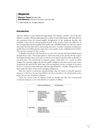
 This article describes the anatomy and life cycle of hair follicles, explaining how disruptions in the hair growth cycle can lead to various forms of alopecia.
 67 citations
,
January 2013 in “Indian Journal of Dermatology, Venereology and Leprology”
67 citations
,
January 2013 in “Indian Journal of Dermatology, Venereology and Leprology” This review discusses the causes, associated conditions, and treatment options for alopecia areata, such as corticosteroids and wigs, but reports no new clinical findings.
 26 citations
,
September 2012 in “Journal of The American Academy of Dermatology”
26 citations
,
September 2012 in “Journal of The American Academy of Dermatology” This study observed that patients with rapidly progressive alopecia areata may have a favorable prognosis regardless of treatment, and regenerated vellus hairs were linked to higher improvement or cure rates.
 11 citations
,
March 2013 in “Gene”
11 citations
,
March 2013 in “Gene” This study reported that the IL1A 4-bp indel polymorphism is associated with a reduced risk of alopecia areata in Chinese populations, possibly through miR-122 mediated regulation of IL-1α expression.
 May 2018 in “Academic Medicine”
 This article reflects on the significant psychosocial effects of hair loss, emphasizing its impact on identity and urging medical professionals to treat it as a serious concern.
 2 citations
,
May 2025 in “Frontiers in Pharmacology”
2 citations
,
May 2025 in “Frontiers in Pharmacology” In this study, analysis of FDA data revealed a substantial risk of dermatologic adverse events with aromatase inhibitors, especially anastrozole and exemestane, highlighting the importance of dermatologic monitoring during such therapies.