4 citations
,
January 2023 in “Indian Dermatology Online Journal” This article discusses the diagnosis and management of autoerythrocyte sensitization syndrome, emphasizing the importance of excluding other causes and integrating psychiatric consultation, but it reports no new clinical results.
 10 citations
,
June 2011 in “Archives of Dermatology”
10 citations
,
June 2011 in “Archives of Dermatology” Finasteride caused blisters on hands and feet.
 1 citations
,
April 2022 in “Journal of The American Academy of Dermatology”
1 citations
,
April 2022 in “Journal of The American Academy of Dermatology” This study found that decreased pressure sensitivity and 2-point discrimination at the scalp's vertex were significantly associated with androgenetic alopecia in men.
 23 citations
,
January 2015 in “Journal of The American Academy of Dermatology”
23 citations
,
January 2015 in “Journal of The American Academy of Dermatology” This study found that patients with myotonic dystrophy type 1 had higher numbers of nevi, dysplastic nevi, melanomas, and pilomatrixomas compared to age- and sex-matched controls.
 31 citations
,
November 2016 in “Cell Reports”
31 citations
,
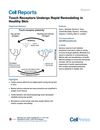
November 2016 in “Cell Reports” This study reveals that somatosensory neurons in mouse skin exhibit structural plasticity during hair-follicle regeneration, which may temporarily impair the reliability of encoding gentle touch.
 July 2026 in “International Journal of Applied Pharmaceutics”
 This review discusses the dermatological and systemic adverse effects of hair dye use, particularly focusing on the common allergen para-phenylenediamine, and reports no new clinical data.
 September 2019 in “Journal of Investigative Dermatology”
 This study reports that thermography and high-frequency ultrasound show promise as diagnostic tools for personalizing treatment plans in atopic dermatitis and psoriasis vulgaris by assessing skin lesion characteristics.
 1 citations
,
October 1984 in “Clinics in dermatology”
1 citations
,
October 1984 in “Clinics in dermatology” This article discusses the psychological impact of skin imperfections and suggests establishing a Cosmetic Dermatology Service within public health systems to address these issues ethically.
June 2024 in “Lasers in Surgery and Medicine” This study found that the novel dermal cooling system was an effective and safe treatment for reducing pigmentation in benign pigmented lesions in Asian patients, with minimal side effects.
132 citations
,
April 2005 in “Gastroenterology” This narrative review discusses advancements in the understanding and treatment of dermatitis herpetiformis as a manifestation of celiac disease and reports no new research results.
February 2022 in “Institutional Repositories DataBase (IRDB)” This case study describes a unique instance of unilateral steroid-induced rosacea-like dermatitis likely due to long-term localized use of topical corticosteroids, emphasizing the need for careful application and thorough histopathological analysis.
July 2023 in “Cosmoderma” November 2025 in “JDDG Journal der Deutschen Dermatologischen Gesellschaft” This study documented a case of an 11-month-old with PKU who developed acrodermatitis enteropathica-like symptoms due to severe phenylalanine deficiency, requiring dietary adjustment to restore phenylalanine levels.
43 citations
,
January 2014 in “Indian Journal of Dermatology” This study reported that EGFR inhibitor therapy in lung and head/neck cancer patients was associated with acneiform eruptions and severe skin dryness, which rarely necessitate discontinuation of treatment and can be managed symptomatically.
November 2025 in “Journal of Investigative Dermatology” Keloid fibroblasts cause itch and pain by releasing more histamine.
3 citations
,
January 2019 in “Indian Journal of Drugs in Dermatology” This study reports two cases of PRIDE complex in nonsmall cell lung cancer patients treated with erlotinib and gefitinib, highlighting cutaneous reactions like papulopustules and paronychia.
This article provides no abstract or new findings and focuses on a patient registry related to spasticity care.
 5 citations
,
October 2015 in “The American journal of pathology”
5 citations
,
October 2015 in “The American journal of pathology” This study found that a spontaneous deletion in the Dsg3 gene of mice leads to hypomorphic desmoglein 3 expression, resulting in severe immunodeficiency, cyclic hair loss, and wasting disease, without causing the blistering typical of pemphigus vulgaris.
 2 citations
,
April 2022 in “PLoS ONE”
2 citations
,
April 2022 in “PLoS ONE” This study reports that short exposure to vibration causes epithelial cells to retract filopodia, concentrate actin at their edges, and increase expression of the protease calpain, suggesting a mechanism for vibration-induced pain relief.
 January 2023 in “Indian dermatology online journal”
 This case report describes a novel NECTIN4 gene mutation linked to ED-syndactyly syndrome 1 in a young girl, contributing to the understanding of this rare ectodermal dysplasia.
109 citations
,
April 1997 in “Archives of Dermatological Research” The researchers reported that mast cell and nerve fiber interactions in mouse skin are highly selective for nerve fiber types and vary depending on the hair cycle phase.
123 citations
,
November 2003 in “Neuroscience Letters” In this study, TRPV4 channels were found in specific mechanosensory endings in mice skin, suggesting a role in pressure sensation transmitted through A- and C-fibers.
 1 citations
,
August 2021 in “Canadian journal of neurological sciences”
1 citations
,
August 2021 in “Canadian journal of neurological sciences” This article offers HTML content and a downloadable PDF but does not provide an abstract or new findings for summary.
1 citations
,
June 2015 in “Journal of anatomy” This study reported that novel kainate derivatives, especially ZCZ90, maintained potency in affecting proprioceptive sensory organ firing, aiding future receptor studies for potential treatment innovations.
January 2020 in “Integrative Medicine Research” 14 citations
,
January 2015 in “Skin Appendage Disorders” This study examined severe skin reactions, including erythema and eczema-like lesions, associated with Brazilian keratin treatment, suggesting a drug reaction phenomenon rather than solely irritant or allergic origin.
 February 2022 in “Journal of Clinical and Experimental Investigations”
 This study found that patients with Fibromyalgia Syndrome had more frequent skin symptoms and lower quality of life compared to controls, suggesting the need for a multidisciplinary treatment approach.
 March 2025 in “Pain Physician”
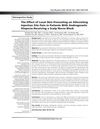
 This retrospective study found that applying local skin precooling before scalp nerve block significantly reduced injection site pain during PRP mesotherapy for patients with androgenetic alopecia, compared to those who did not receive precooling, thus improving patient comfort and compliance.
75 citations
,
January 2004 in “Molecular and Cellular Biology” In this study, EDA-A2 transgenic mice exhibited multifocal myodegeneration dependent on XEDAR, suggesting a potential role for XEDAR in skeletal muscle homeostasis.
 October 2021 in “Revista Medicina Cutánea Ibero-Latino-Americana”
 This case report describes a patient who developed PRIDE syndrome-associated skin issues, including a pruritic papulopustular rash and alopecia, after starting treatment with the EGFR inhibitor erlotinib.