 6 citations
,
January 2016 in “JAMA Dermatology”
6 citations
,
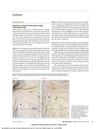
January 2016 in “JAMA Dermatology” This article discusses the presence of dirty dots as a normal trichoscopic finding in children, noting they are not observed in adults or other age groups, and reports no new results.
6 citations
,
October 2003 in “Journal of applied polymer science” This study found that using poly(ethylene imine) as a counterion reagent improved the colorability and shampoo fastness of bleached human hair when dyed with an acid dye.
 5 citations
,
July 2017 in “Women & Health”
5 citations
,
July 2017 in “Women & Health” This study found that nursing women in the West Bank of Palestine who lived in cities and consumed energy beverages had higher blood zinc levels.
 5 citations
,
February 2015 in “Dermatologic Surgery”
5 citations
,
February 2015 in “Dermatologic Surgery” Two cases of a rare skin condition were successfully treated with laser therapy, offering a non-surgical treatment option.
 5 citations
,
July 2006 in “Contact dermatitis”
5 citations
,
July 2006 in “Contact dermatitis” This case report indicates that contact dermatitis on the face can result from using a bleaching ointment containing ammonium bisulfite during hair-dyeing.
 4 citations
,
October 2022 in “Elsevier eBooks”
4 citations
,
October 2022 in “Elsevier eBooks” This review discusses the benefits of plant-derived biosurfactants for cleaning and personal care, highlighting their environmental friendliness, cost-effectiveness, and positive effects on skin and hair, such as strengthening hair follicles and promoting growth, with a focus on saponin-rich Indian plants.
 4 citations
,
January 2018 in “Urology & Nephrology Open Access Journal”
4 citations
,
January 2018 in “Urology & Nephrology Open Access Journal” This case report details an instance of acute kidney injury following the inhalation of hair dye during a hairstyle session.
 4 citations
,
May 2014 in “PubMed”
4 citations
,
May 2014 in “PubMed” This study found that monoethanolamine-based hair color formulations caused significantly more damage to hair than ammonia-based formulations, especially at high concentrations.
 4 citations
,
July 1992 in “Clinics in Dermatology”
4 citations
,
July 1992 in “Clinics in Dermatology” Skin surgery has significantly advanced since 1950, with improvements in chemical peels, hair restoration, lasers, and Mohs surgery, and the development of less invasive techniques and specialized training.
3 citations
,
June 2008 in “Springer eBooks” Hair care products clean, protect, style, color, and change hair structure.
 3 citations
,
March 2008 in “Medical laser application”
3 citations
,
March 2008 in “Medical laser application” This review highlights recent advances in laser treatments for skin disorders, including the optimization of vascular lesion treatment and improved safety for hair removal, but reports no new results.
 3 citations
,
January 2007 in “Journal of health science”
3 citations
,
January 2007 in “Journal of health science” This study found that an enzymatic method effectively identified chemical treatments like perming and dyeing by detecting higher degradation in treated hair compared to untreated hair.
3 citations
,
October 2006 in “Journal of dermatology” This study reported that X-ray microscopy provides more intact images of hair's internal structure compared to transmission electron microscopy, particularly for observing fine details like cuticle coarsening and cortex cracks.
2 citations
,
May 2020 in “Journal of the American Academy of Dermatology” This study suggests that higher use of phytoestrogen-containing hair and personal care products may increase the association between permanent hair dye, straightener use, and breast cancer risk in black women.
 2 citations
,
January 2017 in “Journal of Pigmentary Disorders”
2 citations
,
January 2017 in “Journal of Pigmentary Disorders” This study explores the complex and not yet fully understood causes of premature hair greying, noting genetic factors such as Pax3 and MITE genes, potential defects in melanin transfer, and associations with certain syndromes, while stating that effective treatments are currently lacking.
 2 citations
,
January 2017 in “Journal of Biotechnology Research Center”
2 citations
,
January 2017 in “Journal of Biotechnology Research Center” This study found that hair dyes significantly affect DNA sequence analysis, with the organic extraction method performing better on hair shafts and the prepFiler kit yielding higher success for follicle-included samples.
2 citations
,
January 2010 in “Side effects of drugs annual” This review discusses the adverse effects of dermatological drugs, topical agents, and cosmetics, reporting no new clinical findings; the authors highlight several concerns such as cancer risk from hair dyes and systemic absorption issues with minoxidil.
1 citations
,
April 2019 in “PubMed” In this study, researchers found that papain-treated or mechanically altered Asian scalp hair fibers allowed for spontaneous ion movement and anthocyanin dye flow through the medulla tube, with dye flow enhanced by applied DC voltage.
 1 citations
,
January 2018 in “Journal of Cosmetic and Laser Therapy”
1 citations
,
January 2018 in “Journal of Cosmetic and Laser Therapy” The editorial introduces various topics on laser and cosmetic treatments in a medical journal.
1 citations
,
May 2017 in “Journal of cosmetic and laser therapy” This study found that lasers and light devices may alleviate recalcitrant skin side effects in cancer patients treated with EGFR inhibitors, offering an alternative for those who do not respond to traditional therapies.
 1 citations
,
July 2016 in “Cosmetics”
1 citations
,
July 2016 in “Cosmetics” This review highlights a case of cross sensitization to dyes from temporary henna tattoos and stresses the need for public awareness on the risks associated with these tattoos.
1 citations
,
July 2014 in “The journal of investigative dermatology/Journal of investigative dermatology” This review discusses various topics from the 62nd Annual Montagna Symposium on the Biology of Skin, focusing on the diverse effects of light on skin biology, and reports no new clinical results.
1 citations
,
April 2013 in “Pakistan Journal of Biological Sciences” This study found that hair coloring, waving, and ironing were associated with increased hair abnormalities compared to untreated hair in Iranian women.
1 citations
,
January 2012 in “Human health handbooks” This review discusses the factors influencing human hair color, including genetic components like the MC1R gene and enzyme activity, without presenting new experimental results.
1 citations
,
September 2008 in “International Journal of Cosmetic Science” This study demonstrated that using chelants like N , N ′ ‐ethylenediamine disuccinic acid in hair coloring products can significantly reduce keratin fiber damage by preventing the formation of metal-induced free radicals.
 1 citations
,
January 2001 in “Dermatologic Surgery”
1 citations
,
January 2001 in “Dermatologic Surgery” Pulsed dye laser and hydrogel dressings effectively treat hypertrophic scars.
1 citations
,
February 1989 in “PubMed” In this study, human hair-carboxymethylated protein analysis showed that weathering for over 2.5 years can obscure electrophoretic patterns, while cosmetic treatments did not cause significant changes.
1 citations
,
January 1988 This study found that hair treatments applied after chlorination, especially bleaching and dyeing, more significantly altered surface properties and weight loss, while perming most strongly affected tensile properties.
 May 2026 in “Brazilian Journal of Hair Health”
 This study found that bleaching significantly damages hair structure and increases combing difficulty, while dyeing with emulsifiers can partially reduce damage and improve combability, yet both processes cause notable protein loss.
 May 2026 in “Zenodo (CERN European Organization for Nuclear Research)”
 In this study, a herbal hair dye was formulated and tested, showing good stability and quality. The addition of Barleria prionitis flower enhanced color intensity and conditioning effects, suggesting it as a safe and effective natural alternative to chemical dyes.