41 citations
,
July 2016 in “Journal of Investigative Dermatology” This study identified molecular differences between dysplastic nevi and common melanocytic nevi, including altered keratinocyte differentiation, increased hair follicle-related molecule expression, and distinct immune microenvironment characteristics in dysplastic nevi.
 25 citations
,
June 2021 in “Developmental Cell”
25 citations
,
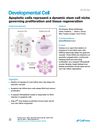
June 2021 in “Developmental Cell” In this study, researchers found that deleting Caspase-9 in hair follicle stem cells delayed apoptosis, leading to accelerated wound repair and new hair follicle regeneration by maintaining apoptotic cells as signaling centers.
18 citations
,
January 2017 in “PloS one” This study identified 295 genes with differential expression in Yangtze River Delta White Goats that produce high-quality brush hair, suggesting these genes and the MAPK signaling pathway may influence hair quality traits.
 2 citations
,
September 2022
2 citations
,
September 2022 In this study, researchers found that a PER3 gene SNP may be pathogenic for a new subtype of dyschromatosis universalis hereditaria, especially when combined with a SASH1 mutation.
January 2018 in “VCU Scholars Compass (Virginia Commonwealth University)” In this study using Xenopus laevis embryos, reduced levels of the desmosomal protein desmoplakin led to defects in epidermal and cardiac structures, suggesting its crucial role in tissue integrity.
132 citations
,
August 2008 in “Development” This research found that Dlx3 plays a central role in hair formation and regeneration, with its absence leading to alopecia through disrupted differentiation and signaling pathways.
8 citations
,
June 2020 in “The journal of investigative dermatology/Journal of investigative dermatology” This study provides definitive evidence that a homozygous mutation in the DSC3 gene causes skin fragility and hypotrichosis in humans.
July 2025 in “Journal of Investigative Dermatology”  August 2019 in “Journal of Investigative Dermatology”
 This study found that the desmosomal protein desmoplakin is crucial for proper epidermal morphogenesis and radial intercalation in developing Xenopus embryos, affecting keratin organization and ectodermal structures.
 11 citations
,
May 2015 in “Stem Cells Translational Medicine”
11 citations
,
May 2015 in “Stem Cells Translational Medicine” This study found that megestrol acetate increases the proliferation, migration, and adipogenic differentiation of adipose-derived stem cells through glucocorticoid receptor phosphorylation.
 3 citations
,
February 2022 in “Frontiers in cell and developmental biology”
3 citations
,
February 2022 in “Frontiers in cell and developmental biology” This study found that the circular RNA circCOL1A1 influences the formation of superior-quality brush hair in white goats by regulating hair follicle stem cell behavior and interacting with the miR-149-5p/CMTM3/AR axis.
 April 2023 in “Journal of Investigative Dermatology”
 In this study using a mouse model of Pemphigus vulgaris, researchers found that loss of desmoglein 3 adhesion in hair follicle stem cells triggers a regenerative program restoring stem cell function, requiring Hedgehog pathway suppression.
1 citations
,
July 2006 in “Journal of Investigative Dermatology” A 4kb fragment of the desmocollin 3 promoter targets gene expression to specific skin and hair follicle areas.
 7 citations
,
July 2005 in “Journal of Dermatological Science”
7 citations
,
July 2005 in “Journal of Dermatological Science” This study identified a gene transcript overexpressed in dermal papilla cells, showing strong similarity to a mouse gene associated with adipose tissue in bombesin receptor subtype-3-deficient mice.
7 citations
,
August 2008 in “Immunogenetics” A gene mutation in mice causes increased mast cells and disorganized hair follicles in their skin.
October 2021 in “The journal of investigative dermatology/Journal of investigative dermatology” This study found that mechanical disruption of the desmosomal cadherin Dsg3 in hair follicle stem cells activates them from quiescence, highlighting its role as a key regulator of stem cell quiescence and epithelial niche integrity.
 August 2022 in “Frontiers in genetics”
 This study identified a novel bi-allelic missense variant in the DSC3 gene linked to severe Hypotrichosis with Recurrent Skin Vesicles in a Saudi child, supporting its role in the condition.
 336 citations
,
August 2015 in “European Journal of Epidemiology”
336 citations
,
August 2015 in “European Journal of Epidemiology” This article reviews the design and objectives of the Rotterdam Study, as well as summarizes major findings, without reporting new results.
 306 citations
,
April 2019 in “International Journal of Molecular Sciences”
306 citations
,
April 2019 in “International Journal of Molecular Sciences” This review discusses the protective roles of skin-resident immune cells in maintaining tissue homeostasis and facilitating wound healing, but reports no new experimental findings.
 265 citations
,
July 2012 in “Cell”
265 citations
,
July 2012 in “Cell” This study found multipotent progenitors in sweat ducts that become unipotent after sweat gland development, highlighting distinct regenerative capabilities in adult glandular skin stem cell populations.
 245 citations
,
January 2018 in “Bone Research”
245 citations
,
January 2018 in “Bone Research” This review discusses the role of TGF-β signaling in stem cell recruitment and tissue regeneration, indicating that abnormalities in TGF-β activation contribute to various major diseases and suggesting avenues for therapeutic intervention.
 196 citations
,
March 2016 in “Nature Communications”
196 citations
,
March 2016 in “Nature Communications” In this study, researchers identified 18 genetic associations with scalp and facial hair traits in Latin Americans, including novel loci for hair greying and balding, with implications for understanding hair evolution.
 156 citations
,
December 2012 in “Cell Stem Cell”
156 citations
,
December 2012 in “Cell Stem Cell” This review explores the role of TGF-β superfamily pathways in stem cell environments and their implications for tissue regeneration and cancer development, reporting no new experimental results.
 106 citations
,
October 2016 in “Cell Stem Cell”
106 citations
,
October 2016 in “Cell Stem Cell” This study found that PDGFA is critical for the proliferation and maintenance of adipocyte stem cells in skin but not other white adipose tissues, highlighting unique regulatory mechanisms in different tissue depots.
 67 citations
,
August 2007 in “American Journal of Pathology”
67 citations
,
August 2007 in “American Journal of Pathology” This study found that overexpression of the mineralocorticoid receptor in a mouse model led to premature epidermal barrier development, keratinocyte apoptosis, and postnatal alopecia, indicating new roles for MR signaling in skin physiology.
 61 citations
,
September 2010 in “Genomics”
61 citations
,
September 2010 in “Genomics” This study found distinct gene expression profiles in alopecia areata-affected skin, suggesting T-cell mediated immune responses and unique gene profiles between different stages of the disease.
 54 citations
,
October 2023 in “Oncogene”
54 citations
,
October 2023 in “Oncogene” In this review, the researchers detailed how the p63 transcription factor influences epithelial stem cell activities such as self-renewal, differentiation, and proliferation, highlighting the role of TAp63 and ΔNp63 isoforms in both normal tissue development and cancer pathogenesis.
 54 citations
,
November 2017 in “Scientific Reports”
54 citations
,
November 2017 in “Scientific Reports” In this study, researchers observed that hyperandrogenic PCOS patients exhibited distinct miRNA and TGFβ signaling gene expression patterns in granulosa cells, suggesting these factors may play a role in PCOS pathogenesis.
 50 citations
,
April 2014 in “Nature Communications”
50 citations
,
April 2014 in “Nature Communications” This study analyzed skin from 538 knockout mouse mutants and identified 50 with epidermal phenotypes, providing valuable insights into genetic conditions and systemic effects related to skin abnormalities.
 48 citations
,
January 2012 in “The journal of investigative dermatology/Journal of investigative dermatology”
48 citations
,
January 2012 in “The journal of investigative dermatology/Journal of investigative dermatology” This study identified chemokine receptor ligands cxcl10 and cxcl11 as new hair-specific transcriptional targets of the Eda pathway, suggesting chemokine signaling plays a role in primary hair follicle patterning.