 40 citations
,
November 1998 in “The journal of investigative dermatology/Journal of investigative dermatology”
40 citations
,
November 1998 in “The journal of investigative dermatology/Journal of investigative dermatology” This study found that the S100A3 gene is exclusively expressed in hair follicle cells differentiating into hair shaft components in mice, suggesting its important role in hair formation.
24 citations
,
May 2009 in “The FASEB Journal” This study found that Akt2 and SGK3 are crucial for postnatal hair follicle development in mice, as their combined absence led to severe hair growth defects due to disrupted β-catenin-dependent transcriptional processes.
22 citations
,
March 2019 in “The Journal of Cell Biology” This study identified that the Wave complex proteins ABI1 and Wave2 play a crucial role in regulating epidermal shape and growth during skin development, notably influencing SOX9 expression and Wnt signaling pathways.
 1 citations
,
September 2017 in “Journal of Investigative Dermatology”
1 citations
,
September 2017 in “Journal of Investigative Dermatology” The researchers reported that inhibiting 11β-HSD1 activity in human dermal papilla cells may reduce the negative effects of glucocorticoids on hair growth, suggesting potential treatment for stress-related hair loss.
 11 citations
,
December 2014 in “The American journal of pathology”
11 citations
,
December 2014 in “The American journal of pathology” This study found that a genetic deletion causing truncated desmoglein 3 protein in mice led to severe pathologies, including cyclic hair loss and immunodeficiency, suggesting possible implications for human desmosome-related diseases.
 57 citations
,
July 2005 in “Genetics”
57 citations
,
July 2005 in “Genetics” In this study on Drosophila wings, researchers identified 435 genes with significant expression changes during wing hair morphogenesis, and found new phenotypes for 9 genes through functional validation.
26 citations
,
March 1995 in “Differentiation” This study isolated and sequenced the complete gene rKAP4L1, which encodes a cysteine-rich hair keratin-associated protein in rabbit hair follicles.
This case report describes a novel mutation in the CDH3 gene in an 11-year-old Iranian boy with sparse scalp hair and macular dystrophy, leading to altered P-cadherin synthesis.
January 2026 in “Non-coding RNA Research” This study found that low-passage exosomes from dermal papilla cells enhance hair follicle stem cell proliferation and that miR-218-5p may serve as a potential biomarker and therapeutic target for hair growth.
 62 citations
,
January 2004 in “The journal of investigative dermatology/Journal of investigative dermatology”
62 citations
,
January 2004 in “The journal of investigative dermatology/Journal of investigative dermatology” This study identified 16 novel high sulfur KAP genes and two KAP pseudogenes on chromosome 21q23, showing expression in a specific region of the hair fiber cuticle.
39 citations
,
December 1998 in “Journal of Cell Science” This study found that the LEF-1 binding site acts as an enhancer element for the wool keratin intermediate filament gene promoter in hair follicle cortex, with specificity regulated by additional factors.
1 citations
,
April 2023 in “International journal of molecular sciences” In this study, AMACO was found to be non-essential for the formation or function of anchoring cords in mice, despite its presence in the structure.
 18 citations
,
December 2020 in “Frontiers in cell and developmental biology”
18 citations
,
December 2020 in “Frontiers in cell and developmental biology” This study found that extracellular vesicles from low-passage dermal papilla cells may activate hair growth by delivering miR-140-5p, which downregulates BMP2 signaling, suggesting potential therapeutic targets for alopecia.
14 citations
,
August 2014 in “The FASEB Journal” This study found that the catalytically inactive serine protease CAP1/Prss8 can still induce skin disorders in mice and is subject to inhibition by nexin-1, independent of its catalytic activity.
10 citations
,
January 2020 in “Genes & Diseases” In this study, circ-Smad5 was found to inhibit the proliferation and cell cycle progression of JB6 cells by suppressing Wnt/β-catenin/Lef 1 signaling activation, marking the first report of its function.
 31 citations
,
August 2005 in “The American Journal of Dermatopathology”
31 citations
,
August 2005 in “The American Journal of Dermatopathology” This study investigated the histopathology of ectodermal dysplasia/skin fragility syndrome, identifying specific skin and hair abnormalities associated with PKP1 gene mutations in two young female patients.
January 2026 in “Journal of Hair Restoration and Regenerative Medicine” This review discusses methods to better identify unsafe donor areas in patients with diffuse unpatterned alopecia, emphasizing non-surgical management when specific diagnostic criteria are met, but reports no new clinical results.
 195 citations
,
February 2005 in “Journal of biological chemistry/The Journal of biological chemistry”
195 citations
,
February 2005 in “Journal of biological chemistry/The Journal of biological chemistry” This study shows that ZIP7 is a functional zinc transporter in mammalian cells, facilitating the movement of zinc from the Golgi apparatus to the cytoplasm.
 21 citations
,
October 2017 in “Journal of Investigative Dermatology”
21 citations
,
October 2017 in “Journal of Investigative Dermatology” This review discusses recent advances in understanding the molecular landscape of the dermal papilla, particularly focusing on Blimp1's role in hair follicle development and potential therapeutic targets for hair regeneration, but presents no new clinical results.
September 2019 in “The journal of investigative dermatology/Journal of investigative dermatology” This study found that in hidradenitis suppurativa, the proteins SERPINB3/B4 and S100A7/A8/A9 were significantly overexpressed in lesional skin compared to nonlesional skin, suggesting new pathways in the disease's pathogenesis.
 6 citations
,
October 2012 in “Journal of Heredity”
6 citations
,
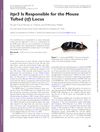
October 2012 in “Journal of Heredity” This study identified the Itpr3 gene as responsible for the tufted hair loss phenotype in the BTBR mouse strain.
21 citations
,
January 2006 in “Hormone Research in Paediatrics” In this case study, a girl with hereditary vitamin D resistant rickets had a novel mutation in the VDR gene that affected hair cycling without causing total alopecia, suggesting ligand-independent VDR function in hair cycling.
56 citations
,
September 2014 in “Molecular Endocrinology” This study found that the absence of unliganded vitamin D receptor significantly impairs cWnt and hedgehog signaling pathways necessary for hair cycle initiation in VDR-null mice.
 28 citations
,
March 2010 in “Histochemistry and cell biology”
28 citations
,
March 2010 in “Histochemistry and cell biology” Skin cells can help create early hair-like structures in lab cultures.
67 citations
,
December 1990 in “The journal of cell biology/The Journal of cell biology” This study identified two evolutionarily conserved ultra-high-sulfur keratin proteins in human and sheep hair follicles, which are specifically expressed in the hair cuticle during the late stages of fiber development.
96 citations
,
March 2007 in “Developmental biology” This study found that the Wnt inhibitor Dkk4 may play a role in regulating hair follicle development through a feedback loop with canonical Wnt signaling pathways.
 11 citations
,
June 2017 in “Journal of cell science”
11 citations
,
June 2017 in “Journal of cell science” In this study, researchers found that AGD1 is crucial for membrane recruitment during root hair development in Arabidopsis thaliana, with its pleckstrin homology domain essential for targeting specific plasma membrane regions.
65 citations
,
September 2014 in “Orphanet Journal of Rare Diseases” This study identified mutations in the STUB1 gene linked to hereditary cerebellar ataxia with cognitive impairment, revealing potential effects on protein function and patient symptoms, including accelerated aging.
January 2009 in “China Practical Medicine” This study found that several genes, including capping protein, palladin, VEGF, and HSPC-related clones, might cooperatively influence the aggregation, proliferation, and cycle control of dermal papilla cells, potentially affecting hair follicle behavior.
 1 citations
,
January 2019 in “Annals of dermatology/Annals of Dermatology”
1 citations
,
January 2019 in “Annals of dermatology/Annals of Dermatology” STAT5 is crucial for hair growth in 3D cultured human dermal papilla cells.