 13 citations
,
June 2007 in “Journal of Dermatological Science”
13 citations
,
June 2007 in “Journal of Dermatological Science” This study identified several genes regulated by dihydrotestosterone in an SV40T-transformed human dermal papilla cell line, which may play a role in androgen-mediated hair growth regulation.
 1 citations
,
July 2022 in “The journal of investigative dermatology/Journal of investigative dermatology”
1 citations
,
July 2022 in “The journal of investigative dermatology/Journal of investigative dermatology” In this open-label trial, Tofacitinib was well tolerated and improved IFN and cytokine scores, as well as overall skin pathology, in individuals with Down syndrome and immune skin conditions.
 104 citations
,
March 2014 in “The Journal of clinical endocrinology and metabolism/Journal of clinical endocrinology & metabolism”
104 citations
,
March 2014 in “The Journal of clinical endocrinology and metabolism/Journal of clinical endocrinology & metabolism” In this study, DHT and calculated free DHT were linked to higher risks of incident cardiovascular disease and all-cause mortality in elderly men, while total testosterone and calculated free testosterone showed no such associations.
12 citations
,
September 2014 in “Bone” This study characterized two siblings with hereditary vitamin D resistant rickets and a mutation in the vitamin D receptor, finding no immune-related disorders despite a defective T cell response to vitamin D.
14 citations
,
June 2011 in “Journal of Dermatological Science” TSH influences keratin expression in human hair follicles.
33 citations
,
October 2005 in “Journal of Investigative Dermatology” A specific gene mutation causes sparse, brittle hair in a family.
8 citations
,
June 2001 in “Journal of Biological Chemistry” This study found that the truncated hHb1-DeltaN transcript in breast cancer cells is produced by a cryptic intron promoter and responds to DNA demethylation, potentially altering cancer cell adhesion.
May 2025 in “Pakistan Armed Forces Medical Journal” This study found that topical Dithranol 0.5% is more effective than topical Tacrolimus 0.1% for hair regrowth in patients with alopecia areata, with 40% of Dithranol-treated patients showing over 80% hair regrowth compared to 23.33% for Tacrolimus-treated patients.
1 citations
,
November 2023 in “Journal of Investigative Dermatology” Farudodstat may effectively treat alopecia areata without harming hair follicles.
1 citations
,
April 2016 in “Journal of Investigative Dermatology” Patients with Focal Dermal Hypoplasia often experience skin, nail, hair, and bone issues, and may benefit from calcium and vitamin D supplements.
1 citations
,
February 2025 in “Toxicology in Vitro” In this study, DPHC from the brown alga Ishige okamurae demonstrated potential to prevent androgenic alopecia by inhibiting hair loss and promoting hair growth through multiple cellular mechanisms.
 8 citations
,
July 1990 in “Archives of Dermatology”
8 citations
,
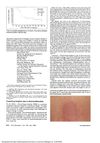
July 1990 in “Archives of Dermatology” This case report details a fixed-drug eruption in a woman linked to the use of dextromethorphan, marking it as a previously unreported skin reaction to this medication.
23 citations
,
January 2017 in “BMC Medical Genetics” This study presents the first reported Spanish case of Hypotrichosis with Juvenile Macular Dystrophy, identifying a new CDH3 mutation and highlighting the importance of clinical and genetic evaluation for accurate diagnosis.
 1 citations
,
February 2022 in “Clinical, Cosmetic and Investigational Dermatology”
1 citations
,
February 2022 in “Clinical, Cosmetic and Investigational Dermatology” In this study, researchers found that the thyroxine receptor agonist TDM10842 accelerated the onset of anagen, a hair growth phase, in C3H mice, potentially through activation of the Wnt/beta-catenin and Hedgehog pathways, with Pclaf playing a key role in this process.
September 1978 in “Journal of steroid biochemistry/Journal of Steroid Biochemistry” This review discusses the antimicrobial and protective effects of hesperidin and hesperetin against various toxicities, with potential mechanisms explored, but it reports no new research findings.
July 2025 in “Journal of Investigative Dermatology” Androgens reduce THY1 in skin cells, leading to less fat, more fibrosis, and worse healing in males.
15 citations
,
June 2019 in “Biochemical Journal” This study identified a heterozygous de novo mutation in the ODC1 gene causing a new disorder characterized by overgrowth and developmental delay, and suggests that DFMO treatment may help manage elevated ODC activity and putrescine levels.
March 2003 in “中華皮膚科醫學雜誌” This report describes a patient with trichothiodystrophy exhibiting both specific hair abnormalities and developmental delay, contributing to the understanding of this rare disorder's clinical presentation.
October 2024 in “Journal of the Endocrine Society” This case report highlights that a patient with resistance to thyroid hormone was misdiagnosed as having Graves’ disease, leading to unnecessary radioactive iodine treatment.
188 citations
,
October 2014 in “Thyroid” This study found that dabrafenib was well tolerated and led to durable responses in patients with BRAF-mutant differentiated thyroid carcinoma, with a median progression-free survival of 11.3 months.
15 citations
,
November 2012 in “Archives of Ophthalmology” This description of dystrophy hypotrichosis associated with juvenile macular dystrophy provides an overview of this rare disorder characterized by short hair from birth and progressive loss of central vision but reports no new findings.
December 2020 in “Journal of Skin and Sexually Transmitted Diseases” This study found no significant correlation between serum testosterone or DHEAS levels and the severity of acne or FPHL in a localized female population, but noted most patients had low testosterone levels.

In a case report, this study identified a new genetic variant in a six-year-old girl from Saudi Arabia with hypotrichosis and juvenile macular dystrophy, expanding the understanding of the genetic spectrum of this rare condition in the region.
1 citations
,
May 2024 in “Communications Biology” This study found that Dab2 conditional knockout mice experienced delayed hair follicle cycles and reduced hair follicle stem cell activity, suggesting Dab2's crucial role in regulating stem cell activation and anti-aging process in hair follicles.
5 citations
,
June 2015 in “The Journal of Dermatology” This study identified "HTLV-1-associated lichenoid dermatitis" as a skin condition in HTLV-1-infected individuals, characterized by reactive eruptions associated with increased immunity toward infected CD4+ T cells.
January 2016 in “DSpace - FIRAT (Fırat University)” November 2024 in “Journal of Investigative Dermatology” Dermal IgA deposition without symptoms is rare in Dermatitis herpetiformis risk groups.
January 1982 in “Clinical Cosmetic and Investigational Dermatology” This case report describes a 54-year-old woman with familial dyskeratotic comedones who experienced slight improvement in her skin lesions after three months of treatment with topical retinoids and urea cream.
37 citations
,
April 2013 in “PLoS ONE” In this study, the researchers found that thymosin beta-4 promotes odontoblastic differentiation in human dental pulp cells, suggesting it as a potential mechanism for regenerative endodontics.
 10 citations
,
February 2008 in “Photochemistry and photobiology”
10 citations
,
February 2008 in “Photochemistry and photobiology” This study suggests that the vitamin D receptor and hairless gene may directly regulate each other via a transcriptional mechanism, potentially explaining phenotypic similarities between atrichia and VDRRIIa rickets.