
Custom skincare can be made based on genes, fewer cats in Lublin have FeLV/FIV than national average, and studies also looked at small water bodies, river pollution, guppy growth, toxins in biochars, palm oil issues, and pumpkin seed oil for hair strength.
 February 2023 in “Acta Scientific Women s Health”
 This review examines emerging and past therapies for recurrent implantation failure, focusing on three innovative strategies: PBMC, G-CSF, and PRP, but reports no new clinical results.
This article provides tables summarizing various medical conditions and symptoms related to COVID-19, sepsis, and cardiovascular issues, but it does not report new research findings.
 January 2023 in “Marmara University Open Access System”
 This study found that tideglusib delivered topically in a bacterial cellulose hydrogel showed positive effects on the wound healing of rat palatal mucosa, as observed through macroscopic, histomorphometric, and immunohistochemical evaluations.
 October 2022 in “International Journal of Homoeopathic Sciences”
 This case report describes a 28-year-old male patient with alopecia areata who received Natrium Muriaticum as an individualized homeopathic treatment for hair loss in his beard area, but it provides no broader clinical findings.
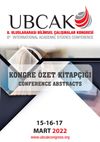 March 2022 in “Marmara University Open Access System”
 This article critically examines the relationship between new media and digital games, emphasizing their cultural and historical contexts, but provides no new empirical findings.
 September 2018 in “Asian journal of pharmacy and pharmacology”
 This review discusses the nutritional and therapeutic benefits of honey based on its botanical origin, and it reports no new clinical results, instead calling attention to its varied uses and potential health impacts.

This thesis explores how optical coherence tomography and advanced imaging methods may address clinical needs in fields like interventional pulmonology and dermatology, highlighting their potential for disease assessment and staging.
 April 2017 in “International journal of research in Ayurveda and pharmacy”
 This review explores the concept of cosmetic toxicity in Ayurveda, focusing on chemical hazards in cosmetics and their management, but provides no new clinical findings.
 March 2017 in “De Gruyter eBooks”
 The Leechbook shows how hair and sexual health were key to medieval masculinity and some remedies may still be useful.

This chapter discusses the role of orthognathic surgeons in facial feminization surgery, focusing on procedures such as forehead reduction and orbital rim contouring, but reports no new clinical results.

This paper discusses advancements in forensic hair analysis, emphasizing a novel DART–HRMS method that improves the accuracy and efficiency of detecting drug use timelines.
This study reported that high cholesterol levels were linked to increased prostate cancer risk, while selenium supplementation affected gene expression, suggesting nutritional and clinical factors might influence prostate cancer risk and biology.
This study found that mouse type II spiral ganglion neurites in vitro avoided laminin and high concentrations of fibronectin, indicating both can guide neurite paths differently than type I neurites.
 January 2009 in “Springer eBooks”
 The document concludes that treating skin conditions should include psychological care and a multidisciplinary approach is essential for effective management.

This review summarizes the proposed model that describes how different shapes of 1alpha,25(OH)2D3 ligands interact with the vitamin D receptor to mediate genomic and rapid responses in cells.
 January 2006 in “mediaTUM – the media and publications repository of the Technical University Munich (Technical University Munich)”
 This study found that carbon and nitrogen isotope analysis of cattle hair reflects dietary and farm system differences, offering insights into cattle nutritional ecology and agroecosystem characteristics.
 September 2003 in “Journal of the Royal Society of Medicine”
 The book has valuable information but is hard to read due to poor writing.
 September 2003 in “Journal of the Royal Society of Medicine”
 Doctors should set boundaries and seek outside help for family medical issues.
 September 2003 in “Journal of the Royal Society of Medicine”
 Understanding breast cancer requires considering both medical advancements and social influences.
 September 2003 in “Journal of the Royal Society of Medicine”
 Improving end-of-life care at home requires better coordination, communication, and support.
 September 2003 in “Journal of the Royal Society of Medicine”
 The book is a useful reference for forensic medicine with some areas needing expansion for multicultural relevance.
 September 2003 in “Journal of the Royal Society of Medicine”
 The book is a comprehensive guide for forensic practitioners and exam candidates.
 April 2003 in “Experimental Dermatology”
 This workshop review from the Australian Hair and Wool Research Society discusses findings in cutaneous biology and endocrinology but presents no new research results.
 70 citations
,
August 2020 in “Nanomaterials”
70 citations
,
August 2020 in “Nanomaterials” This review discusses the development of electrospun nanofibrous scaffolds for promoting angiogenesis in tissue engineering but notes that their clinical application beyond bone and skin repair is still limited.
 26 citations
,
May 2021 in “International Journal of Molecular Sciences”
26 citations
,
May 2021 in “International Journal of Molecular Sciences” In this review, researchers examined the physiological benefits of Cheonggukjang, a salt-free fermented soybean paste, highlighting its various health-promoting components that may contribute to improved heart health, diabetes management, and cancer prevention, among other benefits.
 14 citations
,
May 2021 in “Marine Drugs”
14 citations
,
May 2021 in “Marine Drugs” This review discusses the therapeutic properties of polydeoxyribonucleotides derived from marine organisms for wound healing and inflammation, but it reports no new clinical results.
 4 citations
,
February 2021 in “Nano select”
4 citations
,
February 2021 in “Nano select” This review discusses the role and therapeutic potential of mesenchymal cell-derived exosomes in organ development and disease treatment, highlighting their application in cell-free therapeutic strategies and current challenges faced in their use.
 3 citations
,
December 2018 in “Meta Gene”
3 citations
,
December 2018 in “Meta Gene” This study applied a prediction model based on five SNPs to Russian males with male pattern hair loss, finding a significant association between the AR genomic region and high dihydrotestosterone levels in these patients.
 295 citations
,
September 2006 in “Cell Cycle”
295 citations
,
September 2006 in “Cell Cycle” This review discusses the role of the TOR pathway in aging and suggests that rapamycin could potentially target age-related diseases, but reports no new clinical results.