6 citations
,
August 2013 in “Facial plastic surgery clinics of North America” This article discusses the philosophy and strategies for dense packing in hair transplantation, emphasizing that not all patients are candidates, and reports no clinical results.
1 citations
,
April 2025 in “Clinical Cosmetic and Investigational Dermatology” This report describes a rare case of porokeratotic eccrine ostial and dermal duct nevus in a 64-year-old woman, successfully treated with CO₂ laser, highlighting its potential occurrence in older adults.
5 citations
,
June 2024 in “Pharmacological Research” This study identified neuropilin-1 as the receptor for FOL-026 and showed that it stimulates angiogenesis and cell growth, suggesting potential for vascular repair and enhanced angiogenesis therapies.
 November 2022 in “Journal of Investigative Dermatology”
 This study observed that three-dimensional cultures of dermal papilla cells enhanced endothelial cell migration and angiogenesis in vitro, which may improve vascularization in tissue-engineered skin constructs.
This study found changes in the PGI2 pathway, especially in gene and protein expression, in diabetic mice, but did not observe PGI2-dependent vasomotor dysfunction.
 42 citations
,
February 1998 in “The Journal of Steroid Biochemistry and Molecular Biology”
42 citations
,
February 1998 in “The Journal of Steroid Biochemistry and Molecular Biology” This study found that PNU 157706 is a highly potent inhibitor of human 5α-reductase enzymes, showing a stronger and longer-lasting antiprostatic effect in rats compared to finasteride.
The interdisciplinary approach improved the quality of life for a Parkinson's patient and eased staff workload.
1 citations
,
August 2024 in “Skin Health and Disease” Among pediatric alopecia areata patients treated with DPCP, this study reported complete hair regrowth in 8.8% and any regrowth in 61.8% after one year, with better outcomes for those with milder initial symptoms and longer treatment durations.
 7 citations
,
September 2018 in “Journal of cosmetic dermatology”
7 citations
,
September 2018 in “Journal of cosmetic dermatology” This case report describes a patient who developed acute, painful lymphadenopathy after microneedling with platelet-rich plasma, suggesting a need to include this potential risk in patient consent forms and education.
 3 citations
,
June 1987 in “British Journal of Dermatology”
3 citations
,
June 1987 in “British Journal of Dermatology” In this study, nifedipine provided rapid symptomatic relief in most patients with severe recalcitrant perniosis, but some experienced side effects that limited dosage and two patients were lost to follow-up.
1 citations
,
April 2025 in “Journal of Applied Polymer Science” This study found that microneedles based on polyphosphazene with green tea polyphenols significantly enhanced wound healing in a diabetic rat model.
May 2024 in “Regenerative Therapy” This laboratory study found that dendrobium officinale polysaccharide (DOP) stimulated hair follicle and hair growth in mice by activating the WNT signaling pathway.
 January 2005 in “Elektronische Hochschulschriften der LMU München (Ludwig-Maximilians-Universität München)”
 This study found that a significant portion of alopecia areata patients achieved at least partial hair regrowth with diphenylcyclopropenon therapy, which was more effective in certain subtypes and disease durations.
 August 2026 in “Zenodo (CERN European Organization for Nuclear Research)”
 In this study, a 26-year-old woman with polycystic ovarian disease and advanced hair loss (Ludwig Grade III) showed reduced hair shedding and improved hair density after four sessions of platelet-rich plasma combined with microneedling, with no reported adverse effects.
 86 citations
,
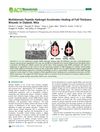
March 2018 in “ACS Biomaterials Science & Engineering”
86 citations
,
March 2018 in “ACS Biomaterials Science & Engineering” This study found that MDP hydrogel significantly accelerated wound healing and improved tissue formation in diabetic mice compared to a standard clinical hydrogel and control buffer.
 June 2025 in “International Journal of Nephrology and Renovascular Disease”
 This study suggests that PLA2R1 overexpression in PMN affects the podocyte cycle and may involve an additional immune response, which could provide new directions for PMN treatment development.
December 2025 in “Zagazig University Medical Journal” This review discusses polydioxanone threads as a promising, minimally invasive treatment for androgenetic alopecia in both males and females, but notes that further research is needed to optimize protocols and outcomes.
 January 2026 in “RSC Advances”
 This study found that the natural polymer-based hydrogel Gel/SA@PL released growth factors in a controlled way, which enhanced tissue regeneration and minimized scarring in the healing of diabetic wounds.
October 2017 in “Our Dermatology Online” This study reports that while DCP had similar treatment efficacy in propylene glycol and isopropanol for alopecia areata, the formulation in isopropanol was better tolerated.
 August 2026 in “Zenodo (CERN European Organization for Nuclear Research)”
 In this study, a 26-year-old woman with polycystic ovarian disease and severe hair loss showed reduced hair shedding and improved hair density following four sessions of platelet-rich plasma combined with microneedling, with no adverse effects reported.
12 citations
,
March 2021 in “JAAD Case Reports” This study reported that immunotherapy in cancer patients can lead to skin-related immune adverse events, such as rashes, pruritus, and vitiligo, affecting a substantial proportion of patients.
 5 citations
,
August 2019 in “Journal of The American Academy of Dermatology”
5 citations
,
August 2019 in “Journal of The American Academy of Dermatology” This paper reviews the use of microneedling alone and in combination with platelet-rich plasma for various skin conditions, but it reports no new clinical findings.
September 2019 in “Journal of Investigative Dermatology” This study observed that PCE-DP may improve skin pigmentation by increasing epidermal turnover and inhibiting melanin uptake and inflammation in human epidermal keratinocytes.
August 2016 in “Anaplastology” This study reports that controlled release PRP therapy using dalteparin and protamine micro-particles may be effective for hair growth and skin rejuvenation in women.
39 citations
,
January 2008 in “World Journal of Gastroenterology” This report documents the first known case of acute inflammatory demyelinating polyneuropathy potentially linked to pegylated interferon-alpha 2a in a woman undergoing treatment for chronic hepatitis C.
3 citations
,
April 2024 in “JAAD Case Reports” This article reviews DPCP's use as a topical immunotherapy for alopecia areata and discusses its suggested mechanism, but reports no clinical results.
14 citations
,
August 2014 in “Journal of the American Academy of Dermatology” This study found that topical diphenylcyclopropenone is an effective treatment for extensive alopecia areata, with significant hair regrowth reported in most patients, though effectiveness varied with disease characteristics.
 25 citations
,
August 2010 in “Acta Biomaterialia”
25 citations
,
August 2010 in “Acta Biomaterialia” This study achieved a first by successfully forming large quantities of dermal papilla spheroidal microtissues, which retained their hair induction potential, using a micropatterned culture system.
 December 2025 in “Molecules”
 This study found that the 15-PGDH inhibitor DPP improved endothelial function in hair-related cells exposed to DHT by reducing oxidative stress and enhancing angiogenic capacity.
50 citations
,
May 1985 in “The journal of pediatrics/The Journal of pediatrics” This study reported successful treatment of biotin deficiency in three patients receiving total parenteral nutrition, suggesting current biotin supplementation recommendations may be inadequate to maintain normal biotin status.