 40 citations
,
February 1990 in “Journal of The American Academy of Dermatology”
40 citations
,
February 1990 in “Journal of The American Academy of Dermatology” This study presents the first reported case of woolly hair nevus appearing during adolescence, with significant improvement observed 5 years later and structural changes in the hair documented.
3 citations
,
January 2010 in “PubMed” This case study reports that a police dog's pododemodicosis lesions resolved completely six months after a treatment regimen of ivermectin, antibacterial drugs, and beta-glucan.
 1 citations
,
January 2016 in “Journal of cosmetology & trichology”
1 citations
,
January 2016 in “Journal of cosmetology & trichology” Trichoscopy helped diagnose and treat a child's fungal scalp infection by spotting specific hair shapes.
February 2026 in “ACS Applied Materials & Interfaces” This study developed a novel treatment method using carbon dots from Cinnamomum burmannii leaves, which improved hair regeneration and thickness in an AGA mouse model by promoting cell proliferation, angiogenesis, and reducing inflammation through multiple signaling pathways.
March 2025 in “International Journal of Trichology” This study describes a 62-year-old male with trichodaganomania, an urge to bite his mustache hair, who was treated with counseling and placebo medication, highlighting the need for a comprehensive treatment approach including potential psychological and psychiatric interventions if symptoms recur.
May 2025 in “Biomedicine & Pharmacotherapy” This study found that HPD is a potent activator of hair follicle regeneration, surpassing the efficacy of conventional minoxidil treatment by modulating Wnt/β-catenin signaling and enhancing follicular proliferation, indicating its potential as a non-invasive hair restoration therapy.
 August 2026 in “Dermatology and Therapy”
 In this study, researchers identified elongated corkscrew hairs as a new trichoscopic pattern in immunosuppressed adults with chronic endothrix tinea capitis, which may help in earlier diagnosis and targeted mycological investigation.
 April 2023 in “Journal of Investigative Dermatology”
 This study found that in biopsied skin samples of alopecia areata, a lower anagen/telogen ratio was associated with increased T cell infiltration, and enhancing the PD-1/PD-L1 axis may inhibit CD8+T cell infiltration and improve the condition.
3 citations
,
September 2023 in “Genes” This study analyzed the molecular evolution and functional divergence of the Dkk gene family, finding accelerated evolution in Aves and Reptilia and identifying functional differences that may impact hair follicle development via Wnt signaling inhibition.
August 2024 in “Bioorganic Chemistry” This study found that oral administration of cedrol, a component of ginger, improved hair regeneration and reduced hair follicle damage in cyclophosphamide-induced alopecia areata in mice more effectively than external administration, by enhancing cytokine expression and modulating key signaling pathways.
4 citations
,
July 2019 in “Experimental Dermatology” In this study, 2-deoxy D-glucose did not prevent the progression of alopecia areata or promote hair regrowth in a mouse model despite its efficacy in other autoimmune conditions.
February 2023 in “Journal of The American Academy of Dermatology” This publication discusses the use of low-dose oral minoxidil for treating traction alopecia but reports no new clinical outcomes; further research on its efficacy and safety is needed.
1 citations
,
August 2024 in “JAAD Case Reports” This report presents a rare case of diffuse hair loss resembling alopecia areata, following a tick bite on the scalp.
 May 2024 in “JCI insight”
 In this study, researchers discovered a dominant variant in the ADAM17 gene that causes hypotrichosis with woolly hair, where the mutation leads to hair follicle stem cell exhaustion and abnormal hair follicles, resulting in alopecia.
 16 citations
,
September 2015 in “Journal of Ethnopharmacology”
16 citations
,
September 2015 in “Journal of Ethnopharmacology” This review examines the long-standing use of "Dictamnus" in traditional medicine, highlighting the promising potential of D. albus and D. hispanicus as herbal drug candidates, but presents no new experimental findings.
 January 2016 in “Human & Experimental Toxicology”
 This study reported that CCT oligodeoxynucleotide induced patchy hair loss in male mice with specific genetic traits, suggesting gender and genetic preferences in immune response.
 January 2011 in “Reactions Weekly”
 Long-term use of minoxidil may cause hair follicles to transform into noticeable terminal hairs, leading to trichostasis spinulosa.
 5 citations
,
November 2012 in “Actas Dermo-Sifiliográficas”
5 citations
,
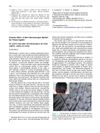
November 2012 in “Actas Dermo-Sifiliográficas” Comma hairs are a new sign for identifying scalp fungal infections.
March 2021 in “Annals of palliative medicine” This meta-analysis found that plum-blossom needling, as an add-on therapy, provided moderate beneficial effects on hair regrowth in alopecia areata patients compared to conventional treatment alone.
January 2015 in “프로그램북(구 초록집)” This study reports significant hair regrowth in two alopecia areata patients resistant to intralesional corticosteroids after treatment with intralesional polydeoxyribonucleotide.
 June 2021 in “International journal of research in dermatology”
 This case report describes a man with trichorrhexis nodosa of the beard, who experienced symptomatic improvement after being advised to shave and avoid brushing, confirming the diagnosis.
 September 2016 in “Journal of The American Academy of Dermatology”
 This case study identified the condition as Monilethrix in a 17-year-old female, characterized by a beaded hair appearance and linked to a genetic cause.
58 citations
,
May 2004 in “British Journal of Dermatology” This study found that topical immunotherapy affects angiogenesis and immune cell ratios in the scalp, potentially offering insights into the mechanisms underlying alopecia areata.
 85 citations
,
February 1989 in “Journal of The American Academy of Dermatology”
85 citations
,
February 1989 in “Journal of The American Academy of Dermatology” This case report describes a newly identified condition called loose anagen hair of childhood, characterized by easily pluckable hair in two young boys, with variable duration and no scalp inflammation or scarring.
10 citations
,
May 2020 in “Frontiers in cell and developmental biology” In this study, researchers found that Dicer, but not Tarbp2, plays a crucial role in regulating the growth phase of hair follicles in post-natal mice.
 7 citations
,
March 2018 in “Asian-Australasian journal of animal sciences”
7 citations
,
March 2018 in “Asian-Australasian journal of animal sciences” This study observed that the OCIAD2 and DCN genes in Liaoning cashmere goats have opposite effects on hair growth by interacting with the TGF-β signaling pathway, influencing follicle morphogenesis and periodic changes.
 3 citations
,
February 2016 in “Dermatologic Therapy”
3 citations
,
February 2016 in “Dermatologic Therapy” Using minoxidil and tretinoin on the skin, along with oral vitamin D, improved hair thickness and density in two girls with woolly hair.
25 citations
,
October 1975 in “Journal of Cutaneous Pathology” This study found that in alopecia areata, hair bulbs are blocked in an early growth stage due to impaired metabolic function in the surrounding connective tissue, hindering hair growth.
2 citations
,
March 2024 in “Pediatric Dermatology” This case report described two siblings with uncombable hair syndrome characterized by unique hair features, and identified a new pathogenic variant in the PADI3 gene (c.1374dup; p. Val459ArgfsTer15) not previously documented.
March 2026 in “World Rabbit Science” This study found that overexpression and knockdown of DKK4 influence genes involved in hair follicle growth and development in Angora rabbits and identified specific SNPs in DKK4 associated with wool quality, notably showing that the TT/GG haplotype combination relates to higher fibre diameters.