2 citations
,
October 1988 in “Steroids” This study found that in non-obese women with moderate body hair growth, DHEA-S and prolactin levels were higher, and SBP was lower compared to controls, which may inform treatment decisions.
67 citations
,
August 2004 in “Endocrinology” This study identified a novel I268T mutation in the vitamin D receptor that reduces its function, contributing to hereditary vitamin D-resistant rickets, and found that a potent vitamin D analog could improve receptor function.
 2 citations
,
January 2016 in “Scientifica”
2 citations
,
January 2016 in “Scientifica” Researchers created a reliable method to measure dexpanthenol and resorcinol in hair products.
April 2026 in “Clinical and Experimental Dermatology” This study found that treating moderate-to-severe prurigo nodularis with dupilumab significantly improved itch severity, skin condition, and quality of life over 104 weeks, with a favorable safety profile, even in elderly and comorbid patients.
 1 citations
,
August 2023 in “Nature communications”
1 citations
,
August 2023 in “Nature communications” In this study, researchers found that Hdac1 and Hdac2 are crucial for maintaining the quiescence and survival of dermal papilla cells in the hair follicle, regulating the hair cycle by controlling cell-cycle genes and Wnt signaling.
 October 2020 in “Journal of bio innovation”
 In this study, DanEra, an herbal hair tonic from Pomegranate and Beetroot extracts, showed equivalent effectiveness to the standard drug Ketoconazole in microbiological tests and provided significant relief from severe dandruff in all volunteers within 10 days.
June 2024 in “The Journal of Nutritional Biochemistry” This study found that 1,25-dihydroxyvitamin D3 promotes hair growth and regeneration in mice by prolonging the anagen phase and counteracting DHT's inhibitory effects, suggesting its potential therapeutic role for androgenetic alopecia.
20 citations
,
March 2021 in “Drug design, development and therapy” This review summarizes the pharmacology, mechanisms, and clinical efficacy of topical immunotherapy for alopecia areata but reports no new clinical results.
1 citations
,
April 2001 in “Biological Rhythm Research” This study suggests that D2O increases hair length in nude mice by extending the hair cycle duration, particularly the hair-existing phase, which is associated with increased mast cell density.
January 2004 in “DOAJ (DOAJ: Directory of Open Access Journals)” This study found no elevation of serum DHEA-S levels in men with androgenetic alopecia and observed no correlation between DHEA-S levels and the clinical stage of the condition.
2 citations
,
January 2012 in “Journal of Clinical & Experimental Dermatology Research” This study found that adding fexofenadine to DPCP treatment in non-atopic Alopecia areata patients did not significantly improve hair regrowth, but it did significantly reduce treatment-related discomfort.
 1 citations
,
June 2023 in “Journal of applied crystallography”
1 citations
,
June 2023 in “Journal of applied crystallography” This study utilized the DNP–SANS technique on human hair for the first time and found significant changes in the SANS profile dependent on polarization conditions, providing insights into the structural composition and dynamic properties of keratin and its associated proteins.
July 2014 in “Journal of the Dermatology Nurses' Association” This article summarizes lessons and tips from the Dermatology Nurses’ Association’s annual conference, sharing insights on various dermatology topics but does not present new research results.
8 citations
,
July 2015 in “International Journal of Dermatology” This study reports that a homozygous A1103G mutation in DSG 4 is responsible for localized autosomal recessive hypotrichosis in a 2-year-old Chinese girl, resulting in reduced DSG 4 expression and hair defects.
 1 citations
,
November 2023 in “Journal of Cutaneous and Aesthetic Surgery”
1 citations
,
November 2023 in “Journal of Cutaneous and Aesthetic Surgery” This study found that diode laser effectively reduces unwanted facial hair in darker skin types and reported no serious adverse events, suggesting that trichoscopy is an underutilized tool for assessing laser hair reduction outcomes.
 8 citations
,
April 2011 in “Surgery today”
8 citations
,
April 2011 in “Surgery today” This study found that sodium zinc dihydrolipoylhistidinate reduced chemotherapy-induced hair loss in rats, suggesting its potential as a treatment for this side effect.
November 2024 in “Journal of Investigative Dermatology” This study found that recombinant human ADM2 treatment inhibited cell proliferation and induced apoptosis in human hair follicles, contrasting with the previously documented pro-proliferative and anti-apoptotic functions of ADM2.
March 2026 in “Journal of the American Academy of Dermatology” Hair diameter diversity could improve androgenetic alopecia assessment and treatment planning.
27 citations
,
September 1994 in “The journal of investigative dermatology/Journal of investigative dermatology” This study found that relatively low concentrations of 1,25(OH)2D3 stimulated human hair follicle and fiber growth, while higher concentrations inhibited growth in a whole-organ culture system.
 6 citations
,
August 1989 in “European journal of pediatrics”
6 citations
,
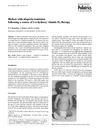
August 1989 in “European journal of pediatrics” This case study describes a child with rickets and alopecia who responded to a small dose of 1-a-hydroxyvitamin D3, but her alopecia remained unchanged despite treatment.
41 citations
,
September 2010 in “British journal of dermatology/British journal of dermatology, Supplement” In this study, hirsute women with normal or medically normalized testosterone levels experienced similar, though declining, hair reduction from both intense pulsed light and long-pulsed diode laser treatments over six months.
1 citations
,
April 2016 in “Journal of Investigative Dermatology” Patients with Focal Dermal Hypoplasia often experience skin, nail, hair, and bone issues, and may benefit from calcium and vitamin D supplements.
21 citations
,
January 1998 in “Urologia internationalis” This study found that combining dibenyline and finasteride for symptomatic BPH treatment offered modest improvements with fewer additional side effects compared to each drug alone.
April 2023 in “Journal of Investigative Dermatology” In this study, trypsin digestion was found to be a faster and more efficient method than the explant technique for extracting bulge-derived keratinocytes from adult scalp biopsies.
 30 citations
,
January 2009 in “Nuclear Receptor Signaling”
30 citations
,
January 2009 in “Nuclear Receptor Signaling” This study identified the Hairless (Hr) gene-encoded protein as a corepressor that plays a crucial role in maintaining skin and hair by regulating epithelial stem cell differentiation and gene expression via chromatin remodeling, which may impact both development and disease.
 January 2024 in “International Journal of Trichology”
 In this laboratory study, researchers found that human platelet-rich plasma (hPRP) significantly improved the proliferation and hair-inductive capacity of human dermal papilla cells (hDPCs) compared to fetal bovine serum, suggesting hPRP as a potential substitute for FBS in expanding hDPCs for clinical hair regeneration therapies.
June 2014 in “Biotechnology and Bioprocess Engineering” This study demonstrated that injecting reconstructed dermal papilla-like tissues in mice led to new hair growth, suggesting potential future applications in hair transplantation and baldness treatment.
 November 2022 in “The journal of investigative dermatology/Journal of investigative dermatology”
 This study used single-cell and spatial transcriptomic profiling to identify specific molecular markers in human follicular dermal papilla cells, enhancing understanding of their role in hair follicle development.
November 2025 in “Clinical and Translational Allergy” This study developed a consensus document to guide danazol discontinuation in hereditary angioedema patients, enhancing the standardization and safety of treatment protocols.
4 citations
,
August 2015 in “JEADV. Journal of the European Academy of Dermatology and Venereology/Journal of the European Academy of Dermatology and Venereology” This study concluded that both low and incremental radiant exposures of diode lasers produced similar hair reduction and patient satisfaction, but low radiant exposure was less painful and better tolerated.