1 citations
,
January 1989 in “Carcinogenesis” This study found that dexamethasone treatment inhibited the inflammatory response and the induction of ornithine decarboxylase activity in mouse skin after TPA application, although the effect on ODC was weaker during the hyperplastic stage.
 July 2026 in “Archives of Dermatological Research”
 In this study, topical finasteride showed mild-to-moderate improvement in androgenetic alopecia among a cohort in Saudi Arabia, with combination therapy outperforming monotherapy. Adverse events were rare. The study highlights the need for prospective trials to clarify finasteride's standalone effects.
23 citations
,
October 2009 in “Gastroenterology” This article reviews the multifaceted roles of vitamin D beyond bone health and notes its potential involvement in reducing risks of certain cancers and autoimmune diseases, but it presents no new clinical results.
 8 citations
,
January 2018 in “Journal of the American Academy of Dermatology”
8 citations
,
January 2018 in “Journal of the American Academy of Dermatology” This study found that maintenance treatment with diphenylcyclopropenone was associated with a lower relapse rate in alopecia areata patients, highlighting the importance of adjusting treatment intervals post-improvement.
1 citations
,
May 2023 in “The Journal of Dermatology” This case report describes a patient with severe alopecia totalis and atopic dermatitis who showed almost complete hair regrowth and improved skin lesions after receiving subcutaneous allergen-specific immunotherapy using house dust mites.
 January 2005 in “Translational and Clinical Pharmacology”
 HDMHG0401-10 improves hair loss in men with androgenetic alopecia and has no major side effects.
January 2024 in “Wiadomości Lekarskie” This pilot clinical study introduces DEC cells as a novel therapy for Duchenne muscular dystrophy, confirming safety and efficacy in seven patients up to 24 months post-treatment.
 July 2026 in “International Journal of Applied Pharmaceutics”
 This review discusses the dermatological and systemic adverse effects of hair dye use, particularly focusing on the common allergen para-phenylenediamine, and reports no new clinical data.
June 2023 in “The Journal of Dermatology” This abstract provides supplementary materials and directs queries to the corresponding author but presents no new research findings.
408 citations
,
May 2004 in “The Journal of clinical endocrinology and metabolism/Journal of clinical endocrinology & metabolism” This study found that dutasteride more effectively reduced serum dihydrotestosterone levels than finasteride in patients with benign prostatic hyperplasia.
September 2011 in “Daehan miyong hakoeji” Henna orange powder, especially with alkali, protects and colors hair better than oxidizing colorants.
16 citations
,
June 2015 in “The journal of investigative dermatology/Journal of investigative dermatology” This study found that DHHC13 is crucial for hair anchoring and skin barrier function, with its deficiency in Zdhhc13(skc4) mice leading to cyclic alopecia and skin abnormalities due to cornifelin deficiencies.
May 2025 in “Dermatology Reports” In this case study from King Fahad University Hospital, an 11-month-old Saudi boy with a history of short, non-growing hair was diagnosed with autosomal recessive woolly hair/hypotrichosis, attributed to a homozygous mutation in the LIPH gene.
June 2026 in “npj Digital Medicine” This systematic review found that digital health interventions may improve quality of life for dermatology patients, especially through telemedicine, which often matched or exceeded in-person care. However, the evidence is limited by study variability and short follow-up periods.
This study found that finasteride treatment in male rats has lasting effects on depressive-like behavior, hippocampal neurogenesis, neuroinflammation, and gut microbiota composition even one month after discontinuation.
 149 citations
,
July 2014 in “Cold Spring Harbor Perspectives in Medicine”
149 citations
,
July 2014 in “Cold Spring Harbor Perspectives in Medicine” This article provides contact information for Bruce A. Morgan and features no new research findings.
July 2016 in “International journal of biomedical research” This study found that among men with androgenetic alopecia, increased DHEA-S levels were significantly associated with greater clinical severity, although testosterone levels were generally normal.
This article reviews current understanding of Hutchinson–Gilford Progeria Syndrome and suggests RNA-based treatments show promise, but no new clinical findings are reported.
 2 citations
,
July 2015 in “Archives of Dermatological Research”
2 citations
,
July 2015 in “Archives of Dermatological Research” This study reports the first familial case of alopecia linked to a novel homozygous variant in the DSP gene, which did not coincide with heart abnormalities despite prior associations.
 May 2026 in “Frontiers in Pharmacology”
 In this study, DOP treatment improved hair regrowth in androgenetic alopecia by altering local steroid metabolism and follicular morphology.

The ProScope HR is an effective, user-friendly, and affordable tool for diagnosing hair loss.
 86 citations
,
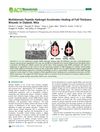
March 2018 in “ACS Biomaterials Science & Engineering”
86 citations
,
March 2018 in “ACS Biomaterials Science & Engineering” This study found that MDP hydrogel significantly accelerated wound healing and improved tissue formation in diabetic mice compared to a standard clinical hydrogel and control buffer.

A bald man grew hair on his head after taking a drug called diazoxide, but lost it again when he stopped the medication.
 13 citations
,
November 2010 in “Experimental Dermatology”
13 citations
,
November 2010 in “Experimental Dermatology” This study found that L-ascorbic acid 2-phosphate could reduce DHT-induced DKK-1 expression in balding scalp cells, suggesting potential for treating androgen-driven hair loss.
 166 citations
,
August 2011 in “Dermatologic Surgery”
166 citations
,
August 2011 in “Dermatologic Surgery” This study found that PRP combined with dalteparin and protamine microparticles may enhance hair growth by increasing hair thickness compared to PRP alone.
 June 2024 in “International Journal of Pharmaceutical Quality Assurance”
 This study established a new reverse-phase high-performance liquid chromatography method to accurately and precisely quantify silodosin and dutasteride in mixtures, meeting International Council of Harmonization validation criteria for stability, sensitivity, and recovery.
May 2024 in “Regenerative Therapy” This laboratory study found that dendrobium officinale polysaccharide (DOP) stimulated hair follicle and hair growth in mice by activating the WNT signaling pathway.
 403 citations
,
November 2005 in “Journal of Endocrinology”
403 citations
,
November 2005 in “Journal of Endocrinology” This review discusses the role of DHEA in intracrinology, highlighting its impact on breast and prostate cancer treatment and potential as a menopause therapy, but reports no new research findings.
September 2015 in “International Society of Hair Restoration Surgery” This article discusses the role of hair follicle stem cells in potential breakthroughs for hair cloning and follicular cell implantation, but reports no new clinical findings.
9 citations
,
June 2017 in “American journal of ophthalmology. Case reports” This case report identifies a novel CDH3 gene mutation associated with hypotrichosis with juvenile macular dystrophy in a 13-year-old Turkish girl, highlighting implications for future genetic analysis and counseling.