 12 citations
,
July 2017 in “Journal of cosmetic dermatology”
12 citations
,
July 2017 in “Journal of cosmetic dermatology” This study suggests that infrared thermography may be a useful noninvasive tool for diagnosing active phases of frontal fibrosing alopecia when combined with dermoscopy.
 January 2025 in “Indian Journal of Dermatology”
 This review discusses the various factors implicated in the etiology of frontal fibrosing alopecia and notes the need for effective treatments, reporting no new clinical findings.
September 2025 in “Development” In this study, deleting the transcriptional pause factor Nelfb in mouse preadipocyte lineages led to defective dermal fat formation and lethal outcomes, while interventions targeting Pparg could rescue adipocyte differentiation and promote dermal white adipose tissue formation, underscoring Nelfb's critical role in adipogenesis.
 July 2018 in “Reactions Weekly”
 Lower finasteride doses had more side effects; dutasteride caused back pain; more research needed on post-finasteride syndrome.
November 2005 in “The Journal of Urology” This erratum addresses the long-term effects of finasteride on prostate-specific antigen levels but reports no new research findings.
 6 citations
,
July 2016 in “Gynecological Endocrinology”
6 citations
,
July 2016 in “Gynecological Endocrinology” This study found that women with PCOS have higher total PSA levels than controls, and the total PSA level correlates positively with testosterone and free androgen index.
 May 2024 in “Indian Journal of Dermatology”
 In this case report, a 22-year-old female was diagnosed with follicular Dowling-Degos disease based on clinical and histological findings, with symptoms including skin lesions confined to hair follicles. The report emphasizes the importance of differentiating this rare variant from similar conditions for proper management.
 3 citations
,
November 2020 in “Clinical, Cosmetic and Investigational Dermatology”
3 citations
,
November 2020 in “Clinical, Cosmetic and Investigational Dermatology” This review summarizes the current treatment modalities for frontal fibrosing alopecia and provides a practical guide for clinicians, but reports no new clinical results.
 57 citations
,
February 1983 in “The Journal of clinical endocrinology and metabolism/Journal of clinical endocrinology & metabolism”
57 citations
,
February 1983 in “The Journal of clinical endocrinology and metabolism/Journal of clinical endocrinology & metabolism” This study found that pubic skin fibroblasts respond to androgens, increasing 5α-reductase activity via an androgen receptor-mediated mechanism, suggesting its potential as a marker of androgen action in vitro.
 3 citations
,
April 2010 in “The American Journal of Dermatopathology”
3 citations
,
April 2010 in “The American Journal of Dermatopathology” This study observed similar D2-40 expression in scarring and nonscarring alopecia, with some increase in scarring cases, suggesting possible Fos-dependent mechanisms, though more research is needed for definitive conclusions.
June 2026 in “Frontiers in Medicine” This study evaluated the 308-nm excimer laser as an adjuvant treatment for frontal fibrosing alopecia and found it may stabilize hairline recession and improve erythema and perifollicular hyperkeratosis, with transient erythema as the only reported adverse effect.
 41 citations
,
June 2018 in “Journal of The American Academy of Dermatology”
41 citations
,
June 2018 in “Journal of The American Academy of Dermatology” This study examined the therapeutic response to folliculitis decalvans treatments among 60 patients and found that earlier disease onset was linked to more severe cases, while a combination of rifampicin, clindamycin, tetracyclines, and intralesional steroids was most effective in controlling symptoms.
 August 2018 in “Journal of The American Academy of Dermatology”
  5 citations
,
May 2023 in “Science of the total environment”
5 citations
,
May 2023 in “Science of the total environment” This study observed that higher PFAS concentrations during adolescence were linked to later pubertal development and lower estradiol levels in females, but not in males, potentially due to PFAS excretion with menstrual fluid.
 2 citations
,
July 2022 in “Frontiers in Medicine”
2 citations
,
July 2022 in “Frontiers in Medicine” This review discusses the current understanding of frontal fibrosing alopecia's pathogenesis, highlighting genetic susceptibility, immune response involvement, and possible links to steroid hormones, but reports no new clinical results.
April 2025 in “International Journal of Dermatology” This article proposes renaming frontal fibrosing alopecia to frontal fibrosing alopecia syndrome to better reflect its varied presentations and enhance understanding and treatment approaches.
 April 2018 in “The journal of investigative dermatology/Journal of investigative dermatology”
 This study found that in a mouse model of Focal Dermal Hypoplasia, treatment with lithium carbonate improved skin disease symptoms compared to controls, though disease severity varied and posed interpretation challenges.
 May 2023 in “GSC biological and pharmaceutical sciences”
 According to this study, forensic DNA phenotyping using Next Generation Sequencing can reliably predict certain visible traits like eye, hair, and skin color, though its routine implementation in forensics is hindered by incomplete genetic knowledge and ethical concerns in some countries.
 7 citations
,
August 2000 in “Journal of Pediatric and Adolescent Gynecology”
7 citations
,
August 2000 in “Journal of Pediatric and Adolescent Gynecology” This review discusses perceptions and side effects of depot medroxyprogesterone acetate and emphasizes the importance of educating teens to enhance compliance; it reports no new clinical findings.
January 2018 in “Murdoch Research Repository (Murdoch University)” This study identified putative causal mutations for PCOS among first-degree relatives, although functional analysis of a specific GDF9 mutation was unsuccessful.
 July 2022 in “Research Square (Research Square)”
 This study found that Egyptian women with frontal fibrosing alopecia had lower serum PPARγ levels and a higher occurrence of PPARG gene polymorphism compared to healthy controls, suggesting a potential role for PPARγ in the condition's development.

This study assessed the environmental impact of the drug finasteride on Daphnia magna, finding that both acute and chronic exposure impaired development and reproduction, affected gene expression and metabolism, and altered lipid profiles, highlighting the need to understand pharmaceutical impacts on aquatic ecosystems.
 January 2022 in “Дерматологія та венерологія”
 This paper presents two cases of frontal fibrosing alopecia in postmenopausal women, noting challenges in monitoring due to the invasive nature of the diagnostic process.
 6 citations
,
January 2020 in “Skin Pharmacology and Physiology”
6 citations
,
January 2020 in “Skin Pharmacology and Physiology” This study demonstrated that caffeine, minoxidil, and the HIF-1α-stimulating agent deferiprone significantly enhanced dermal papilla cell proliferation in a 3D culture model, suggesting deferiprone as a potential alternative to minoxidil.
5 citations
,
January 1997 in “PubMed” This study found that finasteride was rapidly absorbed and extensively metabolized in dogs, with most metabolites excreted in feces, and suggests that higher doses might saturate the metabolism mechanism.
16 citations
,
July 1996 in “Journal of Investigative Dermatology” 50 citations
,
September 2012 in “Developmental Biology” This study found that over-expressing Spry4 and Fgf10 modulates feather stem cells to alter feather morphologies in distinct ways, affecting barb branch formation and tissue structure.
July 2024 in “Journal of Investigative Dermatology” PP405 may help hair growth by activating hair follicle stem cells.
 1 citations
,
October 2023 in “Journal of the Pakistan Medical Association”
1 citations
,
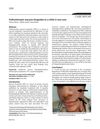
October 2023 in “Journal of the Pakistan Medical Association” This source describes a case of a 12-year-old male diagnosed with folliculotropic mycosis fungoides, presenting with an asymptomatic, erythematous plaque. Histology and immunohistochemistry confirmed FMF, which is typically rare in children and marked by follicular infiltration by CD4+ lymphocytes.
24 citations
,
July 2018 in “British Journal of Dermatology” Contact allergies might contribute to frontal fibrosing alopecia.