 29 citations
,
July 2010 in “Journal of Cutaneous Medicine and Surgery”
29 citations
,
July 2010 in “Journal of Cutaneous Medicine and Surgery” This study reported no significant improvement in patients with frontal fibrosing alopecia treated with various therapeutic agents, highlighting the need for more evidence-based treatments, especially in those with active disease.
39 citations
,
May 2006 in “Molecular Plant-Microbe Interactions” This study suggests that fusaric acid at nontoxic concentrations may activate signal transduction in plants which could aid in the plant-defense responses against Fusarium spp.
 1 citations
,
September 1984 in “Journal of Biological Education”
1 citations
,
September 1984 in “Journal of Biological Education” Plants change their growth in response to shade based on light signals detected by phytochrome.
2 citations
,
July 2025 in “Journal of the European Academy of Dermatology and Venereology” This study involved 69 hair experts using a Delphi process to achieve consensus on treating frontal fibrosing alopecia, finding strong agreement on disease monitoring but less on physical and systemic therapies, indicating the need for more research.
 November 2022 in “Research Square (Research Square)”
 This study identified key genes and pathways involved in the growth and development of forest musk deer hair follicles, providing insights into molecular regulation and laying groundwork for future research on related diseases.
 11 citations
,
February 2011 in “Current Zoology”
11 citations
,
February 2011 in “Current Zoology” The researchers reported that alopecia is common in Japanese macaques, particularly adult females, and varies seasonally and between different populations, with a new scoring system proposed for monitoring.
 10 citations
,
March 2015 in “American journal of primatology”
10 citations
,
March 2015 in “American journal of primatology” This study found that ringtailed lemurs consuming leucaena in Berenty absorb mimosine, which causes alopecia without affecting body condition or organ toxicity; this may increase infant mortality due to alopecic mothers.
24 citations
,
July 2018 in “British Journal of Dermatology” Contact allergies might contribute to frontal fibrosing alopecia.
 8 citations
,
February 2014 in “General and Comparative Endocrinology”
8 citations
,
February 2014 in “General and Comparative Endocrinology” In this study, exposure to the drug finasteride in Silurana tropicalis significantly increased testosterone levels in liver and testis tissues and altered gene expression related to male reproduction and oxidative stress.
53 citations
,
July 2002 in “Journal of Investigative Dermatology” The Dfl mutation in mice causes poor sebaceous gland function and complete hair loss.
 April 2019 in “Journal of Investigative Dermatology”
 This study found that mice lacking REDD1 experienced an expansion of dermal white adipose tissue through both hypertrophy and hyperplasia, suggesting a potential therapeutic target for skin adipogenesis regulation.
2 citations
,
February 2023 in “Anais Brasileiros de Dermatologia”  June 2023 in “Research Square (Research Square)”
 In this study, utilizing a mixture of crushed sky fruit seeds and sodium salt for goat skin preservation led to a significant reduction in environmental impact, decreasing total dissolved solids by 59% and chloride content by 44%, while maintaining the physical quality of processed leather.
This article discusses the effects of ablative carbon dioxide laser treatment for skin rejuvenation, noting it requires only a single treatment but involves more complex postoperative management, without reporting new clinical outcomes.
 8 citations
,
November 2018 in “Australasian Journal of Dermatology”
8 citations
,
November 2018 in “Australasian Journal of Dermatology” This study adds evidence suggesting a genetic component to frontal fibrosing alopecia, with daughters experiencing an earlier onset than their mothers, although the clinical pattern remains similar to non-familial cases.
 April 2018 in “Journal of Investigative Dermatology”
 In this animal study, the researchers found that DPP4 plays a crucial role in scar formation and wound-induced hair follicle neogenesis in mice, impacting regenerative repair.
 1 citations
,
May 2015 in “Dermatologic Therapy”
1 citations
,
May 2015 in “Dermatologic Therapy” The microstrip technique for hair transplantation is effective and discreet for patients needing fewer than 1500 grafts.
 31 citations
,
April 2010 in “British journal of dermatology/British journal of dermatology, Supplement”
31 citations
,
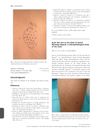
April 2010 in “British journal of dermatology/British journal of dermatology, Supplement” This report describes two patients with frontal fibrosing alopecia who developed acute hair loss on their limbs, revealing that the limb alopecia had similar histological features to scalp alopecia.
 August 2025 in “JURNAL PEMBELAJARAN DAN BIOLOGI NUKLEUS”
 This study conducted in Batam City found a 10.79% prevalence of alopecia among 417 captured bats across seven species, with higher rates in fragmented urban forests associated with anthropogenic pressures, highlighting the influence of habitat conditions on bat health.
 April 2018 in “Journal of Investigative Dermatology”
 This study suggests that macrophages play a more substantial role in the pathogenesis of Lichen planopilaris compared to Frontal fibrosing alopecia, as indicated by increased CD68+ cells in Lichen planopilaris.
October 2022 in “Hair Transplantation” This study highlights that beard hairs are a preferred nonscalp donor source for hair transplantation, especially when scalp donor supply is insufficient due to severe androgenetic alopecia, with careful planning and technique needed to minimize scarring and enhance outcomes.
July 2025 in “Journal of Investigative Dermatology” 1 citations
,
September 2015 in “Hair transplant forum international” This article discusses the widespread use of finasteride among International Society of Hair Restoration Surgery physicians and reports no new clinical findings.
April 2025 in “International Journal of Dermatology” This article proposes renaming frontal fibrosing alopecia to frontal fibrosing alopecia syndrome to better reflect its varied presentations and enhance understanding and treatment approaches.
 12 citations
,
April 2020 in “Facial Plastic Surgery Clinics of North America”
12 citations
,
April 2020 in “Facial Plastic Surgery Clinics of North America” This study reviews advancements in hair restoration surgery, noting that follicular unit excision significantly improves outcomes by enabling graft harvesting without scarring and reporting a graft transection rate under 4% when conducted with advanced equipment.
 41 citations
,
August 2013 in “Facial Plastic Surgery Clinics of North America”
41 citations
,
August 2013 in “Facial Plastic Surgery Clinics of North America” This article discusses the benefits, techniques, and unique considerations of follicular unit extraction for hair grafting, but reports no new clinical results.
 17 citations
,
June 2016 in “Australasian Journal of Dermatology”
17 citations
,
June 2016 in “Australasian Journal of Dermatology” In this case report, a 46-year-old woman with familial frontal fibrosis alopecia experienced initial stabilization of hair loss with dutasteride and minoxidil, but artificial hair transplantation led to implant folliculitis, requiring removal of the fibers.
 February 2024 in “Trends in Sciences”
 This study examined the stability of two 5α-reductase inhibitors in Tectona grandis extracts, finding that they are more stable in acidic environments and degrade rapidly under heat and light unless protected, suggesting the need for careful storage when developing anti-hair loss medications.
 July 2025 in “Journal of Dermatology Research and Therapy”
 In this Stanford study, verteporfin was used to promote scarless skin regeneration by inhibiting YAP activity in a 27-year-old female, resulting in increased hair density at the treated site compared to the untreated control.
 April 2022 in “JAAD International”
 This study suggests that vitamin D deficiency is likely not involved in the development of frontal fibrosing alopecia, as patients showed similar vitamin D levels to those with female pattern hair loss.