 December 2018 in “Journal of Medicinal and Aromatic Plant Sciences”
 This review discusses various plants being investigated for their potential in hair growth promotion and highlights the need for more research, reporting no new clinical results.
 January 2026 in “Journal of Ayurveda and Naturopathy”
 This review highlights that Eclipta alba, or false daisy, shows promise for liver protection and hair care due to its antioxidant and tissue-protective properties, supporting its traditional Ayurvedic uses for treating liver disorders and promoting hair growth.
4 citations
,
December 2020 in “Natural Product Sciences” This study identified ten compounds from Eclipta prostrata, with some displaying potent inhibitory effects against α-glucosidase and acetylcholinesterase enzymes.
 31 citations
,
November 2000 in “Clinical and Experimental Dermatology”
31 citations
,
November 2000 in “Clinical and Experimental Dermatology” This study developed the Women's Androgenetic Alopecia Quality of Life Questionnaire, which shows high reliability and internal consistency for assessing the impact of AGA on women's quality of life.
 11 citations
,
March 2021 in “Dermatology and therapy”
11 citations
,
March 2021 in “Dermatology and therapy” This study developed the Alopecia Areata Patient Priority Outcome (AAPPO), a new tool designed to measure and capture the symptoms and impacts of alopecia areata that matter most to patients.
 February 2022 in “Research Journal of Biotechnology”
 This review discusses the taxonomy, traditional uses, and pharmacological activities of the medicinal plant Eclipta alba but reports no new clinical findings.
 November 2023 in “Cureus”
 In this pilot study, a 12-week topical treatment with a lotion containing magnetized saline water significantly increased hair count and hair mass index while activating autophagy in the scalp of 20 Caucasian men with mild-to-moderate androgenetic alopecia.
August 2026 in “Tạp chí Dược liệu” In this study, Curcuma longa, Eclipta prostrata, and Pogostemon cablin extracts were found to significantly promote human dermal papilla cell proliferation, while Chrysanthemum indicum and Eclipta prostrata exhibited strong antioxidant activities, indicating their potential for hair growth-promoting formulations.
 January 2026 in “RSC Advances”
 Panax notoginseng may help with oral ulcers and hair growth.
1 citations
,
January 2020 in “Progressive Agriculture” This study found that three weekly injections of long-acting tetracycline effectively treated generalized bovine dermatophilosis in a buffalo dairy farm.
29 citations
,
December 2022 in “Dermatology and Therapy” This study reported that patients with alopecia areata experienced significant increases in work productivity loss and activity impairment due to worsening emotional symptoms, highlighting a need for better treatments.
48 citations
,
August 1981 in “American Journal of Veterinary Research” This study demonstrates that glucocorticoid hepatopathy in Beagle dogs led to rapid and lasting clinical, morphologic, and biochemical changes, which may aid in the future diagnosis and prognosis of similar conditions.
 27 citations
,
March 2012 in “Dermatologic Therapy”
27 citations
,
March 2012 in “Dermatologic Therapy” In this study, all five patients with zinc deficiency-related hair loss experienced improvement or recovery of their condition after receiving oral zinc treatment.
 1 citations
,
January 2020 in “International journal of research in pharmacy and chemistry”
1 citations
,
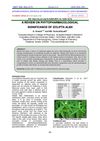
January 2020 in “International journal of research in pharmacy and chemistry” This review provides an overview of the ethnomedicinal uses, chemical composition, and pharmacological profile of Eclipta alba Hassk and presents no new clinical findings.

This review discusses the medicinal uses and phytochemical composition of Eclipta alba and reports no new clinical findings; the authors suggest its potential therapeutic significance due to complex interactions of its constituents.
This study reported that black sesame oil significantly stimulated hair regrowth in mice, suggesting its potential for promoting hair growth or preventing hair loss in humans.
 3 citations
,
November 2020 in “Phyton-international Journal of Experimental Botany”
3 citations
,
November 2020 in “Phyton-international Journal of Experimental Botany” This review discusses the potential therapeutic applications of wedelolactone, a compound in Eclipta prostrata, for various chronic human diseases and reports no new clinical results.
 January 2026 in “Zenodo (CERN European Organization for Nuclear Research)”
 In this study, a herbal hair wax stick formulated with extracts of Tulsi, Amla, and Bhringraj demonstrated favorable styling, antimicrobial, and antioxidant properties, suggesting it as a safe, natural alternative to synthetic hair styling products.
 January 2026 in “Zenodo (CERN European Organization for Nuclear Research)”
 In this study, a herbal hair wax stick incorporating extracts of Tulsi, Amla, and Bhringraj was formulated and evaluated, with the F3 formulation showing the best balance of pH, spreadability, antimicrobial, and antioxidant activity, suggesting it as a natural alternative to synthetic hair styling products.
November 2024 in “Journal of Investigative Dermatology” Inherited ichthyosis negatively impacts quality of life, affecting daily activities, self-image, and reproductive decisions.
16 citations
,
February 2009 in “Clinical neurology and neurosurgery” In this study, patients with epilepsy who switched from immediate-release to extended-release divalproex sodium did not experience significant changes in seizure frequency, but most preferred the new formulation due to a subjective decrease in tremor during daily activities.
13 citations
,
January 2019 in “Journal of the American Academy of Dermatology” This study found that those with pityriasis rubra pilaris reported worse quality of life than patients with most other dermatologic conditions, impacting daily activities and emphasizing its severe life quality implications.
12 citations
,
February 2019 in “Journal of patient-reported outcomes” This study identified common symptoms and side effects experienced by women with hormone receptor-positive, HER2-negative advanced breast cancer, including fatigue, hair loss, and impacts on daily activities and mobility.
 2 citations
,
July 2025 in “Scientific Reports”
2 citations
,
July 2025 in “Scientific Reports” In this study, researchers found that dermatological diseases like atopic dermatitis, psoriasis, and hidradenitis suppurativa impact women's work performance and daily activities more severely than men's, with women reporting higher absenteeism and work impairment and lower work ability scores.
 January 2026 in “Dermatology Practical & Conceptual”
 This study reported that diffuse lichen planopilaris significantly impairs quality of life in Moroccan patients, with trichodynia and hair quality changes most affecting daily functioning and leisure activities.

In this study, radial shockwave therapy significantly improved muscle spasticity, ankle range of motion, and functional abilities in children with spastic cerebral palsy, suggesting it may help them achieve greater autonomy in daily activities.
 March 2024 in “Clinical, cosmetic and investigational dermatology”
 This study found that severe alopecia areata significantly impacts quality of life, mental health, and daily activities, particularly among women and those with a longer disease duration.
 January 2024 in “Journal of Biosciences and Medicines”
 In this study, combining Ginkgo biloba extract dropping pills with butylphthalide capsules improved cognitive and neurological function, daily living activities, and reduced inflammatory responses in patients with cognitive dysfunction following an acute ischemic stroke, compared to butylphthalide treatment alone.
 October 2023 in “Siriraj Medical Journal”
 This study found that acne in adult females, especially when moderate to severe or associated with certain aggravating factors, significantly affected quality of life, particularly in terms of self-consciousness and daily activities.
August 2023 in “Farmacja Polska” This study observed that hair loss due to cytotoxic cancer treatment significantly affects social functioning and interpersonal relationships for both men and women, although it does not have a notable impact on specific daily activities.