Search
for
Sort by
Research
90-120 / 1000+ resultsresearch Localization and Regulation of Expression of the FAR-17A Gene in the Hamster Flank Organs

research URB expression in human dermal papilla cells
This study identified a gene transcript overexpressed in dermal papilla cells, showing strong similarity to a mouse gene associated with adipose tissue in bombesin receptor subtype-3-deficient mice.
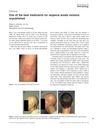
research One of the best treatments for alopecia areata remains unpublished
DNCB is highly effective for treating alopecia areata with minimal long-term side effects.
research Ornithine decarboxylase is a target for chemoprevention of basal and squamous cell carcinomas in Ptch1+/– mice
In this study, overexpression of ornithine decarboxylase accelerated basal cell carcinoma in Ptch1+/– mice under UVB exposure, while its inhibition reduced tumor induction, suggesting potential chemoprevention strategies in humans.
research DNMT3B -579G>T POLYMORPHİSM AND THE RİSK OF COLORECTAL CANCER IN AZERBAİJAN POPULATİON
This study suggests that the DNMT3B -579 G>T polymorphism may be a genetic risk factor for colorectal cancer in the Azerbaijani population.

research BAF200 Is Required for Heart Morphogenesis and Coronary Artery Development
This study found that BAF200, a subunit of the PBAF chromatin remodeling complex, is crucial for heart development and coronary artery formation in mice, as its absence led to embryonic lethality with severe cardiac defects.
research Dermal EZH2 orchestrates dermal differentiation and epidermal proliferation during murine skin development
This study found that dermal EZH2 plays a crucial role in controlling fibroblast differentiation by regulating Wnt/β-catenin and retinoic acid signaling during skin development.
research A novel EDA variant that causes X-linked hypohidrotic ectodermal dysplasia in a Chinese family
In this study, prenatal ultrasonography was found to be a valuable tool for screening ectodermal dysplasia during pregnancy, and a new EDA gene variant associated with X-linked hypohidrotic ectodermal dysplasia was identified, aiding in more accurate diagnoses and reproductive decision-making.
research Cloning and Expression of Cellular Retinoic Acid Binding Protein I Gene in Inner Mongolian Cashmere Goats
In this study, the researchers cloned and analyzed the CRABP I gene in Inner Mongolian cashmere goats, finding its highest mRNA expression at 90 days in embryo skin compared to later stages.
research Deletion of Deoxyribonucleic Acid Binding Domain of the Vitamin D Receptor Abrogates Genomic and Nongenomic Functions of Vitamin D
In this study, homozygous VDR null mutant mice exhibited nonfunctional vitamin D receptors, leading to growth abnormalities and revealing the limited physiological importance of vitamin D pathways outside the classical receptor.
research Ligand‐independent Regulation of the hairless Promoter by Vitamin D Receptor†
This study suggests that the vitamin D receptor and hairless gene may directly regulate each other via a transcriptional mechanism, potentially explaining phenotypic similarities between atrichia and VDRRIIa rickets.
research Search for the Crucial Extracellular Nucleotide Receptor: Kinase Receptor DORN1’s Role in the eATP and eADP Stomatal Signaling Pathways in Arabidopsis thaliana
This study suggests that the DORN1 receptor may play a role in eATP-induced changes in stomatal aperture in Arabidopsis thaliana, but not in the eADP signaling pathway.
research DAB-labelling for collagen type III and PDGFR as control on equine skin sections.
In this study, researchers conducted additional IHC staining on equine skin sections and found that collagen type III primarily labels the extracellular matrix, while anti-PDGFR-antibody staining highlights cells with long-shaped processes mainly arranged around hair follicles.
research Novel D323G mutation of DSG4 gene in a girl with localized autosomal recessive hypotrichosis clinically overlapped with monilethrix
This study reports that a homozygous A1103G mutation in DSG 4 is responsible for localized autosomal recessive hypotrichosis in a 2-year-old Chinese girl, resulting in reduced DSG 4 expression and hair defects.
research Prospective Case Series of Cutaneous Adverse Effects Associated With Dabrafenib and Trametinib
In this prospective study, dabrafenib and trametinib were associated with various skin side effects, including papillomas, hyperkeratosis, and acneiform eruptions in patients with metastatic melanoma.
research Pseudallescheria boydii infection associated with IgG4-related disease
This report identifies a novel splice-site variant in the LAMB3 gene linked to junctional epidermolysis bullosa, emphasizing the need for gene sequencing in diagnosing the disease.
research A Mouse Model for the Basal Transcription/DNA Repair Syndrome Trichothiodystrophy
This study found that mimicking the XPD point mutation in mice resulted in trichothiodystrophy-like symptoms, supporting the role of basal transcription and DNA repair defects in the disease.
research Divergent roles of HDAC1 and HDAC2 in the regulation of epidermal development and tumorigenesis
HDAC1 is crucial for skin development and preventing tumors.
research Androgen binding to cytosol and nuclei of hamster sebaceous glands
This study found that hamster sebaceous glands have high affinity binding sites for dihydrotestosterone, with competition from other steroids indicating specific binding characteristics.
research Cytotoxicity of bendamustine, alone and in combination with novel agents, toward adult T-cell leukemia cells
This study suggests that combining bendamustine with tucidinostat may improve survival in patients with relapsed or refractory adult T-cell leukemia/lymphoma, highlighting its potential for clinical investigation.
research The Region Coding for the Helix Termination Motif and the Adjacent Intron 6 of the Human Type I Hair Keratin Gene hHa2 Contains Three Natural, Closely Spaced Polymorphic Sites
research Fine mapping of the human AR/EDA2R locus in androgenetic alopecia
This abstract contains only supplementary material information and reports no new research findings.

research BRCA2 in abscission
In this study, researchers found that β-catenin directly promotes TERT expression in stem and cancer cells by interacting with the Tert promoter, illustrating a mechanistic link between tumorigenesis and pluripotency.
research Author response: Loss of Dnmt3a and Dnmt3b does not affect epidermal homeostasis but promotes squamous transformation through PPAR-γ
This study found that loss of the DNA methyltransferase Dnmt3a, but not Dnmt3b, increased carcinogen-induced squamous tumors in murine epidermis, with combined deletion leading to more aggressive and metastatic carcinomas.
research Characterization of a mouse Scube3 reporter line
Mouse Scube3 affects teeth, tongue, vibrissae, and eye development, but not facial structure or limb growth.

research Restoration of hair growth with topical diphencyprone in mouse and rat models of alopecia areata
This study found hair regrowth in the majority of AA-affected mice and rats treated with diphencyprone, suggesting its potential utility for understanding human alopecia areata and the drug's therapeutic action.

research Dacomitinib-Induced Paronychia Associated With PRIDE Syndrome in a Patient With Non-Small Cell Lung Cancer
This case study documents a 55-year-old male with advanced NSCLC who experienced toe-predominant paronychia and a papulopustular rash following dacomitinib treatment, with the causality tools indicating a "probable" link, yet the therapy continued successfully without dosage alteration.

research Hair shaft structures in EDAR induced ectodermal dysplasia
In this study, individuals with a c.1072C > T mutation in the EDAR gene showed more hair shaft deformations compared to non-mutation carriers, highlighting EDAR's role in hair follicle development.

research 170 Forecasting Phase 3 Dose-Response for Abrocitinib, an Oral Janus Kinase 1 Selective Inhibitor, Using Investigator’s Global Assessment and Eczema Area and Severity Index
In this study, dose-response modeling predicted that once-daily abrocitinib doses of 100 mg and 200 mg may provide a clinically meaningful response in treating moderate-to-severe atopic dermatitis compared to placebo.