60 citations
,
December 2020 in “Stem Cell Research & Therapy” In this laboratory study, ASC-conditioned medium showed higher therapeutic potential than extracellular vesicles alone in reducing inflammation and catabolic activity in human chondrocytes with an osteoarthritis phenotype, highlighting its possible use in osteoarthritis management.
March 2026 in “Journal of the European Academy of Dermatology and Venereology” This study introduced and validated the VESALT, a visual extension of the Severity of Alopecia Tool, finding it offers improved reliability and user-friendliness over SALT by incorporating pattern recognition and broader coverage, including non-scalp regions, in assessing alopecia areata severity.
 September 2015 in “Dermatologic Surgery”
 In this study, the researchers developed a computer-aided imaging system to quantitatively measure baldness in Chinese women with female pattern hair loss, potentially improving the precision of severity evaluation compared to traditional scales.
 11 citations
,
August 2018 in “Medicine”
11 citations
,
August 2018 in “Medicine” This study found that college students with androgenetic alopecia exhibited higher levels of various psychological symptoms compared to those without AGA, with medical and art students showing particularly elevated symptoms.
 23 citations
,
February 2020 in “PLOS genetics”
23 citations
,
February 2020 in “PLOS genetics” This study found that biallelic LSS mutations lead to congenital hypotrichosis and cataracts, with each tissue-specific loss of function observed in mouse models.
February 2023 in “Archives of Dermatological Research” This study found that despite challenges, a combination of oral antibiotics, anti-androgens, oral retinoids, biologics, and surgery were important in managing hidradenitis suppurativa in patients with intellectual and developmental disabilities.
2 citations
,
June 2021 in “RECERCAT (Consorci de Serveis Universitaris de Catalunya)” Clear definitions and strategies are needed to manage long-term COVID-19 symptoms effectively.
 1 citations
,
January 2003 in “Expert Opinion on Therapeutic Patents”
1 citations
,
January 2003 in “Expert Opinion on Therapeutic Patents” This review discusses the development and potential therapeutic applications of steroid sulfatase inhibitors for hormone-dependent disorders and cognitive dysfunction, reporting no new clinical results.
13 citations
,
January 2024 in “Journal of Nanobiotechnology” This research reported that a newly developed adhesive wound dressing (SIS/PAA/LAP) demonstrated higher tissue adhesion and burst strength compared to conventional products, and improved tissue repair outcomes in animal models, suggesting potential for enhanced wound healing applications.
 March 2024 in “Journal of drugs in dermatology”
 This study evaluated the safety and effectiveness of HASHA, a new hyaluronic acid injectable, for chin augmentation in adults with chin retrusion. HASHA significantly improved chin appearance and satisfaction over 12 months compared to controls, with only mild or moderate transient adverse events.
December 2025 in “Chinese Medical Journal” This study developed a simplified multidimensional assessment scale for alopecia areata severity and systemic treatment initiation among Chinese patients, achieving expert consensus on relevant clinical indicators and conditions.
5 citations
,
April 2024 in “JAAD International” AI can accurately measure hair loss severity in alopecia areata.
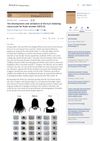 October 2023 in “The Journal of Dermatology”
 This study developed and validated the Hair-Shedding Visual Scale for Asian Women, finding it to be an effective tool for identifying FPHL and TE.
September 2006 in “Pediatrics in Review” This case report highlights a 16-year-old girl with primary amenorrhea diagnosed with complete androgen insensitivity syndrome after chromosomal analysis revealed a 46,XY karyotype.
 2 citations
,
June 2018 in “Journal of Aesthetic Nursing”
2 citations
,
June 2018 in “Journal of Aesthetic Nursing” This review discusses the progress and ongoing challenges in implementing regulations for cosmetic interventions, reporting no new results and highlighting areas that still need improvement.
 21 citations
,
September 2016 in “Journal of Dermatological Treatment”
21 citations
,
September 2016 in “Journal of Dermatological Treatment” This article proposes a new classification, the Obsessive-Compulsive Insight Continuum, to help dermatologists better understand and diagnose skin disorders with obsessive-compulsive features.
17 citations
,
January 2015 in “JOURNAL OF CLINICAL AND DIAGNOSTIC RESEARCH” This report presents a case of Cronkhite-Canada syndrome in an elderly Indian male, adding to the approximately 450 cases documented worldwide, but introduces no new results about the condition.
6 citations
,
April 1990 in “The Journal of Dermatologic Surgery and Oncology” Dermatologic surgery has greatly improved with new techniques over the years.
 July 2016 in “Reumatología Clínica (English Edition)”
 This review discusses the wide range of physiologic skin changes during pregnancy and highlights less frequently recognized changes, based on literature from the past decade, without reporting new clinical results.
 1 citations
,
October 2019 in “Journal of Craniofacial Surgery”
1 citations
,
October 2019 in “Journal of Craniofacial Surgery” In this study, 3D planned resection and reconstruction for skull defects after resection of cSCC with bony invasion led to accurate procedures, though patient-specific factors should guide treatment decisions.
 12 citations
,
August 2018 in “Journal of Dermatological Science”
12 citations
,
August 2018 in “Journal of Dermatological Science” This study observed that adipose-derived stem cells modified with trichogenic factors have similar properties to dermal papilla cells and show enhanced hair regeneration potential compared to unmodified adipose-derived stem cells.
 January 2014 in “Journal of Cutaneous and Aesthetic Surgery”
 The editorial welcomes the new editor of JCAS and discusses the journal's focus on quality research, global reach, and commitment to free access.
March 2026 in “Journal of Investigative Dermatology” This study found that GPT-4o demonstrated high concordance with in-person and image-based provider assessments in generating SALT scores for alopecia areata, suggesting its potential as an adjunct tool in clinical practice for automating these assessments.
 55 citations
,
November 2018 in “American journal of human genetics”
55 citations
,
November 2018 in “American journal of human genetics” This study identified five mutations in the gene LSS in individuals with unexplained hypotrichosis simplex, highlighting a potential role of mislocalized LSS proteins in disrupting hair follicle biology.
 August 2024 in “Skin Appendage Disorders”
 This study introduces "alopecia areata in a male or female pattern distribution" as a new clinical subtype of alopecia areata, observed in three adult cases, to enhance diagnostic precision and treatment personalization.
 6 citations
,
January 2020 in “BMC Medical Genetics”
6 citations
,
January 2020 in “BMC Medical Genetics” In this study, researchers identified a novel STS gene (c.287G > A; p.W96*) mutation in Pakistani individuals with X-linked ichthyosis, expanding the understanding of its genetic causes and aiding in genetic counseling.
 18 citations
,
November 2008 in “Disease-a-Month”
18 citations
,
November 2008 in “Disease-a-Month” This study developed a multifunctional injectable hydrogel that effectively provided hemostasis and accelerated healing of infected skin wounds, demonstrating significant potential for clinical wound dressing applications.
Men with CCCA often face delayed diagnosis and severe hair loss, highlighting the need for earlier recognition and treatment.
 June 2016 in “American Journal of Cardiology”
 This paper discusses the relationship between androgenetic alopecia and cardiovascular atherosclerosis, focusing on carotid intima-media thickness and the SYNTAX score, and reports no new results.
November 2009 in “Oncology Times” This article reports that the American Society of Clinical Oncology and the Oncology Nursing Society have issued the first national standards for safe chemotherapy administration to improve patient care and reduce errors.