January 2022 in “Chemistry: A European Journal” This study found that synchrotron radiation ECD imaging provides new insights into solid-state Finasteride by highlighting the significant role of anisotropy in local domains for chiroptical measurements.
45 citations
,
March 1997 in “Journal of Investigative Dermatology” TCDD changes skin gene expression and may harm skin health.
January 2016 in “e-Oftalmo CBO Revista Digital de Oftalmologia” This review discusses central serous chorioretinopathy, detailing its etiology, associated factors, diagnostic imaging, and therapeutic options, but provides no new clinical findings.
87 citations
,
July 2009 in “Journal of Cell Science” The researchers found that corneodesmosin is crucial for maintaining skin barrier integrity and hair follicle architecture in mice, with its deletion leading to severe skin and hair abnormalities.
 1 citations
,
October 2019 in “Journal of Craniofacial Surgery”
1 citations
,
October 2019 in “Journal of Craniofacial Surgery” In this study, 3D planned resection and reconstruction for skull defects after resection of cSCC with bony invasion led to accurate procedures, though patient-specific factors should guide treatment decisions.
6 citations
,
July 2023 in “Plants” This study found that Datura metel extracts obtained through supercritical CO2 extraction demonstrated significant biological activity, including antioxidant and anti-inflammatory properties, and effectively promoted wound closure and collagen preservation, comparable to standard treatments, in laboratory experiments.
 May 2024 in “Animal genetics”
 The researchers investigated a Maine Coon cat with suspected classical Ehlers-Danlos Syndrome and discovered a heterozygous deletion in the COL5A1 gene, underscoring the value of whole-genome sequencing for precise veterinary diagnostics.
This study introduced the C-CAT, a new assessment tool for central centrifugal cicatricial alopecia, and found that established treatments improved symptoms in most patients over six months.
 March 2026 in “International Journal of Science Strategic Management and Technology”
 This research introduces WomenCare, a web-based system using a machine learning model to predict PCOD risk by evaluating factors like age, BMI, and lifestyle habits; it aims to help women monitor their health but is not a substitute for a professional diagnosis.
3 citations
,
December 2013 in “Balkan Journal of Medical Genetics” This case report highlights the use of microarray analysis to identify cryptic chromosomal rearrangements in a young woman with intellectual disability and multiple congenital anomalies.
 January 2020 in “Journal of Cutaneous and Aesthetic Surgery”
 The conference improved skills and knowledge in skin and aesthetic surgery.
November 2022 in “Journal of Investigative Dermatology” This study reported that an HS-associated NCSTN mutation in iPSC-derived skin organoids led to altered hair follicle stem cell differentiation and increased expression of proteins linked to HS inflammation.
September 2019 in “Journal of Investigative Dermatology” CCCA in women of African ancestry may be caused by PADI3 gene mutations and intense hair grooming.
53 citations
,
August 2017 in “Journal of Investigative Dermatology” December 2025 in “Medical dosimetry” 56 citations
,
September 2010 in “Veterinary pathology” This study found that certain C57BL/6 mouse substrains have a genetic vulnerability to skin lesions resembling central centrifugal cicatrical alopecia in humans, potentially worsened by high vitamin A levels.
11 citations
,
December 2013 in “Clinical and experimental dermatology” This study reports a case of a child with congenital skin fragility, alopecia, and cardiomyopathy due to compound heterozygous mutations in the DSP gene causing desmoplakin deficiency.
6 citations
,
October 2023 in “JAAD Case Reports” This study describes dissecting cellulitis of the scalp (DCS) as a rare and aggressive form of chronic scalp inflammation presenting with pustules and nodules, commonly affecting males and African Americans, and leading to significant quality of life impacts and psychological distress.
88 citations
,
August 2014 in “PLOS genetics” This study found that mice lacking syndecan-1 experienced cold stress and metabolic issues due to reduced intradermal fat, which was restored by thermoneutral housing or rosiglitazone treatment.
December 2025 in “Journal of Veterinary Clinics” This case report describes the use of CO2 laser surgery to treat chronic pododermatitis and pseudopads in an 8-year-old obese dog, resulting in complete healing within four weeks after previous treatments provided only temporary relief.
37 citations
,
February 2007 in “Experimental Dermatology” This study found that PDCD4 protein expression is reduced in various skin cancers compared to normal skin, suggesting its potential role in preventing or treating certain skin cancers.
 3 citations
,
February 2022 in “Journal of the American Academy of Dermatology”
3 citations
,
February 2022 in “Journal of the American Academy of Dermatology” This article highlights a lack of published data on vitamin D deficiency prevalence among individuals with central centrifugal cicatricial alopecia, despite its known link to other forms of hair loss.
 1 citations
,
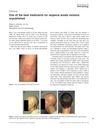
June 2018 in “International Journal of Dermatology”
1 citations
,
June 2018 in “International Journal of Dermatology” DNCB is highly effective for treating alopecia areata with minimal long-term side effects.
 10 citations
,
January 2013 in “Stem Cells and Development”
10 citations
,
January 2013 in “Stem Cells and Development” This study suggests that dermal stem/progenitor cells can be enriched by intracellular granularity and display high proliferation and differentiation potential in vitro, distinguishing them from other fibroblasts and progenitors.
July 2024 in “Journal of Investigative Dermatology” Human epidermal stem cells divide faster than previously thought.
 July 2023 in “Nasza Dermatologia Online”
 More research is needed on CCCA in children, especially Black and Asian adolescents.
9 citations
,
January 2015 in “Medical hypotheses” This report suggests that TCDD may alter human epidermal stem cell populations by upregulating c-Myc, potentially leading to increased stem cell turnover during chloracne development.
 46 citations
,
July 2008 in “Dermatologic Therapy”
46 citations
,
July 2008 in “Dermatologic Therapy” This study developed and evaluated a photographic scale to assess CCCA pattern and severity in African American women, finding it reproducible when used by investigators and participants.
September 2017 in “The journal of investigative dermatology. Symposium proceedings/The Journal of investigative dermatology symposium proceedings” This study emphasizes the genetic component of central centrifugal cicatricial alopecia, highlighting an atypical case involving an adolescent male within an African-American family.
22 citations
,
September 2003 in “Journal of Investigative Dermatology” This study analyzed patients with X-linked dominant chondrodysplasia punctata and identified novel mutations in the emopamil-binding protein gene, highlighting the need for genetic testing alongside biochemical analysis for accurate diagnosis.