1 citations
,
September 2001 in “Dermatologic Surgery” This study found that adding a low-power CO2 laser to Er:YAG laser improves hemostasis in hair transplantation without significantly affecting hair counts or increasing thermal damage.
67 citations
,
September 2017 in “Cell Reports” Caloric restriction improves skin and fur structure but can cause muscle loss and movement issues.
18 citations
,
June 2020 in “Dermatologic Therapy” In this study, FCO2 laser treatment showed significantly better improvement for alopecia areata compared to traditional intralesional corticosteroid injections, with no serious side effects or relapse observed.
December 2024 in “International Journal of Molecular Sciences” This study observed that treating basal and squamous cell carcinoma cells with platelet-rich fibrin significantly reduced cell viability and increased apoptosis-associated gene expression, suggesting potential use as adjunctive therapy for localized nonmelanoma skin cancers.
 June 1995 in “International Journal of Gynecology & Obstetrics”
 This article lacks an abstract and reports no new findings.
September 2024 in “Journal of Cosmetic Dermatology” Cold gel compresses are the best for pain relief during scalp microneedling.
 January 1989 in “Journal of The American Academy of Dermatology”
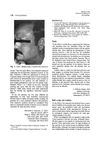
 Dr. Hanke acknowledges the success of CO₂ laser for less severe blast tattoos and suggests dermabrasion for more extensive injuries, while also discussing dermatology's media presence and issues with minoxidil research.
 3 citations
,
November 2022 in “Advances in Clinical and Experimental Medicine”
3 citations
,
November 2022 in “Advances in Clinical and Experimental Medicine” The authors reported that electrochemotherapy and electroporation-based treatments, both with and without cytotoxic drugs, show promise as safer and more effective options for breast cancer treatment, including metastatic cases and palliative care, in vitro and in vivo.
110 citations
,
August 2014 in “International journal of cancer” This study found that scalp cooling significantly reduced the risk of chemotherapy-induced alopecia in breast cancer patients, while topical minoxidil and other interventions did not show significant efficacy.
 1 citations
,
November 2020 in “Journal of Cosmetic Dermatology”
1 citations
,
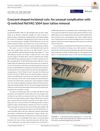
November 2020 in “Journal of Cosmetic Dermatology” This letter to the editor discusses an unusual complication, crescent-shaped incisional cuts, observed with Q-switched Nd:YAG 1064 laser tattoo removal and reports no new clinical results.
May 2018 in “Dermatologic Surgery” This overview highlights the Dermatologic Surgery journal's comprehensive coverage of dermatologic surgical procedures, but it reports no new research findings.
25 citations
,
January 2006 in “Journal of the European Academy of Dermatology and Venereology” This study reported that a new extraction technique using cautery and forceps is a simple, effective treatment and diagnostic procedure for eruptive vellus hair cysts, with no recurrence after 4 months.
 1 citations
,
January 2018 in “Springer eBooks”
1 citations
,
January 2018 in “Springer eBooks” The document concludes that scalp cooling and treatments like minoxidil can help manage hair loss from cancer therapy.
 September 2023 in “Russian Journal of Skin and Venereal Diseases”
 This study reported a rare case of necrobiosis lipoidica occurring on the scalp, leading to scarring alopecia, and highlighted a positive response to glucocorticoid therapy by reducing the brightness and growth of plaques over one month.
7 citations
,
July 2023 in “International Journal of Molecular Sciences” In this study, human nucleus pulposus cells treated with hyaluronic acid showed increased proliferation and reduced oxidative stress compared to those treated with EDTA-PBS, suggesting a potential role for hyaluronic acid in enhancing intervertebral disc therapy.
 February 2019 in “International journal of research in dermatology”
 This study found that a combination therapy of subcision, micro-needling, and TCA CROSS led to significant improvement in atrophic acne scars, with many patients showing improved scar grades over the treatment period.
November 2022 in “Pakistan Armed Forces Medical Journal” This study found that topical liquid nitrogen improved pain tolerance during intradermal platelet-rich plasma therapy in androgenic alopecia compared to normal saline, although patient satisfaction did not significantly differ between groups.
 17 citations
,
May 2023 in “Aesthetic Plastic Surgery”
17 citations
,
May 2023 in “Aesthetic Plastic Surgery” This review found that among emerging technologies for skin anti-aging, stem cell therapies using recipient chimerism might be more beneficial than CRISPR-Cas9 and other current innovations, though further studies on safety and efficacy are needed.
9 citations
,
June 1999 in “Acta Obstetricia Et Gynecologica Scandinavica” In this study, oral contraceptives containing desogestrel or cyproteron acetate effectively treated hyperandrogenism in women with polycystic ovary syndrome, while ovarian electrocautery is recommended for those with concurrent infertility.

Quickly fix tissue in formalin after excision to preserve it.
2 citations
,
August 2002 in “British Journal of Ophthalmology” This article discusses the potential of intralesional cidofovir as a treatment for SCC and reports no systemic toxicity, but highlights surgical excision as the most reliable curative option.
51 citations
,
October 2002 in “Archives of dermatology” This case study of a patient with dissecting cellulitis of the scalp found that multiple medications, including isotretinoin, achieved only modest improvement, and symptoms returned after treatments were stopped.
 July 1998 in “Dermatologic Surgery”
 Various techniques and tools for hair restoration were presented in 1998, including a mathematical model for donor area, use of lasers in surgery, methods for controlling grafted hair direction, and ways to increase graft yield. Satisfaction rates were around 39%, and studies showed trauma and dehydration can damage hair follicles.
 3 citations
,
November 2020 in “Journal of Drugs in Dermatology”
3 citations
,
November 2020 in “Journal of Drugs in Dermatology” This study found that indirect treatment with cold atmospheric plasma showed promise for improving androgenetic alopecia in patients, laying the groundwork for longer trials to assess its efficacy.
1 citations
,
March 2018 in “Journal of lasers in medical sciences” This study found that combining topical capislow with laser hair removal significantly enhanced hair reduction compared to laser alone, although the beneficial effects lasted only while capislow was applied.
3 citations
,
September 2001 in “Dermatologic Surgery” This study found that adding a 5 W CO2 laser to an Er:YAG laser improved hemostasis without significantly affecting mean hair counts or increasing lateral thermal damage in men with androgenetic alopecia.
 May 1999 in “Dermatologic Surgery”
 Using an ultrasonic liposuction machine with different cannula sizes and power settings does not change water temperature.
In this study, intralesional steroids were the most effective treatment for alopecia areata, achieving cosmetically acceptable hair regrowth in 88% of patients, compared to cryotherapy at 76%, phenol at 52%, and phototherapy at 36%.
19 citations
,
January 1999 in “Journal of cutaneous laser therapy” This review discusses various hair removal techniques, particularly focusing on laser hair removal, and reports no clinical results; it emphasizes the need for ongoing research to assess effectiveness.
 10 citations
,
January 2019 in “Biomarker Insights”
10 citations
,
January 2019 in “Biomarker Insights” This article explores the potential of combining biomarkers to assess and improve treatments for chemotherapy-induced alopecia, highlighting the limited availability of data on hair follicle damage markers with and without scalp cooling.