 March 2026 in “Frontiers in Cell and Developmental Biology”
 This meta-analysis found that autologous cell-based therapies, especially stromal vascular fraction, significantly improved atrophic acne scars over control treatments, enhancing both clinical and patient-reported outcomes.
 February 2026 in “Molecular Imaging and Radionuclide Therapy”
 In this study, male patients treated with 150 mCi of radioactive iodine showed no negative impact on fertility, but long-term studies with larger groups are needed to further assess hormonal effects and sperm health after this treatment.

This study suggests that estimating autism likelihood as early as one month after birth may enable more precise early intervention for children with developmental support needs, potentially improving diagnosis, workflows, and reducing service wait times.
 June 2024 in “BioSCIENCE”
 This study reviewed the use of microinfusion of microparticles (MMP®) with methotrexate for treating alopecia frontal fibrosante and found it reduced symptoms associated with the condition and improved specific scalp measurements, showing that the technique is safe and well-tolerated.
 April 2024 in “bioRxiv (Cold Spring Harbor Laboratory)”
 In a keratinocyte-specific knockout mouse model, this study found that deleting GRK2 disrupted hair follicle homeostasis, causing cyst-like structures, abnormal growth patterns, and eventual hair loss, suggesting potential links to immune-mediated alopecias.
 April 2024 in “arXiv (Cornell University)”
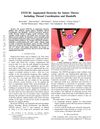
 In this study, the researchers developed an advanced robotic system called STITCH for performing suture tasks, which completed an average of 2.93 sutures autonomously and 4.47 sutures with human intervention in physical trials.
 January 2024 in “Research Square (Research Square)”
 This study reports that adjusting the valence states of Mo in Pluronic F127-coated MoO3-x nanozymes enhances their selective H2O2-related catalytic activity, showing promise in acute kidney injury treatment and enabling real-time monitoring of therapy effectiveness through ROS-responsive photoacoustic imaging.
 November 2023 in “Klìtinna ta organna transplantologìâ”
 This study reviews the regenerative potential and clinical applications of exosomes derived from mesenchymal stem cells in conditions like COVID-19, alopecia, skin aging, and osteoarthritis, highlighting their role as a promising tool in regenerative medicine.
 December 2022 in “bioRxiv (Cold Spring Harbor Laboratory)”
 This study found that inducing miR-205 reduces actin contractility and stiffness in hair follicle stem cells and progenitors, stimulating hair regeneration in both young and old mice.
 December 2022 in “Medical lasers”
 This study reviews the mechanism and potential treatment roles of low-level laser therapy for immune-mediated skin diseases, reporting no new clinical results.
 October 2021 in “The Egyptian Journal of Hospital Medicine ”
 This study concluded that combination therapies often yield better results for treating atrophic post-acne scars than single treatments.
 April 2021 in “Journal of Investigative Dermatology”
 This study suggests that edelweiss extract may promote hair growth and reduce shedding in ex vivo experiments by affecting hair follicle anagen phase duration and keratinocyte proliferation.

This review discusses the cornification process of epidermal keratinocytes in forming the skin barrier and reports no new results; it emphasizes the importance for diagnosis and treatment of skin disorders.
 April 2018 in “Journal of Investigative Dermatology”
 This study found that BMP signaling is involved in regulating melanogenesis, pigment transfer, and melanocyte migration, contributing to our understanding of skin pigmentation mechanisms.
 April 2018 in “Journal of Investigative Dermatology”
 This study investigated novel genetic tools to manipulate hair follicle compartments in mice and found that altering dermal papilla genes can significantly impact hair pigmentation.
 April 2018 in “Journal of Investigative Dermatology”
 This study suggests that the Leptin receptor may serve as a novel cell surface marker for dermal papilla cells, potentially aiding future isolation and research efforts in hair follicle regeneration studies.
 April 2018 in “Journal of Investigative Dermatology”
 This study found that Fgf20 signaling facilitates fibroblast migration and influences dermal condensate cell development during hair follicle morphogenesis by supporting cellular activities such as cell cycle exit and specific cell shape adoption.
 January 2018 in “bioRxiv (Cold Spring Harbor Laboratory)”
 This study identified a new cis-regulatory element in the mouse Hr gene that influences its expression in skin and brain cells, highlighting a complex molecular network involved in hair follicle formation.

This paper discusses advancements in forensic hair analysis, emphasizing a novel DART–HRMS method that improves the accuracy and efficiency of detecting drug use timelines.
 January 2012 in “Durham e-Theses (Durham University)”
 This study found that knock-down of keratin 15 in various cell lines affected cell spreading, morphology, migration, differentiation, and proliferation, suggesting its role in maintaining the stem cell nature of keratinocytes.
 May 2011 in “Expert Review of Endocrinology & Metabolism”
 Breast cancer survivors may have a higher risk of falls, tamoxifen could prevent breast cancer and deaths, new guidelines urge caution with prostate cancer therapy, and early balding in men may indicate a higher prostate cancer risk.
 June 2007 in “Endocrinology and Metabolism Clinics of North America”
 This study reports that incomplete information in a reverse supply chain can lead to efficiency losses, but a two-part tariff contract for the remanufacturer may improve performance by eliciting private information from collectors.
 September 2005 in “Clinics in Plastic Surgery”
 This article discusses multiple aspects of complex regional pain syndrome, including its diagnosis, pathogenesis, and treatment, but reports no new scientific findings.
 November 2000 in “Current problems in dermatology”
 This article discusses advancements expected in treatments for hair loss and unwanted hair, including hormonal modulation and improved laser hair removal, but reports no new clinical findings.
 June 1999 in “Proceedings of SPIE”
 The study suggests that CO₂ laser creates hair transplant channels with significantly less lateral thermal damage than Ho:YAG laser in the human scalp.
 March 2018 in “John Wiley & Sons, Ltd eBooks”
 This chapter reviews classification and techniques of surgical therapies for treating stable, recalcitrant vitiligo, highlighting their role alongside non-surgical methods for small, specific cases.

This study suggests that hair follicle dermal stem/progenitor cells play a key role in both hair regeneration and skin wound healing, with potential implications for preventing hair follicle miniaturization linked to aging or alopecia.
 199 citations
,
April 2010 in “Nature”
199 citations
,
April 2010 in “Nature” A gene called APCDD1, which controls hair growth, is found to be faulty in a type of hair loss called hereditary hypotrichosis simplex.
 25 citations
,
August 2014 in “Endocrinology”
25 citations
,
August 2014 in “Endocrinology” This study created a humanized mouse model of hereditary vitamin D-resistant rickets that lacks alopecia, indicating the mutant receptor's potential to explore the syndrome's characteristics beyond vitamin D binding.
 10 citations
,
December 2008 in “Journal of Clinical Neuromuscular Disease”
10 citations
,
December 2008 in “Journal of Clinical Neuromuscular Disease” This report describes a case where a man developed reversible myalgia and significant hyperCKemia after long-term finasteride use for male frontal baldness, with symptoms resolving upon discontinuation.