 December 2016 in “John Wiley & Sons, Ltd eBooks”
 This chapter reviews disorders of skin appendages including miliaria, acne, and alopecia, providing guidance on management and treatment but does not present new clinical findings.
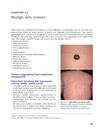
This chapter classifies various benign skin tumors and discusses their characteristics, treatment indications, and potential for recurrence, but reports no new clinical findings.
 December 2013 in “Research Portal (King's College London)”
 This article discusses the anatomical and biological aspects of hair follicle stem cells in the bulge region but reports no new research findings.
 January 2008 in “Springer eBooks”
 Thyroid hormone may be useful for treating various skin conditions and needs more research.
 May 2006 in “Dermatologic Surgery”
 This study found that multi-hair follicles naturally orient perpendicular to the radial line from the crown whirl, suggesting that perpendicular transplantation of grafts could replicate this natural appearance.
 October 2005 in “Nature reviews. Molecular cell biology (Print)”
 This study suggests that the interaction between the hairless and wise proteins can help bald mice regrow fur, highlighting its essential role in hair-follicle regeneration.
 April 2001 in “Dermatologic Surgery”
 This article proposes a standardized naming system for areas of the balding scalp to improve communication among hair restoration professionals, but it reports no clinical results.

This research elucidates the molecular mechanisms underlying carbamazepine and griseofulvin's inclusion complex channel formations with polymers, revealing why carbamazepine forms stable channels independently, while griseofulvin requires polymeric support due to weaker interactions.

This case report describes a transgender woman who achieved a soft, feminine hairline nine months post-hair transplant using follicles from both the occipital scalp and pubic area.
 2 citations
,
April 2018 in “Journal of Cosmetic Dermatology”
2 citations
,
April 2018 in “Journal of Cosmetic Dermatology” This study found that hair shaft exit angles in patients undergoing strip hair restoration increased after the tumescence injection and further increased after strip excision.
 24 citations
,
June 2012 in “BMC Research Notes”
24 citations
,
June 2012 in “BMC Research Notes” This study outlines the Human Gene Correlation Analysis tool, which classifies human genes by coexpression levels and identifies overrepresented annotation terms in correlated gene groups, with no new clinical results reported.
 March 1997 in “The American Journal of Cosmetic Surgery”
 A new hair transplant method showed promising results and a study found how deep a CO₂ laser can penetrate skin.
 January 2016 in “Dermatology Review”
 This review details various skin manifestations linked to different endocrine disorders but does not report any new clinical results.
January 2019 in “Can Tho University Journal of Science” This study reported that applying a nanosilica-bromelain-curcumin complex improved wound healing and hair regrowth in mice with second-degree burns compared to no treatment.
 2 citations
,
January 2016 in “Archives of Aesthetic Plastic Surgery”
2 citations
,
January 2016 in “Archives of Aesthetic Plastic Surgery” This article reviews methods for restoring the temporal peaks of hair and highlights a technique that produces variable density for a more natural look, but reports no new clinical results.
April 2017 in “Journal of Dermatological Science” Asymmetric hair follicle differentiation causes the unique shape of kinky hair.
12 citations
,
January 2015 in “Skin appendage disorders” This article illustrates that dermoscopy can quickly diagnose hair breakage due to intrinsic and chemical factors in patients of African descent, although published findings are limited.
3 citations
,
August 2018 in “Journal of Structural Biology” KAP8.1 protein is crucial for hair structure and interacts with keratin 85.
2 citations
,
July 2019 in “Cosmetics” This study identified a unique concentric double-layered structure in both Japanese and Caucasian SHINAYAKA hair, associated with improved flexibility and elasticity, and developed a succinic acid treatment to enhance these properties.

In this research, the author hypothesizes that curly hair is influenced by the contraction of the Arrector Pili muscle, suggesting that its relaxation through specific treatments could potentially modulate hair follicle curvature, but further studies are needed to confirm this mechanism.
 January 2024 in “Indian Journal of Pharmaceutical Sciences”
 This study hypothesizes that the curling of hair may result from the contraction of the Arrector Pili Muscle, contributing to the diverse types of curly hair.
 January 2024 in “Indian Journal of Pharmaceutical Sciences”
 This study hypothesizes that curly hair is shaped by the contraction of the Arrector Pili Muscle within the follicle, potentially modifiable through muscle-relaxing treatments, but further research is needed to confirm this mechanism.
19 citations
,
February 2013 in “Journal of Investigative Dermatology” Touch domes in human skin are complex sensory structures not directly linked to hair.
9 citations
,
November 2017 in “Frontiers in Pharmacology” This study found that Shengfu oil may enhance wound healing in scalded rabbit skin by regulating proteins β-catenin, Dlk1, and COX-2, due to its anti-inflammatory, analgesic, and antimicrobial properties.
6 citations
,
April 2001 in “The Anatomical Record” This study introduces a method for determining the orientation of collagen fibers in skin by analyzing the anisotropic shape of hair pores, which may aid in skin grafting procedures.
 March 2023 in “Scientific Reports”
 In this rodent model study, the researchers reported that using low-intensity focused ultrasound with phenytoin enhanced its anti-epileptic efficacy by disrupting plasma protein binding in a region-specific manner, reducing seizure frequency and duration.
January 2025 in “Pharmaceutical journal/The pharmaceutical journal” This abstract provides background information on alopecia areata, describing it as an autoimmune condition leading to non-scarring, patchy hair loss but does not report specific study results.
1 citations
,
December 2023 This study explored the complex developmental processes of human hair, emphasizing the intricate interactions required for hair follicle morphogenesis and its implications for drug incorporation and concentration interpretation, particularly in early childhood.
5 citations
,
June 2025 in “Journal of Functional Biomaterials” This study explored recent advancements in 3D bioprinting for head and neck defects, highlighting how bioinks and scaffolds may improve treatment customization and functionality by mimicking native tissue features. The research also examined challenges like biocompatibility and regulatory requirements on the path to clinical use.
2 citations
,
September 2023 in “Journal of clinical medicine” This study found that using autologous ultra-thin split-thickness skin grafts from the scalp with the DermaBlade tool led to rapid wound healing, minimal complications, and improved cosmetic outcomes for 90% of patients with lower extremity lesions, without causing scarring or alopecia.