 113 citations
,
July 2020 in “Communications biology”
113 citations
,
July 2020 in “Communications biology” This review suggests that understanding the biological and molecular reasons for more severe COVID-19 in men, particularly those at risk for prostate cancer, could improve management of these patients, but reports no new results.
112 citations
,
September 2021 in “BMC Biology” This study found that specific gene expressions during different stages of hair follicle development in Merino sheep are linked to wool-related traits, and may also be relevant to human skin, metabolic, and immune traits.
112 citations
,
April 2009 in “Cochrane library” This review found some evidence suggesting that spironolactone can effectively reduce hirsutism in women but did not support its use for treating acne vulgaris.
112 citations
,
September 1968 in “PubMed” In this study, irreversible alopecia on the crown of the scalp in Black women using hot combs was associated with chronic inflammation and follicle damage leading to scarring.
110 citations
,
January 1995 in “European Journal of Neuroscience” This study found that glycinergic synapses in the rat spinal cord are predominantly associated with gephyrin, though gephyrin may also be present at non-glycinergic synapses.
 109 citations
,
December 2003 in “American Journal of Pathology”
109 citations
,
December 2003 in “American Journal of Pathology” This study observed that the ontogenetic transition from scarless repair in early fetal rat wounds to scar-forming repair in late gestation is associated with differential TGF-β ligand and receptor expression patterns.
109 citations
,
June 2000 in “Development” This study reports that activating Notch signaling in the hair follicle cortex of transgenic mice caused abnormal differentiation of the medulla and cuticle, highlighting potential cell-cell interactions.
 108 citations
,
March 2011 in “Archives of Dermatology”
108 citations
,
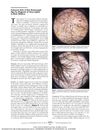
March 2011 in “Archives of Dermatology” Corkscrew hair may be a new sign for quickly diagnosing scalp fungus in black children.
107 citations
,
September 1968 in “Archives of Dermatology” In this study, researchers identified a form of irreversible scalp alopecia in Black women using hot combs, characterized by incomplete hair loss primarily on the crown and follicular scarring.
 106 citations
,
January 2016 in “Journal of Cosmetic Dermatology”
106 citations
,
January 2016 in “Journal of Cosmetic Dermatology” This study found that adding platelet-rich plasma to microneedling improved outcomes for atrophic acne scars more than microneedling alone, according to both quantitative and qualitative assessments.
 106 citations
,
September 2010 in “Stem cells”
106 citations
,
September 2010 in “Stem cells” This study found that skin-derived precursor cells in mice can originate from both neural crest and somite lineages but show functional similarities regardless of their developmental origins.
105 citations
,
October 2017 in “Stem cells” This review discusses Wnt signaling pathways in skin development and stem cell regulation, highlighting potential interactions with other pathways but reports no new findings.
105 citations
,
December 1998 in “Archives of Dermatological Research” This study found that dermal papilla cells in human hair follicles exhibit stronger expression of VEGF mRNA and protein compared to other follicular cells, suggesting their key role in angiogenic processes related to hair growth.
103 citations
,
September 2004 in “Clinics in dermatology” This article discusses methods to measure comedogenesis in acne through the presence of microcomedones and reports no new clinical results; the authors outline a skin surface biopsy technique using cyanoacrylate gel.
103 citations
,
July 2001 in “Proceedings of the National Academy of Sciences” This study found that conditional expression of TGFβ1 in mice affects epidermal and hair follicle growth, with chronic expression causing severe alopecia and a negative feedback loop involving Smad7.
102 citations
,
October 2010 in “Molecular Pharmaceutics” In this study, copper-doxorubicin liposomes with multidose therapy reduced systemic toxicity compared to ammonium sulfate-loaded doxorubicin liposomes, while combinatorial strategies further enhanced tumor regression and accumulation.
 101 citations
,
July 2020 in “Dermatologic therapy”
101 citations
,
July 2020 in “Dermatologic therapy” This systematic review reports that "COVID toes" and other skin manifestations can be initial signs of COVID-19, and advises immunosuppressive therapy adjustments only for infected or at-risk patients.
101 citations
,
January 2014 in “Journal of Visualized Experiments” This study validated a method for measuring cortisol levels in hair, which may serve as a biomarker for chronic stress in both humans and various animals.
 100 citations
,
November 2021 in “Cell Research”
100 citations
,
November 2021 in “Cell Research” This study found that SARS-CoV-2 hijacks the host factor IGF2BP1 to stabilize its RNA and enhance translation, and identified Cepharanthine and Trifluoperazine as potential treatments against the virus.
 100 citations
,
May 2011 in “Journal of Pediatric and Adolescent Gynecology”
100 citations
,
May 2011 in “Journal of Pediatric and Adolescent Gynecology” This review covers the pathophysiology, diagnosis, and treatment of congenital adrenal hyperplasia due to 21-hydroxylase deficiency and reports no new findings.
 100 citations
,
July 2018 in “Journal of The American Academy of Dermatology”
100 citations
,
July 2018 in “Journal of The American Academy of Dermatology” This study found that alopecia areata is linked with a higher prevalence of systemic and psychiatric diseases, suggesting that physicians should monitor for these potential comorbidities.
100 citations
,
November 1997 in “Human Genetics” In this study, researchers found that the prevalent Glu 410 Lys mutation in hHb6 and a new Glu 403 Lys mutation in hHb1 are linked to monilethrix, suggesting a mutational hotspot in type II hair keratins.
 99 citations
,
July 2017 in “Clinical Reviews in Allergy & Immunology”
99 citations
,
July 2017 in “Clinical Reviews in Allergy & Immunology” This review noted that alopecia areata is an autoimmune disease impacting hair follicles and offered insights into its complex pathogenesis involving immune responses, while highlighting ongoing research into new treatments such as Janus kinase inhibitors and other immunomodulatory drugs.
99 citations
,
May 1998 in “Journal of biological chemistry/The Journal of biological chemistry” This study found that small proline-rich proteins modify the biomechanical properties of cornified cell envelopes in rodent forestomachs, potentially affecting the tissue's ability to withstand mechanical stress.
99 citations
,
January 2002 in “Plastic & Reconstructive Surgery” In this study, fetal rat wounds at gestational age 16 days healed without scar formation and resembled normal skin architecture, unlike those at 18 days which resulted in scarring and lack of hair follicles.
98 citations
,
February 2021 in “Dermatologic Therapy” This review explores how air pollutants may contribute to various skin diseases and highlights potential mechanisms, but it presents no new clinical findings.
98 citations
,
December 2015 in “The Journal of Cell Biology” In this study, researchers found that the absence of type I or type II keratins in mice leads to severe skin barrier defects, highlighting keratins' crucial role in epidermal structure and function.
98 citations
,
May 2010 in “British Journal of Dermatology” This document discusses the British Association of Dermatologists' current perspective on isotretinoin, focusing on its known side effects, prescribing requirements, teratogenic risks, and the contentious link to mood changes, reporting no new research findings.
 98 citations
,
November 2002 in “Contact Dermatitis”
98 citations
,
November 2002 in “Contact Dermatitis” This study found that adverse reactions to para-phenylenediamine in hair dye, including severe allergic contact dermatitis, may be more common than currently reported and often misdiagnosed.
98 citations
,
July 1968 in “Archives of Dermatology” This study found that applying scalp sebum from young men to rabbit ear canals caused follicular hyperkeratosis, suggesting sebum stimulates the formation of comedones, a key feature in acne vulgaris.