 1 citations
,
November 2023 in “Journal of cosmetic dermatology”
1 citations
,
November 2023 in “Journal of cosmetic dermatology” This study developed a novel antidandruff shampoo with ketoconazole-coated zinc oxide nanoparticles that showed enhanced antifungal activity against Malassezia furfur compared to standard ketoconazole treatments, suggesting it could be a more effective alternative for dandruff management.
 9 citations
,
October 2013 in “Pediatric dermatology”
9 citations
,
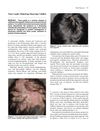
October 2013 in “Pediatric dermatology” This study highlights a dissecting cellulitis-like presentation of tinea capitis in children that should be identified to ensure correct diagnosis and treatment to prevent scarring alopecia.
 80 citations
,
August 2002 in “Journal of Dermatology”
80 citations
,
August 2002 in “Journal of Dermatology” This study found that combining oral finasteride with topical minoxidil resulted in the greatest improvement in hair growth for male patients with androgenetic alopecia, compared to using any single treatment.
 26 citations
,
April 2019 in “Journal of Cosmetic Dermatology”
26 citations
,
April 2019 in “Journal of Cosmetic Dermatology” This review discusses the potential of herbal treatments like Saw palmetto, Green tea, and Rosemary as alternatives to conventional drugs for androgenetic alopecia, noting that these herbs may inhibit the 5-alpha-reductase enzyme and reduce hair loss with fewer side effects.
 14 citations
,
October 2020 in “Natural Products and Bioprospecting”
14 citations
,
October 2020 in “Natural Products and Bioprospecting” This review discusses current topical treatments, natural products, and complementary therapies for androgenetic alopecia, but it reports no new clinical results.
 13 citations
,
January 2016 in “Journal of cosmetology & trichology”
13 citations
,
January 2016 in “Journal of cosmetology & trichology” This review discusses the emerging pathophysiological factors and potential new therapies for androgenetic alopecia beyond traditional treatments, but reports no new results.
 35 citations
,
April 2006 in “Ocular Surface”
35 citations
,
April 2006 in “Ocular Surface” This review discusses adverse effects of cosmetic products and procedures on the ocular surface, including mild discomfort to severe vision-threatening conditions, and reports no new clinical results.
 December 2017 in “Springer eBooks”
 Transplant patients often get skin problems, with treatments varying by condition.
 1 citations
,
October 2013 in “Actas Dermo-Sifiliográficas”
1 citations
,
October 2013 in “Actas Dermo-Sifiliográficas” This review discusses the current role and challenges of compounding in dermatology without presenting new research results; the authors suggest its resurgence in practice despite pharmaceutical alternatives.
 5 citations
,
November 1992 in “Current problems in dermatology”
5 citations
,
November 1992 in “Current problems in dermatology” This review discusses the role of glucocorticoids in treating severe inflammatory disorders and highlights their potential adverse effects, recommending dosage management to minimize these risks; no new clinical results are reported.
 24 citations
,
January 2013 in “Indian Journal of Dermatology, Venereology and Leprology”
24 citations
,
January 2013 in “Indian Journal of Dermatology, Venereology and Leprology” This review examines hormonal influences on acne development and available hormonal therapies but reports no new clinical results.
 47 citations
,
August 2000 in “Endocrine Reviews”
47 citations
,
August 2000 in “Endocrine Reviews” This review discusses idiopathic hirsutism, potential underlying mechanisms, and various therapeutic approaches without providing new clinical results, and emphasizes the need for further research on well-defined patient groups.
 13 citations
,
October 2010 in “Pharmacogenomics”
13 citations
,
October 2010 in “Pharmacogenomics” This study constructed a panel of pharmacokinetic and pharmacodynamic genes, revealing that current SNP chips insufficiently capture many drug-response gene variants, highlighting the need for complementary genetic approaches.
 June 2025 in “Journal of Endocrinological Investigation”
 This review identifies and discusses various endocrine-related causes of hypertension in children and adolescents, emphasizing the role of genetic predispositions and highlighting the need for systematic diagnostic guidelines and genetic sequencing referrals to improve diagnosis and treatment strategies.
 November 2019 in “Harper's Textbook of Pediatric Dermatology”
 This index of Harper's Textbook of Pediatric Dermatology, Fourth Edition, provides no clinical results or new findings.
 March 2008 in “Aging health”
 This research reported that docetaxel is generally safe and effective for elderly patients with solid tumor malignancies, showing no significant age-related differences in efficacy or toxicity.
 January 2025 in “Directory of Open access Books (OAPEN Foundation)”
 This book reviews the symptoms, diagnosis, and treatments for Polycystic Ovary Syndrome, providing a comprehensive exploration but reports no new clinical results.
 1 citations
,
September 2023 in “Molecules (Basel. Online)”
1 citations
,
September 2023 in “Molecules (Basel. Online)” This source highlights that while plant sterols show potential benefits and applications in various industries, significant research gaps, including their complex structures and mechanisms, hinder their broader use, emphasizing the need for innovative sources and sustainable methods for their study.
 141 citations
,
September 2016 in “European Journal of Dermatology”
141 citations
,
September 2016 in “European Journal of Dermatology” This review examines dermatological side effects of taxane chemotherapy reported in past studies and highlights the necessity for identifying and managing these conditions to maintain cancer patients' quality of life; it presents no new clinical results.
 14 citations
,
January 2013 in “Journal of Cutaneous Medicine and Surgery”
14 citations
,
January 2013 in “Journal of Cutaneous Medicine and Surgery” This study describes permanent scalp alopecia in patients receiving chemotherapy, radiation, or both, and highlights the need for further research to identify causative factors and mitigation strategies.
December 2013 in “대한피부과학회지” This study described the clinical characteristics of chemotherapy-induced permanent alopecia, highlighting two patterns: diffused and androgenetic, and noting limited treatment response with minoxidil or finasteride.
16 citations
,
December 2006 in “Chinese Medical Journal” This case report describes a 12-year-old boy with congenital insensitivity to pain with anhidrosis and progressing acro-osteolysis, highlighting the severe complications and the necessity for early intervention.
 9 citations
,
August 2024 in “Cureus”
9 citations
,
August 2024 in “Cureus” This study reviewed existing knowledge and research, observing that ketoconazole shampoo is a safe and effective treatment for scalp seborrheic dermatitis, significantly improving irritation and scaling while maintaining low relapse rates and minimal side effects.
June 2026 in “International Journal of Advanced Multidisciplinary Research and Studies” This study highlights the potential of a ketoconazole antifungal hair spray as an innovative and effective topical method for treating tinea capitis, offering benefits such as easy application, improved drug penetration, and reduced systemic exposure compared to conventional treatments.
 28 citations
,
December 2003 in “Medical Hypotheses”
28 citations
,
December 2003 in “Medical Hypotheses” This paper suggests that ketoconazole 2% shampoo may enhance finasteride's effectiveness in treating androgenetic alopecia by more completely inhibiting the dihydrotestosterone pathway.
 March 2025 in “JEADV Clinical Practice”
 This article explores the role of ketoconazole shampoo in hair care beyond treating dandruff and seborrhoeic dermatitis, suggesting it may reduce hair shedding and chronic scalp inflammation, potentially complementing treatments for androgenetic alopecia.
 39 citations
,
January 2019 in “Journal of Dermatological Treatment”
39 citations
,
January 2019 in “Journal of Dermatological Treatment” This review found topical ketoconazole to be highly effective against Malassezia-related skin conditions, though other treatments may outperform it for Tinea and Candida infections.
 May 2023 in “Asian journal of research in pharmaceutical sciences”
 This study concluded that topical ketoconazole is effective and safe for treating superficial fungal infections and has potential for new dermatologic uses despite concerns over oral administration's adverse effects.
 92 citations
,
January 1998 in “Dermatology”
92 citations
,
January 1998 in “Dermatology” This study found that 2% ketoconazole shampoo improved hair density and anagen follicle proportion in androgenic alopecia similarly to minoxidil treatment, suggesting a potential role for Malassezia in inflammation.
5 citations
,
February 2013 in “PubMed” In this case study, an 11-year-old girl with a Cladosporium scalp infection showed significant improvement in hair growth and appearance after treatment with itraconazole.