 29 citations
,
December 2017 in “Molecular therapy”
29 citations
,
December 2017 in “Molecular therapy” This study found that enzyme replacement therapy in mice with a severe form of classical homocystinuria improved metabolic patterns and alleviated many clinical symptoms.
 10 citations
,
December 2015 in “Clinics in Dermatology”
10 citations
,
December 2015 in “Clinics in Dermatology” This review highlights the eye and skin manifestations of endocrine-related metabolic diseases but provides no new clinical results.
 May 2021 in “Histochemistry and Cell Biology”
 This article highlights studies on cholesterol transporter proteins in hair cycles, epithelial-to-mesenchymal transition in cancer, ovarian hormone effects on cell polarity before implantation, and UV effects on rodent skin, without providing new clinical results.
 April 2024 in “Pharmaceuticals”
 This review highlights the clinical usefulness of bimatoprost in lowering intraocular pressure for glaucoma patients and its promising results in promoting hair growth for conditions like alopecia, with research also exploring potential new applications and delivery systems.
226 citations
,
May 2004 in “Journal of Biological Chemistry” This study identified collagen XXII as a novel extracellular matrix protein specifically present at tissue junctions, where it functions as a cell adhesion ligand for skin epithelial cells and fibroblasts.
 1 citations
,
July 2023 in “Nature communications”
1 citations
,
July 2023 in “Nature communications” This study found that deleting the Mof gene in mouse skin leads to severe defects in skin cell self-renewal, differentiation, and hair follicle growth, indicating that MOF is crucial for mitochondrial and ciliary gene expression and essential for skin development.
 July 2025 in “Journal of Dermatology Research Reviews & Reports”
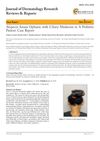
 In this case study, a 10-year-old girl with infantile ophiastic alopecia areata and ciliary madarosis showed excellent hair and eyelash regrowth after 56 days of treatment involving oral corticosteroids, topical minoxidil, and clobetasol hair lotion, following an initial diagnosis and psychological evaluation.
January 2024 in “Skin Appendage Disorders” This article discusses ciliary madarosis as a transient condition secondary to IAC, emphasizing the value of physical and trichoscopic evaluations for diagnosis and prognosis; it does not report new clinical results.
 April 2018 in “Journal of Investigative Dermatology”
 In this study, researchers identified CENPV as a new CYLD interacting partner that localizes to primary cilia and regulates acetylated tubulin levels, offering insights into the pathogenesis of skin appendage tumors.
12 citations
,
October 2001 in “British Journal of Ophthalmology” This paper suggests intralesional cidofovir as a potentially effective treatment for SCC with no systemic toxicity observed, but surgical excision remains the standard for its curative outcomes and thorough evaluation.
 October 2022 in “Ophthalmic Plastic and Reconstructive Surgery”
 This case report describes a 7-year-old boy who developed telogen effluvium resulting in unilateral ciliary madarosis nine weeks after COVID-19 infection, with no other causes identified.
 45 citations
,
September 2012 in “Life Sciences”
45 citations
,
September 2012 in “Life Sciences” This study observed that Aconiti Ciliare Tuber extract may promote hair growth in mice by activating the Wnt/β-catenin signaling pathway.
 November 2022 in “bioRxiv (Cold Spring Harbor Laboratory)”
 This study found that conditional deletion of Mof in mice resulted in severe defects in skin development, including compromised epidermal differentiation and hair growth, leading to perinatal lethality.
July 2025 in “OPAL (Open@LaTrobe) (La Trobe University)” The research found that topical maslinic acid stimulates hair growth in mice, comparable to minoxidil, by inducing anagen phase acceleration and activating pathways such as Wnt/β-catenin, Notch, and MAPK; a potential link to cilia activity was also explored.
 December 2012 in “Journal of undergraduate research in Alberta”
 This study suggests that primary cilia may enhance the proliferation of skin-derived precursors when combined with lithium chloride and platelet-derived growth factor, potentially targeting them for stem cell-based therapies.

This article discusses the various skin side effects associated with targeted cancer therapies like tyrosine kinase inhibitors and EGF-R inhibitors but provides no new clinical findings.
This review discusses the role of the Wnt/β-catenin pathway in hair follicle development and how natural products that activate this signaling could be used to treat hair loss, but it reports no new experimental results.
 June 2026 in “arXiv (Cornell University)”
 This study investigated the dynamic mechanical properties of fluid-immersed elastic hair beds under oscillatory shear flows, revealing a nonlinear response influenced by driving frequency and amplitude, which impacts mechanosensory signaling stability in biological processes like vasodilation and ciliary remodeling.
 January 2025 in “Institutional Repositories DataBase (IRDB)”
 This study observed that topical application of maslinic acid stimulated hair growth in mice comparably to minoxidil, possibly through the Wnt/β-catenin pathway and involving ciliary gene activity, highlighting increased levels of trichogenic gene expression and protein levels.
 29 citations
,
July 2014 in “PLoS ONE”
29 citations
,
July 2014 in “PLoS ONE” This study suggests that inactivation of β-catenin is necessary for chick retina regeneration, as it allows cells to enter the cell cycle during injury and promotes regeneration without needing FGF2.
24 citations
,
March 2020 in “Cells” This review provides an overview of natural product-derived small molecule modulators of the Wnt signaling pathway, exploring their potential as therapeutic agents for tissue regeneration and cancer treatment.
 102 citations
,
August 2008 in “Genes & Development”
102 citations
,
August 2008 in “Genes & Development” This study found that laminin-511 is crucial for hair morphogenesis in mice, as it influences primary cilia formation and dermal papilla maintenance through noggin and sonic hedgehog signaling.
 May 2022 in “bioRxiv (Cold Spring Harbor Laboratory)”
 In this study, primary cilia were found to contribute to meibomian gland enlargement and lipid production, though they are not necessary for normal gland development.
April 2021 in “The journal of investigative dermatology/Journal of investigative dermatology” This study found that MPZL3 plays a crucial role in regulating the hair cycle clock in mice, with its absence leading to accelerated hair follicle cycling and suggesting potential therapeutic pathways for alopecia treatment.
2 citations
,
June 2020 in “bioRxiv (Cold Spring Harbor Laboratory)” This study demonstrates that in vivo live imaging reveals how distinct stem cell activities in the limbal niche coordinate corneal regeneration.
 July 2022 in “The journal of investigative dermatology/Journal of investigative dermatology”
 This study suggests that Myelin Protein Zero-like 3 plays a crucial role in hair follicle cycling by regulating anagen and catagen phases, mediated through mitochondrial signaling mechanisms in both human and murine hair follicles.
 December 2024 in “Stem Cell Research & Therapy”
 This study found that OCT4-overexpressing human hair follicle mesenchymal stem cells show promise for artificial hematopoiesis by enhancing self-renewal through cytoskeletal remodeling and the beta-catenin-dependent adherens junction pathway.
September 2008 in “Acta Ophthalmologica” This study found that murine vibrissa hair follicle stem cells can differentiate into corneal epithelial-like cells in vitro when cultured with limbus-specific microenvironmental factors.
 15 citations
,
May 2010 in “International Journal of Cosmetic Science”
15 citations
,
May 2010 in “International Journal of Cosmetic Science” This review discusses new developments in understanding the structure and properties of keratin fiber cell membrane complexes, without reporting new experimental results.
5 citations
,
September 2009 in “Acta Ophthalmologica” This study found that the Meibomian gland shares structural and cytokeratin composition similarities with hair follicles, and plays a role in hyper-keratinisation observed in obstructive Meibomian gland dysfunction.