 17 citations
,
July 2014 in “Our Dermatology Online”
17 citations
,
July 2014 in “Our Dermatology Online” In this study of elderly patients at an Indian medical center, researchers found that xerosis was the most common physiological skin change and pruritus was the most frequent complaint.
 64 citations
,
January 2002 in “American Journal of Clinical Dermatology”
64 citations
,
January 2002 in “American Journal of Clinical Dermatology” This review examines the adverse skin reactions associated with antipsychotic medications and reports no new clinical findings, but suggests discussing management strategies to improve patient compliance.
 9 citations
,
August 2002 in “Current Opinion in Pediatrics”
9 citations
,
August 2002 in “Current Opinion in Pediatrics” This article discusses the roles of pediatrics and dermatology departments at Yale University School of Medicine, but reports no specific clinical results.
2 citations
,
December 2019 in “Chinese medical journal/Chinese Medical Journal” This case report describes a rare instance of tinea capitis caused by Trichophyton tonsurans in a Chinese patient, followed by the development of herpes zoster, suggesting a potential link to immunosuppression.
January 2000 in “The Journal of Trace Elements in Experimental Medicine” In this case report, an 11-year-old girl with acrodermatitis enteropathica experienced a complete resolution of symptoms following oral zinc therapy, highlighting its effectiveness in managing this condition.
October 2025 in “Frontiers in Medicine” In this case report, a 10-month-old ethnic minority infant from Xinjiang with acrodermatitis enteropathy improved clinically and biochemically after zinc supplementation, underscoring the importance of early genetic testing for SLC39A4 mutations and individualized zinc therapy in managing this disorder.
 January 2023 in “Open journal of pediatrics”
 In this case report, a 7-month-old girl with suspected acrodermatitis enteropathica and severe dermatitis experienced a tragic outcome despite zinc treatment, highlighting the challenges of diagnosing and managing this rare genetic disorder.
July 2024 in “Medical alphabet” The authors concluded that "burning scalp" syndrome lacks general treatment recommendations, but therapeutic cosmetics showing antipruritic and anti-inflammatory effects may offer promise for long-term management and prevention.
 February 2006 in “Journal of The American Academy of Dermatology”
 This study found that Malassezia globosa, a scalp-associated fungus linked to dandruff, grows with saturated but not unsaturated fatty acids, potentially causing unsaturated fatty acid accumulation on the scalp and triggering dandruff-like flaking in susceptible individuals.
 March 2026 in “Open MIND”
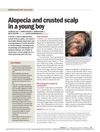
 Early treatment of scalp infections can prevent permanent hair loss.
 June 2026 in “International Journal Of Ayurvedic And Herbal Medicine”
 In this case report, a 23-year-old male with alopecia areata in the beard area experienced significant improvement, with tiny hairs appearing, after 10 days of combined Ayurvedic Shamana and Shodhana therapies.
 23 citations
,
September 2021 in “Frontiers in Medicine”
23 citations
,
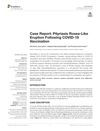
September 2021 in “Frontiers in Medicine” This report describes a rare case of pityriasis rosea-like eruption in a 52-year-old Thai woman following Oxford/AstraZeneca COVID-19 vaccination, emphasizing the condition does not preclude further vaccinations.
2 citations
,
October 2023 in “JDDG Journal der Deutschen Dermatologischen Gesellschaft” This case report found that dupilumab treatment in a 5-year-old with prurigo nodularis considerably reduced her itch severity and nearly cleared the skin lesions after six months.
 August 2025 in “International Journal of Research in Dermatology”
 This case report highlights an atypical presentation of acrodermatitis enteropathica in an 18-year-old male, exhibiting symptoms like erythrokeratoderma variabilis with a positive response to high-dose oral zinc, underscoring the importance of considering zinc deficiency in unusual skin conditions.
 June 2026 in “Zenodo (CERN European Organization for Nuclear Research)”
 This case report describes significant improvement in a 23-year-old male with alopecia areata of toxic origin after 10 days of Ayurvedic treatment involving Shamana and Shodhana therapies, as new hair emerged.
 June 2023 in “Indian Journal of Canine Practice”
 This study reports a case of a Persian cat with Malassezia pachydermatis infection, treated with fluconazole, topical miconazole shampoo, and a skin tonic. The cat showed remarkable clinical improvement after one week and fully recovered after four weeks.
November 2022 in “Indian Journal of Dermatology” This case report describes a 52-year-old woman with erythema annulare centrifugum after using topical luliconazole and oral itraconazole, suggesting a drug-induced reaction confirmed by a positive rechallenge test.
2 citations
,
May 2024 in “International Journal of Dermatology” January 2024 in “Journal of the American Academy of Dermatology” Gabapentin helps with scalp itch, dutasteride works for frontal fibrosing alopecia, and more research is needed for better PCA treatments.
January 2025 in “Dermatology Online Journal” The man's hair loss and skin papules were diagnosed as atrichia with papular lesions, not alopecia areata universalis.
 4 citations
,
March 2017 in “Journal of evolution of medical and dental sciences”
4 citations
,
March 2017 in “Journal of evolution of medical and dental sciences” This study observed that pruritus and xerosis were the most common skin complaints among the geriatric population attending a dermatology clinic in Puducherry.
January 2026 in “Zenodo (CERN European Organization for Nuclear Research)” In this study, researchers observed complete hair regrowth and improved quality-of-life in a 7-year-old boy with alopecia areata after a 15-week protocol involving Yoga Prana Vidya healing, suggesting its potential as an alternative treatment.
1 citations
,
January 2017 in “International journal of trichology” This case report suggests that topical diphenylcyclopropenone (DPCP) may be beneficial for treating both alopecia areata and verruca vulgaris, although it is not typically a first-line therapy.
March 2025 in “International Journal of Trichology” This case study reported that a 15-year-old female developed acquired localized trichorrhexis nodosa, a hair shaft disorder, due to vigorous rubbing of an herbal powder on her scalp as part of local cultural practices.
 2 citations
,
April 2018 in “Pediatric dermatology”
2 citations
,
April 2018 in “Pediatric dermatology” This report describes cases of localized alopecia in two girls following hairstyling marketed as the "Princess Package" at a major U.S. theme park, likely due to pressure ischemia and acute traction alopecia, with some regrowth observed but also areas of scarring.
 January 2025 in “Dermatology Review”
 This case report from the provided study details a previously unreported adverse effect of salivary gland inflammation potentially linked to acitretin therapy for generalized pustular psoriasis, suggesting further research is needed to explore this association.
2 citations
,
January 2018 in “Indian dermatology online journal” This case report describes a 16-year-old girl who developed Plica Polonica, a rare hair matting disorder, after using a homeopathic antidandruff shampoo, highlighting a potential link between shampoo use and the condition.
 June 2025 in “Journal of Ayurveda and Integrated Medical Sciences”
 In this study, a case of alopecia areata showed significant improvement in scalp health and hair regrowth following Shiropichu therapy, an Ayurvedic technique using coconut oil pads on the scalp, suggesting it as a potential non-invasive treatment option.
May 2026 in “Journal of International Medical Research” This case report describes a 4-year-old patient with complete hair loss and keratotic papules, leading to a diagnosis of atrichia with papular lesions, underscoring diagnostic challenges in resource-limited settings and suggesting a clinical framework for identifying this condition, especially in consanguineous families.
15 citations
,
July 1968 in “JAMA” This letter describes a case where severe pruritus without visible skin disease was a presenting symptom of hyperthyroidism in a 43-year-old woman, highlighting a less common association with the condition.