 1 citations
,
April 2020 in “medRxiv (Cold Spring Harbor Laboratory)”
1 citations
,
April 2020 in “medRxiv (Cold Spring Harbor Laboratory)” This study identified gene sets associated with Tourette Syndrome, implicating Ligand-gated Ion Channel Signaling, Lymphocytic, and Cell Adhesion and Trans-synaptic Signaling processes in the disorder's neurobiology.
 October 2024 in “Journal of the Endocrine Society”
 In this case report, a rare association between Cushing's syndrome caused by ectopic ACTH from cervical cancer is documented, highlighting the diagnostic challenges, treatment complexity, and high morbidity and mortality, with the patient succumbing to septic shock post-surgery.
 August 2023 in “Clinical and Experimental Dermatology”
 The document discusses a special exam case for formulating and using systemic therapy named Athena.
 March 2026 in “International Journal of Science Strategic Management and Technology”
 This research introduces WomenCare, a web-based system using a machine learning model to predict PCOD risk by evaluating factors like age, BMI, and lifestyle habits; it aims to help women monitor their health but is not a substitute for a professional diagnosis.
17 citations
,
January 2015 in “JOURNAL OF CLINICAL AND DIAGNOSTIC RESEARCH” This report presents a case of Cronkhite-Canada syndrome in an elderly Indian male, adding to the approximately 450 cases documented worldwide, but introduces no new results about the condition.
6 citations
,
December 2015 in “Medicine” This review discusses Cronkhite-Canada syndrome, highlighting a relatively mild case and suggesting that it may be a more benign and possibly reversible condition with treatment, but reports no new clinical results.
September 2021 in “Journal of the American Academy of Dermatology” This study found that reported stress and hair growth changes related to facial/body hair excess or scalp hair loss differ among ethnic gender minority groups, with black and other ethnic respondents experiencing more stress compared to Caucasians, particularly in relation to facial/body hair excess.
 April 2017 in “The journal of investigative dermatology/Journal of investigative dermatology”
 This study reports that 71% of patients treated with the gamma-secretase inhibitor PF-03084014 for desmoid tumors experienced dermatologic side effects, such as follicular lesions and pruritic eruptions, which were managed with topical or systemic treatments.
 43 citations
,
July 1984 in “Clinical and Experimental Dermatology”
43 citations
,
July 1984 in “Clinical and Experimental Dermatology” This study found that women with common baldness treated with cyclical antiandrogen therapy for 52 weeks experienced increased hair density and a higher percentage of hairs in the anagen growth phase.
 October 2024 in “Journal of the Endocrine Society”
 This case report highlighted a rare instance of Cushing's syndrome caused by ectopic ACTH from cervical cancer, demonstrating diagnostic challenges, treatment complexity, and high risks of morbidity and mortality, with less than 10 cases documented overall.
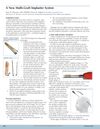 2 citations
,
May 2018 in “International Society of Hair Restoration Surgery”
2 citations
,
May 2018 in “International Society of Hair Restoration Surgery” The new system makes hair transplants faster and more precise.
 May 2024 in “British journal of dermatology/British journal of dermatology, Supplement”
 The researchers reported increased ubiquitination of proteins such as the insulin receptor in CYLD cutaneous syndrome skin tumors, suggesting that CYLD dysfunction may affect protein secretion and signaling processes.
May 2025 in “OPAL (Open@LaTrobe) (La Trobe University)” This study identified 4,942 differentially expressed genes between Jiangnan cashmere goats and Changthangi pashmina goats, mainly involving the PI3K-Akt pathway, with 24 key genes potentially affecting cashmere quality, offering insights for future genetic improvements.
1 citations
,
February 2026 in “ACS Nano” This study developed the TLMG hydrogel, a seamless in situ biointerface platform, demonstrating robust adhesion, high conductivity, and therapeutic effects for intelligent wound management in complex animal models and human tests, indicating its promise for integrated bioelectronic medicine.
April 2023 in “Journal of Investigative Dermatology” In this study, researchers developed a mouse model of scarring alopecia and observed significant reductions in CD200R expression in affected skin, potentially linking this signaling pathway to immune attacks on hair follicles and suggesting new treatment targets for scarring hair loss.
September 2025 in “International Journal of Cosmetic Science” This study found that a 0.5% cationic guar gum and 0.5% anionic surfactant formulation formed stable coacervates with improved adhesion and coverage on damaged hair, suggesting it may enhance the effectiveness of hair conditioning products compared to other ratios.
215 citations
,
November 2000 in “Journal of Investigative Dermatology” This study found that the tetracycline-regulated transcription system effectively controls conditional gene expression in the mouse epidermis, allowing suppression and activation of specific genes with doxycycline.
1 citations
,
November 2024 in “Blood” This study found that inhibiting the PI3Kδ enzyme in murine models of cutaneous chronic graft-versus-host disease (cGVHD) reduced skin scores and fibrosis, prevented pathogenic lymphoid structures, and improved survival, suggesting it as a promising therapeutic approach to address the disease's hypoxic pathophysiology.
August 2026 in “European Journal of Pharmacology” 2 citations
,
September 2020 in “International Journal of Molecular Sciences” In this study, the elimination of NG2+ hair follicle stem cells during the anagen phase was associated with an aggravated sensitization phase of allergic contact dermatitis, suggesting their immunosuppressive role.
1 citations
,
October 2023 in “Journal of the Endocrine Society” In this study, researchers found that transgender men exhibited impaired autonomic modulation during sympathetic stimulation compared to cisgender women, potentially due to testosterone treatment affecting cardiac autonomic modulation.
This study found that high-charge-density cassia HPTC improves deposition efficiency and conditioning benefits in shampoos compared to quaternized guar, suggesting its potential as an alternative or adjunct conditioning agent.
 January 2021 in “Mastology”
 This study found that over 80% of women treated with paclitaxel who used a hypothermic glycerin-based hydrogel cap preserved at least 50% of their initial hair volume, suggesting scalp cooling may effectively prevent chemotherapy-induced alopecia.
 5 citations
,
January 2023 in “Fertility and sterility”
5 citations
,
January 2023 in “Fertility and sterility” This review discusses the emerging considerations and challenges of uterus transplantation for transgender women but presents no new clinical results.
May 2025 in “OPAL (Open@LaTrobe) (La Trobe University)” This study identified 4,942 differentially expressed genes and key candidate genes involved in the hair follicle development and cashmere quality differences between Jiangnan and Changthangi goats, highlighting potential molecular targets for genetic improvement of cashmere goats.
 January 2024 in “Dermatologic Surgery”
 This abstract pertains to a dermatology-related academic profile without reporting any specific study findings. Results or research details are not provided.
33 citations
,
September 1990 in “Proceedings of the National Academy of Sciences” This study found that a 671-base pair promoter sequence from the ultra-high-sulfur keratin gene is sufficient to direct tissue-specific and development-specific expression of a reporter gene during hair growth in transgenic mice.
 March 2024 in “Cytologia”
 In this study, researchers observed that melatonin-mediated LncRNA MTC in Liaoning cashmere goat skin fibroblasts enhances cell proliferation by interacting with the GSTM1 protein, affecting its complex formation with ASK1 and thereby inhibiting apoptosis, which may be relevant for improving cashmere growth.
 June 2016 in “American Journal of Cardiology”
 This paper discusses the relationship between androgenetic alopecia and cardiovascular atherosclerosis, focusing on carotid intima-media thickness and the SYNTAX score, and reports no new results.
 14 citations
,
January 2018 in “Endocrine”
14 citations
,
January 2018 in “Endocrine” This report describes a three-generation family with Cantú syndrome linked to a novel ABCC9 gene variant, featuring acromegaloid appearance and hypertrichosis without growth hormone abnormalities, and suggests a potential association with pituitary adenomas.