January 2026 in “PLoS Biology” This study used developing mouse hair follicles to explore early epithelial bud formation, finding that the Rho GTPase regulator ARHGEF3 plays a crucial role in regulating cell fate and cadherin patterning, with knockouts showing disrupted morphology and increased straight hair follicle growth.
 April 2018 in “Journal of Investigative Dermatology”
 This study found that 1550-nm Er:Glass fractional laser treatment significantly increased hair density and shaft diameter in patients with androgenetic alopecia, though the mechanism may not involve Wnt10A or IGF-1 expression.
 2 citations
,
April 2018 in “Journal of Investigative Dermatology”
2 citations
,
April 2018 in “Journal of Investigative Dermatology” This case study in a renal transplant patient observed that eruptive KA-type SCCs exhibited aggressive behavior and genetic expression changes following intralesional chemotherapy, indicating potential caution against routine use of such treatments in similar cases.
 28 citations
,
May 2020 in “BMC plant biology”
28 citations
,
May 2020 in “BMC plant biology” This study concluded that GLCAT14A-C genes are crucial for the function of glucuronic acid transfer to AGPs in Arabidopsis, affecting various growth and reproductive traits such as seed germination and root hair growth.
This study identified the FGF5:c.578C>T variant as linked to long hair in Akitas in Japan and suggests that genetic testing could help improve their breeding practices and welfare.
 February 2026 in “Zenodo (CERN European Organization for Nuclear Research)”
 This study introduces the N-K Healing Series, an alternative geometric approach to medicine, claimed to restore tissue fully and eliminate pain without the traditional drawbacks, allegedly achieving results beyond mainstream medical treatments in simulated injury scenarios.
10 citations
,
November 2022 in “International Journal of Cosmetic Science” In this laboratory study, Camellia japonica fruit shell extract showed potential to mitigate hair loss by promoting hair cell growth and reducing harmful effects of DHT and oxidative stress.
 January 2026 in “Journal of Cutaneous Immunology and Allergy”
 In this case report, a young Japanese man was diagnosed with scalp IgG4-related disease, which mimicked acne keloidalis nuchae but was identified by histopathology and elevated serum IgG4 levels as a systemic fibroinflammatory disorder, highlighting the importance of differential diagnosis in atypical scarring alopecia.
 2 citations
,
September 2022 in “Composites Part B: Engineering”
2 citations
,
September 2022 in “Composites Part B: Engineering” This study found that multifunctional peptide-based materials derived from Crassostrea gigas may promote scarless dermal wound healing without affecting intestinal flora through both topical and oral administration.
 May 2024 in “Animal genetics”
 The researchers investigated a Maine Coon cat with suspected classical Ehlers-Danlos Syndrome and discovered a heterozygous deletion in the COL5A1 gene, underscoring the value of whole-genome sequencing for precise veterinary diagnostics.
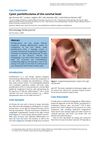 March 2026 in “Dermatology Online Journal”
 In this case report, the authors describe a rare cystic panfolliculoma in an 84-year-old man's right conchal bowl, noting its potential to mimic other tumors like basal cell carcinoma, which complicates diagnosis.
20 citations
,
December 2013 in “PTR. Phytotherapy research/Phytotherapy research” This study found that ginsenoside Rg3 up-regulates vascular endothelial growth factor expression in human dermal papilla cells and mouse hair follicles, suggesting its potential role in promoting hair growth.
7 citations
,
October 2011 in “BMC Cancer” This study found no evidence that HDGF expression transforms melanocytes into tumors in a mouse model, although it may play a role in cell differentiation and tumor progression.
 May 2026 in “Research Square”
 This research reports that the polyG fragment within the Hoxc13 protein alters its gene regulatory functions, which could have influenced mammalian hair evolution by affecting pathways related to hair follicle development.
20 citations
,
July 2005 in “Experimental dermatology” This study found that the fuzzy mutation in mice is linked to both structural hair defects and accelerated hair follicle cycling, influencing the regulation of hair cycle phases such as catagen and anagen.
415 citations
,
January 2008 in “Cell” NFATc1 controls hair stem cell activity, affecting hair growth and could be a target for hair loss treatments.
 1 citations
,
December 2024 in “Scientific Data”
1 citations
,
December 2024 in “Scientific Data” This study identified 1,289 molecular signatures that distinguish the three phases of cashmere growth in goat secondary hair follicles, offering potential targets for improving cashmere production.
28 citations
,
August 2005 in “Journal of Investigative Dermatology” TG5 helps maintain hair follicle health, while TG3 aids in hair shaft development.
56 citations
,
June 2002 in “Biomaterials” This study found that controlled release of VEGF via a collagen hydrogel promoted hair follicle growth and cell proliferation in mice more effectively than free VEGF injections.
3 citations
,
June 1979 in “The Journal of Dermatology” This study found that the dermal glycosaminoglycan content and mast cell count in rats peaked during the anagen stage of hair growth and decreased during later stages.
114 citations
,
October 2006 in “Journal of the European Academy of Dermatology and Venereology” In this study, clobetasol propionate foam demonstrated effectiveness and good patient compliance as a safe topical treatment for moderate to severe alopecia areata, with significant hair regrowth compared to placebo.
8 citations
,
August 2023 in “Lasers in Surgery and Medicine” This study observed that treating acne scars with fractional ablative laser concurrently with isotretinoin improved outcomes more effectively compared to applying the laser 6 months after isotretinoin treatment ended, as measured by the Quantitative Global Acne Scarring Grading System.
 9 citations
,
February 2004 in “Clinical and Experimental Ophthalmology”
9 citations
,
February 2004 in “Clinical and Experimental Ophthalmology” This report documents the second known case of Castleman's disease in the lacrimal gland, diagnosed in an 84-year-old woman through histological examination after excising a left upper lid mass.
August 2026 in “Journal of Cutaneous and Aesthetic Surgery” This study found that growth factor concentrate injections combined with topical minoxidil in androgenetic alopecia patients led to similar hair regrowth outcomes as platelet-rich plasma, with lower reported pain.
 April 2026 in “Open MIND”
 This review article discusses the aesthetic impacts of GLP-1 medications like Ozempic (semaglutide), including "Ozempic Face," skin sagging, and loss of lean mass, and explores potential recovery methods such as biostimulators, HIFU, endolaser, and PRP.
9 citations
,
March 2022 in “Military Medical Research” This study developed a method to convert fibroblasts into sweat gland-like cells, suggesting potential for regenerating damaged skin and restoring sweat gland function.
 14 citations
,
January 2015 in “Genetics and molecular research”
14 citations
,
January 2015 in “Genetics and molecular research” This study found that numerous genes involved in hair growth, including 73 co-up-regulated ones, were differentially expressed in goat hair follicles during the hair growth cycle.
 2 citations
,
March 2023 in “European Polymer Journal”
2 citations
,
March 2023 in “European Polymer Journal” This study developed multifunctional nanofiber wound dressings that significantly reduced bacteria and promoted healing in a mouse wound model by incorporating antibacterial and growth-promoting agents.
31 citations
,
March 2010 in “Molecular Endocrinology” This study identified that androgens increase calcium sensitization in mouse colonic smooth muscle by activating the Rho/Rho kinase pathway, highlighting its role in modulating muscle contractility.
November 2025 in “Clinical and Translational Medicine” This study found that cell-free RNA, particularly DNAJB9, shows potential as a biomarker for diagnosing and prognosing female androgenetic alopecia using a machine learning model.