September 2017 in “Journal of Investigative Dermatology” LRIG1 protein affects hair growth by regulating skin receptors, leading to hair loss when overexpressed.
71 citations
,
February 2012 in “The American Journal of Human Genetics” This study found that a heterozygous missense mutation in ATR is associated with a hereditary cancer syndrome, manifested by oropharyngeal cancer and other anomalies, in an autosomal-dominant inheritance pattern across a five-generation family.
33 citations
,
June 2007 in “Gene Expression Patterns” This study found that CTIP2 is highly expressed in mouse skin during embryogenesis and adulthood, suggesting it may play a role in skin development and homeostasis.
 17 citations
,
January 2019 in “International journal of biological sciences”
17 citations
,
January 2019 in “International journal of biological sciences” This study found that inserting the Tβ4 gene into cashmere goats increased cashmere yield by 74.5% without compromising quality, suggesting potential economic benefits for goat breeding.
April 2019 in “The journal of investigative dermatology/Journal of investigative dermatology” In this study, the researchers introduced a mutation in mice to mimic Olmsted syndrome and found that the mutation caused hair loss due to impaired keratinocyte differentiation and depletion of hair follicle stem cells.
30 citations
,
January 2013 in “Human Mutation” This study identified a homozygous frameshift mutation in the HOXC13 gene associated with pure hair and nail ectodermal dysplasia in a consanguineous Syrian family, suggesting crucial roles for HOXC13 in hair and nail development.
April 2019 in “Journal of Investigative Dermatology” This study found that frontal fibrosing alopecia involves distinct molecular changes, such as downregulation of steroid and cholesterol pathways and upregulation of fibrotic and immune response genes, which may help guide treatment strategies.
October 2021 in “Scholarworks (University of Massachusetts Amherst)” This dissertation demonstrates that FERONIA regulates essential plant functions such as RAC/ROP signaling, pollen tube reception, cell wall integrity, and sugar signaling as a cell surface receptor kinase.
33 citations
,
May 2017 in “Journal of Clinical Oncology” This phase I study reported that ETC-159, targeting Wnt signalling, showed tolerable safety profiles at doses that inhibit its pathway, though bone turnover markers increased, warranting early and regular monitoring. No tumor responses were observed, but two patients achieved stable disease for several cycles.
14 citations
,
September 1999 in “Mammalian genome” In this study, researchers generated a mouse mutation called scraggly, related to hair and skin defects, and mapped it to a genetic location on mouse Chromosome 19 distinct from similar mutations.
 8 citations
,
December 2009 in “Journal of The European Academy of Dermatology and Venereology”
8 citations
,
December 2009 in “Journal of The European Academy of Dermatology and Venereology” This article discusses a novel mutation in the FERMT1 gene identified in a Spanish family with Kindler’s syndrome but reports no new clinical results.
January 2004 in “uO Research (University of Ottawa)” This study found that overexpression of Claudin 6 in mice led to incomplete epidermal formation and hair abnormalities, suggesting its crucial role in skin differentiation and hair follicle development.
July 2026 in “Theranostics” This study developed a novel ferritin-based delivery system (LR@Fn) that effectively co-delivers RG108 and LLY283 for hearing loss treatment in animal models, reducing hair cell loss and synaptic damage more effectively than dexamethasone.
 July 2025 in “New Phytologist”
 This study demonstrated that the FER/MLO signaling module regulates calcium dynamics and ROS accumulation in root hair growth, with the constitutively active MLO (faNTA) able to restore normal development and signaling in specific mutant genotypes, highlighting MLO15's role in root hair tip growth regulation.
 6 citations
,
September 2024 in “BMC Pulmonary Medicine”
6 citations
,
September 2024 in “BMC Pulmonary Medicine” This study demonstrated that CEP may effectively treat pulmonary fibrosis by inhibiting fibroblast activation through regulating macrophage M2 polarization and decreasing fibrosis-associated factors, suggesting a new avenue for future research in this area.
January 2024 in “Animals” In this study, researchers found that circERCC6, a circular RNA identified in cashmere goat hair follicles, helps activate secondary hair follicle stem cells, with its role dependent on specific m6A modifications that interact with miR-412-3p to regulate BNC2 expression.
April 2026 in “Proceedings of the National Academy of Sciences” In this study, Tmem30b was identified as a key regulator of outer hair cell structure in mice, and its modulation may offer a therapeutic approach for certain types of hearing loss.
 8 citations
,
September 2017 in “Journal of Investigative Dermatology”
8 citations
,
September 2017 in “Journal of Investigative Dermatology” This study found that inhibiting the interaction between CXXC5 and Dishevelled could stimulate hair regrowth in mouse models by enhancing WNT/β-catenin signaling, suggesting a potential therapeutic strategy for hair loss involving compounds that block this interaction, such as interfering short peptides.
 192 citations
,
March 2017 in “Cell host & microbe”
192 citations
,
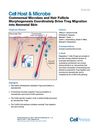
March 2017 in “Cell host & microbe” The researchers reported that hair follicle development and commensal microbe colonization promote the accumulation of regulatory T cells in neonatal skin, with the Ccl20-Ccr6 pathway playing a key role in this process.
This study found that the rs3185480 polymorphism in the APCDD1 gene was associated with an elevated risk of developing androgenic alopecia and reduced protein levels, potentially due to altered codon usage affecting translation efficiency.
 July 2023 in “Indian Journal of Animal Health”
 This study found that fibroblast growth factor 5 may enhance Cashmere goat hair growth by altering the expression of specific genes related to keratin and keratin-associated proteins.
 April 2019 in “The journal of investigative dermatology/Journal of investigative dermatology”
 In this study, researchers found that CCCA in women of African descent is associated with molecular changes, including dysregulation of fatty acid metabolism and fibrosis pathways, suggesting potential targets for new treatments.
26 citations
,
January 1983 in “PubMed” This study reports that despite normal cystine incorporation into hair follicles, trichothiodystrophy patients have decreased cystine levels in hair shafts, contradicting the hypothesis of defective transport in hair follicles.
37 citations
,
January 2010 in “Human Molecular Genetics” In this study using mice with specific gene knockouts, both farnesyltransferase and geranylgeranyltransferase-I were found to be essential for the proliferation and survival of skin keratinocytes.
 40 citations
,
December 2012 in “PLoS ONE”
40 citations
,
December 2012 in “PLoS ONE” This study found that selective deletion of Ctip2 in epidermal keratinocytes in adult mice leads to atopic dermatitis-like inflammation and suggests Ctip2 plays a crucial role in skin barrier maintenance and inflammatory regulation.
August 2025 in “BMC Pharmacology and Toxicology” The LTF gene may help predict and manage nonspecific orbital inflammation.
January 2018 in “Journal of Crohn s and Colitis” This study found that high-dose intravenous ferric carboxymaltose may reduce inflammatory activity in patients with inflammatory bowel disease and iron deficiency anaemia, as evidenced by decreased CRP levels and improved clinical disease indices.
31 citations
,
March 2010 in “Molecular Endocrinology” This study identified that androgens increase calcium sensitization in mouse colonic smooth muscle by activating the Rho/Rho kinase pathway, highlighting its role in modulating muscle contractility.
10 citations
,
November 2019 in “Journal of the European Academy of Dermatology and Venereology” This study observed distinct differences in hair characteristics between individuals with cardio-facio-cutaneous syndrome and Costello syndrome, highlighting the role of the RAS pathway in these RASopathies and aiding clinical diagnosis.
January 2011 in “Anhui nongye kexue” This study reports that the recombinant expression vector pcDNA3.1-KK demonstrates specific expression in the skin of newborn mice.