 1 citations
,
October 2023 in “Journal of the Pakistan Medical Association”
1 citations
,
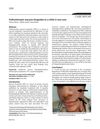
October 2023 in “Journal of the Pakistan Medical Association” This source describes a case of a 12-year-old male diagnosed with folliculotropic mycosis fungoides, presenting with an asymptomatic, erythematous plaque. Histology and immunohistochemistry confirmed FMF, which is typically rare in children and marked by follicular infiltration by CD4+ lymphocytes.
7 citations
,
February 2012 in “Journal of cutaneous pathology” This case report presents unique histopathological findings in skin lesions of hereditary mucoepithelial dysplasia that have not been previously documented.
 6 citations
,
November 2011 in “Journal of Dermatological Science”
6 citations
,
November 2011 in “Journal of Dermatological Science” A new gene mutation may allow some piebaldism patients to regain skin color in white patches.
 4 citations
,
January 2001 in “Archives of Biochemistry and Biophysics”
4 citations
,
January 2001 in “Archives of Biochemistry and Biophysics” This study found that TPA induces apoptosis in pig renal epithelial cells by affecting cell cycle proteins, and activated ras can prevent this process.
46 citations
,
May 1995 in “Proceedings of the National Academy of Sciences” This study demonstrated that a specific 9-kbp fragment of the bovine keratin 6 gene effectively directs tissue-specific and inducible expression in transgenic mice, suggesting potential applications for targeted gene therapy in hyperproliferative skin conditions.
4 citations
,
August 2013 in “Chinese Medical Journal” This study found that a mutation in the seventh exon of the KRT86 gene plays a major role in the pathogenesis of monilethrix in a Chinese family.
1 citations
,
September 2016 in “Journal of Dermatological Science” In this study using tamoxifen-inducible claudin-1 knockout mice, researchers observed that tight junction barrier leakage induced stratum corneum barrier defects and skin inflammation, suggesting a possible cycle of barrier damage and inflammation in atopic dermatitis.
 20 citations
,
July 2013 in “PLoS ONE”
20 citations
,
July 2013 in “PLoS ONE” This study found that inhibiting EGFR signaling in mice can prevent alopecia caused by cyclophosphamide treatment, highlighting its potential role in managing chemotherapy-induced hair loss.
 11 citations
,
February 2022 in “Scientific Reports”
11 citations
,
February 2022 in “Scientific Reports” This study found that CD26+ fibroblasts are crucial for effective extracellular matrix production and achieving rapid epidermal and dermal homeostasis in human tissue-engineered skin substitutes transplanted onto rodents.
5 citations
,
November 2021 in “The journal of investigative dermatology/Journal of investigative dermatology” This study found that inhibiting Wnt/β-catenin signaling disrupted hemidesmosome organization in keratinocytes, suggesting potential therapeutic targets for HD-defective diseases like epidermolysis bullosa.
September 2025 in “PeerJ” This study found that the genes FCER1A and RGS1 are promising biomarkers for diagnosing systemic lupus erythematosus, with FCER1A downregulated and RGS1 upregulated in patients.
71 citations
,
May 2019 in “Rheumatology” This study observed that PD-1+CXCR5-CD4+T peripheral helper cells are significantly elevated in patients with systemic lupus erythematosus and are correlated with disease activity indicators, suggesting their potential role in lupus pathogenesis.
 8 citations
,
January 2023 in “RSC Advances”
8 citations
,
January 2023 in “RSC Advances” This article reviews advancements in carbon dots for tissue engineering and regenerative medicine, highlighting challenges and future directions without presenting new clinical findings.
 1 citations
,
June 2018 in “International Journal of Dermatology”
1 citations
,
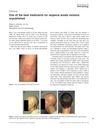
June 2018 in “International Journal of Dermatology” DNCB is highly effective for treating alopecia areata with minimal long-term side effects.
7 citations
,
October 2016 in “Cellular and Molecular Bioengineering” This study demonstrated that an automated algorithm can effectively track epithelial cell movement within clusters, revealing that partial knockdown of E-cadherin reduces electrotactic potential in breast epithelial cells, particularly in free-moving clusters, and suggesting an adhesion-independent role of E-cadherin in regulating cell electrotaxis.
 4 citations
,
September 2010 in “Journal of Dermatological Science”
4 citations
,
September 2010 in “Journal of Dermatological Science” This article reviews keratosis follicularis squamosa, a keratinizing disorder predominantly found in the Japanese population, but reports no new clinical results.
 January 2025 in “Recent Patents on Anti-Cancer Drug Discovery”
 In this study, neoadjuvant treatment with durvalumab combined with albumin-bound paclitaxel and carboplatin in patients with driver gene-negative stage III NSCLC showed a 65% objective response rate and was associated with high pathological response rates and improved immune function, with most adverse events being mild.
 April 2017 in “Journal of Investigative Dermatology”
 In laboratory tests and mouse models, this study found that the novel IPC analog SIG-1451 may offer potent anti-inflammatory effects for treating allergic skin inflammation, potentially outperforming some current therapies in specific inflammatory phases.
1 citations
,
April 2014 in “Journal of the American Geriatrics Society” This case report highlights the diagnostic challenge of mycosis fungoides, which was initially misdiagnosed as psoriasis in an elderly woman, emphasizing the need for careful evaluation of persistent skin conditions.

This study demonstrated that de novo designed bifunctional proteins can target and degrade BCL-xL, leading to cell apoptosis, suggesting a new approach to targeted protein degradation therapy.
November 2025 in “Journal of Investigative Dermatology” TEC kinases may help cause inflammation in vitiligo and could be targeted for treatment.
 9 citations
,
February 2022 in “Nature communications”
9 citations
,
February 2022 in “Nature communications” This study identified KRT82 as a significant Alopecia Areata risk gene, finding that rare damaging variants are linked to elevated immune cell infiltration around hair follicles in affected individuals.
 April 2018 in “Journal of Investigative Dermatology”
 This study found that TGFbeta is a key pathway causing age-related loss of dermal fat's antimicrobial function, suggesting that targeting TGFBR might help restore skin defense against infections in older age.
7 citations
,
May 2021 in “EBioMedicine” This study observed that aberrant DNA methylation in murine and human cutaneous squamous cell carcinoma likely contributes to the silencing of tumor suppressor genes, notably affecting the FILIP1L gene.
12 citations
,
May 2021 in “The journal of investigative dermatology/Journal of investigative dermatology” This study found that disrupting Lm332 expression in mice changes keratinocyte genetic expression, alters cell shape, and disrupts epidermal homeostasis, despite some compensatory anchorage by hair follicle basal cells.
 April 2020 in “Journal of animal research”
 In this study, researchers identified hair follicle stem cells in the bulge region of canine hair follicles, suggesting potential applications for future translational research.
November 1997 in “Open Archive (Karolinska Institutet)” This research observed that mutations in the PTCH gene are common in both sporadic and hereditary basal cell cancers, suggesting a critical role of the PTCH signaling pathway in skin tumor development.
44 citations
,
November 2022 in “Frontiers in Immunology” This review discusses the role of toll-like receptors in cancer treatment, providing an overview of pre-clinical studies and clinical trials on TLR-targeted therapies and noting the challenges and future prospects.
 6 citations
,
January 2020 in “International journal of biological sciences”
6 citations
,
January 2020 in “International journal of biological sciences” In this study, deletion of ROBO4 in mice ameliorated hair loss caused by elevated PAF levels, suggesting potential interplay with VLDLR-related pathways.
1 citations
,
July 2007 in “Journal of Investigative Dermatology” The mutation causes hairless mice due to mislocalized and dysfunctional HR protein.