21 citations
,
April 2008 in “Toxicologic Pathology” This study found that CI-1033 caused skin lesions in rats that resemble effects seen in humans receiving EGF receptor inhibitors, suggesting this animal model can help explore the mechanisms behind this cutaneous toxicity.
63 citations
,
April 2005 in “Mechanisms of development” This study found that heterozygous mice overexpressing Claudin-6 experienced alterations in epidermal and hair follicle differentiation, leading to distinctive coat characteristics and a disrupted epidermal permeability barrier.
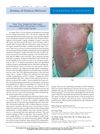 35 citations
,
May 2008 in “Journal of Clinical Oncology”
35 citations
,
May 2008 in “Journal of Clinical Oncology” A cancer patient died from a severe skin reaction after taking the drug cetuximab.
March 2010 in “European Journal of Cancer Supplements” March 2026 in “Wound Repair and Regeneration” In this study, researchers used a mouse model to demonstrate that expression of MARCKSL1 in dendritic cells plays a crucial role in modulating fibrotic responses and scar formation during wound healing, suggesting that targeting this expression could offer new therapeutic strategies for scar prevention.
8 citations
,
August 1987 in “The Journal of Dermatology” This study reports that the monoclonal antibody BKN-1 specifically stained basal cell epithelioma cells and certain normal skin structures, indicating a similarity in keratin expression between the tumor and follicular epithelium below the isthmus portion.
 23 citations
,
January 2024 in “Nature Immunology”
23 citations
,
January 2024 in “Nature Immunology” This study, using multimodal profiling in mice, found that various tissues contain unique γδ T cell subsets adapted to their environment, revealing their functional diversity, lineage relationships, and similarities to CD8+ tissue-resident memory T cells.
10 citations
,
December 2015 in “International Journal of Dermatology” This study suggests that basal cell carcinoma and trichoblastoma may share differentiation toward the hair follicle, as indicated by strong positivity in CK 15, follistatin, and Bmi‐1 markers.
July 2024 in “Journal of Investigative Dermatology” Brepocitinib improves cicatricial alopecia and reduces key immune markers.
1 citations
,
July 2024 in “Journal of Investigative Dermatology” TAK-279 effectively reduces psoriasis symptoms and is safe.
 28 citations
,
July 2007 in “Development”
28 citations
,
July 2007 in “Development” In this study, inactivating the TAF4 subunit of transcription factor TFIID in mouse epidermis disrupted gene expression linked to skin and hair function, and increased tumor risk.
10 citations
,
December 2021 in “Frontiers in Cell and Developmental Biology” This study suggests that BBS7 is crucial for maintaining Sonic hedgehog signaling activity, which is essential for periodontal ligament homeostasis under occlusal hypofunction conditions.
 1 citations
,
December 2004 in “Hepatology”
1 citations
,
December 2004 in “Hepatology” This study found that in lamivudine-resistant hepatitis B patients, tenofovir significantly reduced HBV DNA levels faster and more consistently than adefovir, reaching undetectable levels in all treated patients by 44 weeks.
40 citations
,
December 2010 in “Human Genetics” 4 citations
,
September 2011 in “Journal of the American Academy of Dermatology” This case report describes a 46-year-old man who developed folliculotropic mycosis fungoides, a form of post-transplant lymphoproliferative disorder, following renal transplantation.
 November 2025 in “Cancer Management and Research”
 This study highlighted Keratin 17's critical role in cancer therapy resistance across several malignancies, involving various signaling pathways, and identified it as a significant biomarker and potential therapeutic target, particularly in reversing resistance.
December 2021 in “Figshare” This study found that downregulation of BBS7 in periodontal ligament cells was associated with reduced Sonic hedgehog signaling, which plays a crucial role in maintaining PDL homeostasis.
6 citations
,
March 2007 in “BioTechniques” This study observed that PCR-based genotyping for cre-loxP mice can lead to errors due to cre-mediated recombination in non-target tissues like tails, affecting the detection of lox alleles.
150 citations
,
June 1999 in “Oncogene” July 2024 in “Journal of Investigative Dermatology” INTASYL is a promising, adaptable RNAi technology for treating skin cancers.
33 citations
,
August 2000 in “Experimental Cell Research” 5 citations
,
April 2022 in “The journal of investigative dermatology/Journal of investigative dermatology” This article discusses junctional epidermolysis bullosa caused by COL17 deficiency, noting a lack of experimental therapies and the impact of nonsense mutations, but it reports no new clinical results.
July 2026 in “Journal of Investigative Dermatology” 1 citations
,
October 2023 in “BMC Genomics” This study identified miRNAs within the Dlk1-Gtl2 region on chromosome 18 as potential epigenetic regulators of lamb fur traits, with possible implications for the PI3K-AKT signaling pathway.
 119 citations
,
November 2014 in “Trends in Cell Biology”
119 citations
,
November 2014 in “Trends in Cell Biology” This review discusses the mechanisms and pathways of FGFR signalling and its roles in development, disorders, and therapeutic targeting, but reports no new clinical results.
September 2023 in “Journal of the American Academy of Dermatology” Bullous pemphigoid can look like erythema multiforme, so awareness is needed for proper treatment.
April 2023 in “Journal of Investigative Dermatology” This study suggests that monitoring CD8+ TEMRA cells in patients with rapidly progressive alopecia areata treated with intravenous corticosteroids could help predict therapeutic outcomes.
January 2026 in “Animal Genetics” This study investigated a Labrador Retriever with paw pad hyperkeratosis and identified a unique de novo heterozygous missense variant in the GJB6 gene, suggesting its potential role in the condition, analogous to Clouston syndrome in humans, although differences between species may provide further insights.
November 2025 in “Journal of Investigative Dermatology”  1 citations
,
November 2024 in “Cureus”
1 citations
,
November 2024 in “Cureus” This case report describes a rare aggressive variant of squamous cell carcinoma on the scalp of a non-immunosuppressed older male, highlighting its high biological risk for metastasis and poor outcomes.