 7 citations
,
March 2021 in “Molecular Medicine Reports”
7 citations
,
March 2021 in “Molecular Medicine Reports” This study demonstrated that culturing high-passage dermal papilla cells with specific supplemented conditioned media may preserve their hair-inducing abilities, suggesting potential for reconstructing new hair follicles in vivo.
 1 citations
,
May 2026 in “Nature Communications”
1 citations
,
May 2026 in “Nature Communications” This study demonstrated that CD19-CAR T cell therapy may promote structural regeneration in the skin of systemic sclerosis patients, as evidenced by histological improvements and fibroblast population changes, suggesting its potential for tissue remodeling in fibrotic diseases.
 February 2023 in “Archives of Dermatological Research”
 This study found fractional carbon dioxide laser therapy effective in treating alopecia areata, both alone and with topical treatments, suggesting decorin's involvement in improving hair growth.
 63 citations
,
May 2011 in “Clinical cancer research”
63 citations
,
May 2011 in “Clinical cancer research” In this study, topical CUR61414 was effective in inhibiting basal cell carcinomas in mice, but no clinical activity was observed in human trials.
50 citations
,
February 2004 in “Genomics” This study identified a missense mutation in the rat Desmoglein 4 gene, causing abnormal hair shaft development in lanceolate hair mutant rats by disrupting a critical calcium binding site.
This case report describes a novel mutation in the CDH3 gene in an 11-year-old Iranian boy with sparse scalp hair and macular dystrophy, leading to altered P-cadherin synthesis.
 March 2024 in “EMBO molecular medicine”
 This study found that the antiviral drug daclatasvir significantly improved fibrosis and quality of life in a mouse model of recessive dystrophic epidermolysis bullosa, suggesting potential for treating this and other fibrotic diseases.
 8 citations
,
March 2020 in “Frontiers in Cell and Developmental Biology”
8 citations
,
March 2020 in “Frontiers in Cell and Developmental Biology” This study developed a DPC cell line by introducing mutant CDK4, Cyclin D1, and TERT, making it a promising tool to study downstream signaling pathways activated by testosterone in androgenetic alopecia.
 May 2026 in “Frontiers in Immunology”
 This case report documents the first use of bimekizumab as monotherapy for dissecting cellulitis of the scalp, where a 27-year-old man experienced significant symptom relief without adverse effects after failing standard treatments.
11 citations
,
January 1999 in “Dermatology” 22 citations
,
May 2007 in “Molecular Biotechnology” September 2025 in “OPAL (Open@LaTrobe) (La Trobe University)” This study found that topical treatment with 7DHC and BM15766 reduced hair growth in mice compared to those treated with Ethanol/DMSO, and hair did not recover after treatment ceased, alongside increased apoptotic cells and decreased expression of specific genes.
 June 2023 in “British Journal of Dermatology”
 This pilot study found that night shift workers showed fewer signs of wrinkle formation compared to day workers, but there were no significant differences in DNA amplification or collagen percentage.
October 2021 in “The journal of investigative dermatology/Journal of investigative dermatology” This study found that mechanical disruption of the desmosomal cadherin Dsg3 in hair follicle stem cells activates them from quiescence, highlighting its role as a key regulator of stem cell quiescence and epithelial niche integrity.
22 citations
,
March 1999 in “International Journal of Clinical Practice” This review discusses the use of topical immunotherapy for severe alopecia areata and resistant viral warts, highlighting diphencyprone's advantages and the need for careful handling to avoid staff sensitisation; it reports no new clinical results.
 November 2023 in “Journal of cosmetic dermatology”
 This report describes three cases of erythromelanosis follicularis faciei et colli showing significant improvement in facial telangiectasia following treatment with a 595-nm pulsed dye laser, with minimal recurrence observed during follow-up.
 June 2010 in “Melanoma research”
 This study found that LDE225, a novel Smo antagonist, shows potential as a topical treatment for basal cell carcinoma due to its high affinity binding and effective inhibition of tumor growth in preclinical models.
 September 2024 in “Frontiers in Genetics”
 In this study, researchers found a significant association between the rs13405699 SNP at 2q31.1 and male pattern baldness among Han Chinese men, suggesting genetic influence on this condition in this population.
 April 2023 in “Journal of Investigative Dermatology”
 This study demonstrates that human epidermal stem cells can adapt to environmental temperature changes through mTOR signaling, and prolonged inhibition of mTORC1 supports stem cell maintenance, which may be vital for regenerative medicine.
July 2026 in “Journal of Investigative Dermatology”  September 2022 in “Dermatology and therapy”
 This review summarizes current evidence on the use of contact immunotherapy, excluding alopecia areata, for various skin diseases, discussing its safety, efficacy, and the underlying mechanisms as reported from studies in the PubMed database.
 24 citations
,
July 2017 in “Structure”
24 citations
,
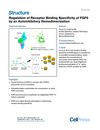
July 2017 in “Structure” In this study, researchers found that ligand homodimerization controls the receptor binding specificity of the FGF9 subfamily, preventing off-target activation of FGFR "b" isoforms.
9 citations
,
June 2017 in “American journal of ophthalmology. Case reports” This case report identifies a novel CDH3 gene mutation associated with hypotrichosis with juvenile macular dystrophy in a 13-year-old Turkish girl, highlighting implications for future genetic analysis and counseling.
 February 2016 in “The journal of allergy and clinical immunology/Journal of allergy and clinical immunology/The journal of allergy and clinical immunology”
 This study reports a novel mutation in the TP63 gene associated with T and B cell lymphopenia in an EEC patient, suggesting that EEC diagnosis should include TREC assay and evaluation for immunodeficiency.
1 citations
,
July 2006 in “Journal of Investigative Dermatology” A 4kb fragment of the desmocollin 3 promoter targets gene expression to specific skin and hair follicle areas.
 November 2022 in “CARDIOMETRY”
 This article discusses the potential benefits of GcMAF and oral MAF, developed by "Saisei Mirai", for cancer and other conditions, but reports no new clinical results.
 September 2024 in “Journal of the American Academy of Dermatology”
 This introduction highlights that a common challenge with managing dandruff, a mild form of seborrheic dermatitis, is compliance with treatment, and notes that selenium disulfide shampoo is beneficial for this condition.
3 citations
,
April 2017 in “Journal of Investigative Dermatology” This study found that dermoscopy is valuable for diagnosing facial actinic keratosis in Chinese patients, with specific patterns like red pseudonetwork and follicular plugs suggesting its utility in differential diagnosis.
June 2024 in “Lasers in Surgery and Medicine” This study found that the novel dermal cooling system was an effective and safe treatment for reducing pigmentation in benign pigmented lesions in Asian patients, with minimal side effects.
5 citations
,
March 2017 in “Gene” This study found that the transcription factor CAP1 negatively regulates KRT83 expression in Tan sheep, possibly influencing their curly hair phenotype.