 164 citations
,
April 2008 in “Cochrane library”
164 citations
,
April 2008 in “Cochrane library” This review of interventions for alopecia areata found no significant treatment benefits for hair growth compared to placebo, indicating a need for larger, well-conducted studies.
 159 citations
,
November 2007 in “American Journal of Pathology”
159 citations
,
November 2007 in “American Journal of Pathology” In this study, researchers found that substance P triggered premature catagen development and immune changes in human scalp hair follicles, providing a possible biological link between stress and hair loss conditions like telogen effluvium and alopecia areata.
 146 citations
,
June 2012 in “PLoS ONE”
146 citations
,
June 2012 in “PLoS ONE” This study observed that quiescent label-retaining cells in the intestine, identified by Paneth cell markers, can switch to a proliferative state and activate Bmi1 expression during tissue injury, contributing to tissue regeneration.
 139 citations
,
December 1998 in “The journal of investigative dermatology/Journal of investigative dermatology”
139 citations
,
December 1998 in “The journal of investigative dermatology/Journal of investigative dermatology” This study identified a new type II cytokeratin, named K6hf, exclusively expressed in the companion layer of the human hair follicle, distinguishing it from other keratins and suggesting a unique biochemical role.
 137 citations
,
October 2009 in “The American journal of pathology”
137 citations
,
October 2009 in “The American journal of pathology” This study found that matriptase, a membrane serine protease, is crucial for maintaining multiple types of epithelial tissues in mice, with its absence leading to severe organ dysfunction and increased permeability.
 134 citations
,
January 2011 in “Development”
134 citations
,
January 2011 in “Development” This study found that disrupting Adam10 in the epidermis led to severe skin and multi-organ abnormalities, implicating Adam10 as crucial for proper Notch signaling and skin maintenance.
 131 citations
,
January 2018 in “Scientific Reports”
131 citations
,
January 2018 in “Scientific Reports” In this study, mycorrhizal fungal inoculation was associated with increased root-hair growth and enhanced drought tolerance in trifoliate orange by modulating auxin synthesis and transport under water stress conditions.
 126 citations
,
October 2012 in “PLoS ONE”
126 citations
,
October 2012 in “PLoS ONE” This study found that reduced cytokinin levels allow plants to adapt to low potassium conditions by enhancing root hair growth, reactive oxygen species accumulation, and expression of a key potassium transporter gene.
 124 citations
,
September 1992 in “Endocrinology”
124 citations
,
September 1992 in “Endocrinology” This article discusses the structure of the human type II 5 alpha-reductase gene and reports no new experimental results.
 123 citations
,
May 2009 in “Journal of Neuroscience”
123 citations
,
May 2009 in “Journal of Neuroscience” In this study, researchers found that in late pregnancy, the neuroactive progesterone metabolite allopregnanolone inhibits HPA axis responses to immune challenges via an opioid-mediated mechanism.
 112 citations
,
November 2023 in “Nano-Micro Letters”
112 citations
,
November 2023 in “Nano-Micro Letters” This review discusses the developments over the past five years in nanozyme-based theranostics for tumor therapy, including their classification, design, and synergistic strategies. It also outlines the challenges and prospects of using nanozymes to enhance selectivity, biosafety, repeatability, and stability in therapeutic applications.
 112 citations
,
May 2020 in “Nature Communications”
112 citations
,
May 2020 in “Nature Communications” This study found that cardiac fibroblasts significantly enhance the maturation of neonatal mouse and human embryonic stem cell-derived cardiomyocytes, suggesting a pivotal role in postnatal heart development and disease.
 108 citations
,
July 2004 in “American Journal of Pathology”
108 citations
,
July 2004 in “American Journal of Pathology” This study suggests that nerve growth factor plays a crucial role in the stress-induced termination of hair growth in mice, and its antagonism might offer a therapeutic approach to mitigate stress-related hair loss.
 106 citations
,
September 2010 in “Stem cells”
106 citations
,
September 2010 in “Stem cells” This study found that skin-derived precursor cells in mice can originate from both neural crest and somite lineages but show functional similarities regardless of their developmental origins.
 104 citations
,
May 2003 in “Endocrinology”
104 citations
,
May 2003 in “Endocrinology” This study found that the vitamin D receptor in lampreys, which lack bones and hair, binds 1,25-dihydroxyvitamin D3 and may function to induce enzymes for detoxifying substances.
 103 citations
,
November 2014 in “Journal of Cell Biology”
103 citations
,
November 2014 in “Journal of Cell Biology” This study found that overexpression of miR-214 in keratinocytes inhibits hair follicle development and cycling by targeting β-catenin in the Wnt signaling pathway.
 103 citations
,
March 2011 in “PLoS Biology”
103 citations
,
March 2011 in “PLoS Biology” This study found that a mutation in the BMP12/GDF7 gene is associated with the Naked neck trait in chickens, reducing neck feathering due to altered signaling pathways.
 98 citations
,
June 2001 in “Journal of biological chemistry/The Journal of biological chemistry”
98 citations
,
June 2001 in “Journal of biological chemistry/The Journal of biological chemistry” This study identified a cluster of genes on chromosome 17 related to hair keratin-associated proteins, including 37 genes forming seven multigene families, localized in the hair shaft's upper cortex.
 95 citations
,
July 2010 in “Genes & development”
95 citations
,
July 2010 in “Genes & development” In this study, the researchers reported that Notch/CSL signaling is crucial for hair follicle differentiation, with Wnt5a signaling and FoxN1 acting as mediators in mice.
 93 citations
,
April 2003 in “Proceedings of the National Academy of Sciences of the United States of America”
93 citations
,
April 2003 in “Proceedings of the National Academy of Sciences of the United States of America” This study identified an unexpected critical role for the FATP4 protein in skin and hair development in mice, linking it to a potential candidate gene for restrictive dermopathy in humans.
 92 citations
,
June 2017 in “Journal of Plastic Reconstructive and Aesthetic Surgery”
92 citations
,
June 2017 in “Journal of Plastic Reconstructive and Aesthetic Surgery” This review found that microneedling appears to be a safe and effective option for treating scars and wrinkles, with fewer side effects and shorter recovery time than some other treatments.
 89 citations
,
May 1999 in “Pediatric Dermatology”
89 citations
,
May 1999 in “Pediatric Dermatology” This article reviews the treatment options for tinea capitis, suggesting that itraconazole, terbinafine, and fluconazole are effective and safe alternatives to griseofulvin but reports no new clinical results.
 87 citations
,
January 2017 in “PLoS Genetics”
87 citations
,
January 2017 in “PLoS Genetics” This study found that simultaneously inhibiting both KLK5 and KLK7 proteases completely rescued skin barrier defects in a mouse model of Netherton syndrome, suggesting both should be therapeutic targets.
 87 citations
,
March 2005 in “Journal of Dermatological Science”
87 citations
,
March 2005 in “Journal of Dermatological Science” This study found that the extract of Asiasari radix may promote hair growth in mice by enhancing protein synthesis, cell proliferation, and growth factor expression.
 86 citations
,
August 2011 in “Toxicological sciences”
86 citations
,
August 2011 in “Toxicological sciences” In this study, researchers found that TCDD exposure accelerated differentiation and altered gene expression in human epidermal cells, indicating the epidermal barrier as a target of TCDD-activated AHR.
 84 citations
,
October 2014 in “PLoS Genetics”
84 citations
,
October 2014 in “PLoS Genetics” This study found that epidermal Wnt production is crucial for forming the skin's spinous layer through a BMP-FGF signaling cascade, although Wnt from basal cells is not needed for their differentiation.
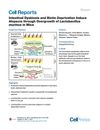 82 citations
,
August 2017 in “Cell Reports”
82 citations
,
August 2017 in “Cell Reports” This study found that antibiotic-induced gut dysbiosis, particularly overgrowth of Lactobacillus murinus, can lead to hair loss in mice by depleting biotin.
 82 citations
,
May 2009 in “Development”
82 citations
,
May 2009 in “Development” This study found that downregulation of EGF and KGF signaling is necessary for hair follicle initiation in placodes, revealing a new role for KGF in hair follicle formation in mice.
 81 citations
,
September 2005 in “The American journal of pathology”
81 citations
,
September 2005 in “The American journal of pathology” This study found that activin affects both stromal cells and keratinocytes in skin morphogenesis and repair, with dose-dependent effects on keratinocytes demonstrated through transgenic mouse models.
 81 citations
,
January 2003 in “The FASEB Journal”
81 citations
,
January 2003 in “The FASEB Journal” This study found that follistatin and activin interactions are important for hair follicle development and cycling in mice, suggesting that they may regulate processes involving BMP-2 and its antagonist.