65 citations
,
February 2011 in “Molecular cancer therapeutics” This study reported that the novel AKT inhibitor CCT128930 demonstrated significant antitumor activity in human cancer cell lines and xenografts, highlighting its potential as an anticancer therapy.
 January 2016 in “Human & Experimental Toxicology”
 This study reported that CCT oligodeoxynucleotide induced patchy hair loss in male mice with specific genetic traits, suggesting gender and genetic preferences in immune response.
 4 citations
,
February 2022 in “International Journal of Molecular Sciences”
4 citations
,
February 2022 in “International Journal of Molecular Sciences” This review discusses the similarities between myotonic dystrophy and aging, highlighting the role of cellular senescence in its pathophysiology, and reports no new clinical findings; the authors note potential anti-aging therapy applications.
 1 citations
,
September 2024 in “BMC Ophthalmology”
1 citations
,
September 2024 in “BMC Ophthalmology” This study found significantly elevated central corneal thickness and intraocular pressure in patients with polycystic ovary syndrome, suggesting it should be considered in evaluating anterior segment diseases and glaucoma in women.
1 citations
,
October 2025 in “Ulusal travma dergisi” In this animal study, combined cellular therapy significantly improved diabetic wound healing, and probiotics further enhanced these effects by reducing oxidative stress, apoptosis, and inflammation while promoting vascularization and collagen organization.
66 citations
,
January 1987 in “Journal of Investigative Dermatology” This study found that enzyme activity critical to cancer induction by polycyclic aromatic hydrocarbons in human hair follicles increased after using a crude coal tar-containing shampoo for four days and was substantially inhibited by imidazole compounds.
 42 citations
,
October 2009 in “The journal of investigative dermatology/Journal of investigative dermatology”
42 citations
,
October 2009 in “The journal of investigative dermatology/Journal of investigative dermatology” In this study, researchers identified two distinct homozygous mutations in the KRT85 gene among consanguineous Pakistani families with pure hair and nail ectodermal dysplasia, highlighting variations in severity and potential impacts on the K85 protein function.
This article provides tables summarizing various medical conditions and symptoms related to COVID-19, sepsis, and cardiovascular issues, but it does not report new research findings.
165 citations
,
September 2013 in “Contemporary Clinical Trials”  17 citations
,
November 2000 in “Journal of the American Pharmaceutical Association”
17 citations
,
November 2000 in “Journal of the American Pharmaceutical Association” This review discusses the perimenopause, its symptoms, and management options, emphasizing the role of pharmacists in educating and advising women on treatment strategies and preventive health measures, but it reports no new results.
 14 citations
,
July 2001 in “American Journal of Human Genetics”
14 citations
,
July 2001 in “American Journal of Human Genetics” Haplogroup X found in Altaian population supports Amerindian origin.
 13 citations
,
October 2013 in “The Journal of Dermatology”
13 citations
,
October 2013 in “The Journal of Dermatology” This study found that topical cepharanthine increased IGF-I production in human dermal papilla cells, suggesting it may stimulate hair growth and be a promising treatment option for androgenetic alopecia.
 13 citations
,
November 2009 in “Journal of Dermatological Science”
13 citations
,
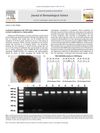
November 2009 in “Journal of Dermatological Science” This article discusses various dermatological studies cited by previous authors and reports no new clinical results.
 April 2024 in “bioRxiv (Cold Spring Harbor Laboratory)”
 In this study, researchers identified a gene regulatory network in Arabidopsis that controls root hair growth under low-temperature conditions, revealing specific transcription factors and downstream targets that contribute to this growth response despite overall plant development being halted.
 January 1998 in “Dermatology”
 Various dermatology events and meetings were announced for 1998.
 80 citations
,
March 2004 in “Neuropediatrics”
80 citations
,
March 2004 in “Neuropediatrics” This article presents an update on a family with Coats' plus disorder, documenting additional symptoms and two new similar cases, and reviews literature suggesting a link to dyskeratosis congenita for potential molecular insights.
 343 citations
,
March 2016 in “Nature Communications”
343 citations
,
March 2016 in “Nature Communications” This study found that IL-17A-producing γδ T cells play a key role in bone fracture healing by promoting bone formation, with deficiencies leading to impaired repair in mice.
 336 citations
,
August 2015 in “European Journal of Epidemiology”
336 citations
,
August 2015 in “European Journal of Epidemiology” This article reviews the design and objectives of the Rotterdam Study, as well as summarizes major findings, without reporting new results.
 271 citations
,
September 2008 in “Nutrition reviews”
271 citations
,
September 2008 in “Nutrition reviews” This study identified new dietary ligands for the human vitamin D receptor, including curcumin and gamma-tocotrienol, which may influence its biological functions.
 266 citations
,
November 2013 in “European Journal of Epidemiology”
266 citations
,
November 2013 in “European Journal of Epidemiology” This article outlines the rationale and design of the Rotterdam Study, summarizes its major findings, and updates its objectives and methods; it reports no new research results.
 248 citations
,
December 2011 in “Journal of Neuroscience”
248 citations
,
December 2011 in “Journal of Neuroscience” This study demonstrated that stress-derived neurosteroid THDOC shifts from inhibiting to activating the HPA axis under stress, presenting potential therapeutic targets for stress-related disorders.
 211 citations
,
October 2001 in “The FASEB Journal”
211 citations
,
October 2001 in “The FASEB Journal” This study found that the BMP antagonist noggin induces hair growth in postnatal skin by neutralizing BMP4's inhibitory activity, potentially mediated by changes in Shh expression.
 196 citations
,
May 2001 in “The journal of investigative dermatology/Journal of investigative dermatology”
196 citations
,
May 2001 in “The journal of investigative dermatology/Journal of investigative dermatology” This study found that SZ95 sebocytes and HaCaT keratinocytes exhibit distinct enzyme expressions and activities, implicating their different roles in androgen metabolism and homeostasis in vitro.
 195 citations
,
June 2005 in “American Journal of Human Genetics”
195 citations
,
June 2005 in “American Journal of Human Genetics” Genetic variation in the androgen receptor gene mainly causes early-onset hair loss, with maternal inheritance playing a key role.
 194 citations
,
May 2000 in “Journal of Investigative Dermatology”
194 citations
,
May 2000 in “Journal of Investigative Dermatology” This study demonstrated that blocking the Sonic hedgehog signaling pathway in mice led to reversible inhibition of body coat hair morphogenesis, while whisker development was unaffected.
 190 citations
,
October 2002 in “The FASEB journal”
190 citations
,
October 2002 in “The FASEB journal” In this study, androgen did not affect keratinocyte growth in coculture with androgenetic alopecia-derived dermal papilla cells, but did significantly suppress keratinocyte growth when androgen receptor was overexpressed in the papilla cells.
 175 citations
,
November 2009 in “PLOS ONE”
175 citations
,
November 2009 in “PLOS ONE” This study found that both genetic and environmental factors influence appearance-related aging in women, with skin wrinkling, hair graying, and sun damage significantly affecting perceived age more than chronological age.
 171 citations
,
July 2007 in “Journal of Investigative Dermatology”
171 citations
,
July 2007 in “Journal of Investigative Dermatology” The researchers reported that DHT-inducible DKK-1 may play a significant role in DHT-driven balding by inhibiting hair follicle cell growth and promoting apoptosis in androgenetic alopecia.
 169 citations
,
May 2006 in “Genes & Development”
169 citations
,
May 2006 in “Genes & Development” This study found that keratin 17 and TNFα play interdependent roles in regulating hair follicle cycling, with TNFα required for the anagen–catagen transition and its ablation partially rescuing hair cycling defects in K17-null mice.
 168 citations
,
December 1986 in “Cancer Chemotherapy and Pharmacology”
168 citations
,
December 1986 in “Cancer Chemotherapy and Pharmacology” Epirubicin is as effective as doxorubicin for cancer treatment with less heart damage, but doesn't work on doxorubicin-resistant cancers.