May 2014 in “Hanbang an'i'bi'in'hu pibu'gwa haghoeji” This study reviewed and analyzed existing research on laser therapy for alopecia, suggesting both low-level and high-level lasers may serve as effective treatment alternatives.
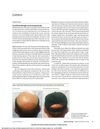 April 2016 in “JAMA Dermatology”
 This commentary highlights the importance of additional sun protection for individuals with alopecia, noting that common headwear like baseball caps may provide insufficient photoprotection for the scalp.
 40 citations
,
February 2012 in “Dermatology Online Journal”
40 citations
,
February 2012 in “Dermatology Online Journal” This review discusses cases and research on paradoxical hair growth after laser hair removal and explores laser and light therapies for treating alopecia, but reports no new results.
 117 citations
,
September 2013 in “Lasers in Surgery and Medicine”
117 citations
,
September 2013 in “Lasers in Surgery and Medicine” This study found that low level laser therapy at 655 nm significantly increased hair counts in males with androgenetic alopecia.
 January 2012 in “Human health handbooks”
 This review discusses the application of low-level light therapy for hair loss treatment, particularly androgenetic alopecia, and reports no new clinical results; the authors suggest consideration of light source characteristics and potential pros and cons.
 45 citations
,
December 2018 in “Lasers in Medical Science”
45 citations
,
December 2018 in “Lasers in Medical Science” In a 24-week randomized trial, this study found that the RAMACAP laser helmet significantly increased hair density and diameter in androgenetic alopecia patients compared to a sham device, although limitations included a small sample size and potential issues with the control used.
 April 2024 in “Lasers in medical science”
 This study reviews the use of lasers and light therapies as treatment options for managing the two most common types of alopecia—androegenetic alopecia and alopecia areata—highlighting that existing FDA-approved drugs like minoxidil and finasteride are partially effective, necessitating additional therapeutic approaches.
 2 citations
,
October 2014 in “International Journal of Trichology”
2 citations
,
October 2014 in “International Journal of Trichology” Low-level laser therapy may increase hair density in pattern hair loss.
 81 citations
,
July 2011 in “Lasers in Medical Science”
81 citations
,
July 2011 in “Lasers in Medical Science” This study found that using a low-level laser comb led to hair regrowth in a mouse model of alopecia areata, while sham-treated mice showed no hair regrowth.
47 citations
,
November 2000 in “Archives of dermatology” In this observational study, the effectiveness of a diode laser was evaluated for treating pseudofolliculitis barbae at the Laser and Skin Surgery Center of New York, but it reports no new clinical results.
 5 citations
,
January 2017 in “Skin appendage disorders”
5 citations
,
January 2017 in “Skin appendage disorders” In this case report, the authors linked acute psoriasiform contact dermatitis of the forehead and scalp to a low-laser light cap, identifying DMDE in the fabric as a likely cause.
 July 1998 in “Proceedings of SPIE”
 This study found that Low Power Laser therapy may be an effective complementary treatment for scalp alopecia and crural ulcers, showing quicker and potentially better results than conventional treatments.
 November 2023 in “Dermatologic Surgery”
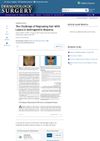
 Lasers might help regrow hair in people with hair loss due to genetics.
This study found that low-level laser therapy significantly improved hair count and reduced hair loss in patients with alopecia areata of the scalp.
 September 2024 in “Pakistan Journal of Science”
 This systematic review suggests that laser treatments, especially low-level laser therapy and excimer lasers, may be effective for hair regrowth, though further large-scale studies are needed for validation.
September 1998 in “Journal of the European Academy of Dermatology and Venereology”  April 2025 in “Archives of Dermatological Research”
 In this study, the combination of CO2 fractional laser therapy with Bimatoprost 0.03% was found to be more effective in promoting hair regrowth in Alopecia Areata patients than laser therapy alone, with higher response rates and minimal adverse effects reported.
 December 2024 in “Dermatologic Surgery”
 This study observed that pooled analysis of LED caps increased hair density in patients with androgenetic alopecia compared to sham, achieving 28.5 more hairs per cm².
 January 2018 in “Clinical approaches and procedures in cosmetic dermatology”
 This review discusses clinical studies on low-level laser therapy for various types of hair loss and suggests it may be promising for those unresponsive to conventional treatments, but reports no new clinical results.
 4 citations
,
March 2007 in “Hair transplant forum international”
4 citations
,
March 2007 in “Hair transplant forum international” This article discusses hairline design in hair restoration surgery and reports no new research data.
December 2018 in “Zenodo (CERN European Organization for Nuclear Research)” This review of low-level laser therapy for patterned hair loss found that red-spectrum light may be effective for hair growth, but larger case-controlled studies are needed to further support this conclusion.
 1 citations
,
February 2022 in “Lasers in Medical Science”
1 citations
,
February 2022 in “Lasers in Medical Science” In this real-world study, low-level laser helmet therapy for androgenetic alopecia showed that male patients with specific scalp conditions may have better results after more than 180 uses or a year of treatment.
 10 citations
,
November 2019 in “Journal of Dermatological Treatment”
10 citations
,
November 2019 in “Journal of Dermatological Treatment” This study revealed that photobiomodulation significantly improved hair density in androgenetic alopecia patients, with laser treatments being more effective than combined laser/LED treatments, while device style did not significantly affect outcomes.
6 citations
,
October 2020 in “Actas Dermo-Sifiliográficas” This review discusses the effectiveness of low-level laser therapy for androgenetic alopecia, finding significant increases in hair density and growth for individuals treated with this method.
 13 citations
,
October 2011 in “Clinical and Experimental Dermatology”
13 citations
,
October 2011 in “Clinical and Experimental Dermatology” This study found no improvement in male-pattern hair loss after six months of using laser hair-comb therapy in two men.
 25 citations
,
August 2017 in “Lasers in Medical Science”
25 citations
,
August 2017 in “Lasers in Medical Science” This literature review reported that fractional lasers, like the 1550-nm nonablative erbium-glass laser, may enhance hair regrowth by stimulating a wound healing process, but more randomized controlled trials are needed to confirm their effectiveness and optimize treatment parameters.
 January 2023 in “The Egyptian Journal of Hospital Medicine ”
 This review suggests that fractional CO2 laser treatment may be a promising option for treating alopecia areata with a good safety profile.
 7 citations
,
August 2015 in “Dermatologic Surgery”
7 citations
,
August 2015 in “Dermatologic Surgery” This study found that cross beam laser is a reliable tool for assessing scalp laxity in hair restoration surgery, with results comparable to the Mayer elasticity scale.
 June 2023 in “QJM: An International Journal of Medicine”
 This study found that combining fractional CO2 laser treatment with platelet-rich plasma led to a statistically significant improvement in hair regrowth for male androgenetic alopecia, compared to using the laser treatment alone.
63 citations
,
January 2006 in “Journal of cosmetic and laser therapy” This study found that pulsed infrared diode laser therapy (904 nm) was effective in promoting hair regrowth in 94% of patients with resistant patches of alopecia areata.