July 2011 in “Journal of Pediatric and Adolescent Gynecology” This report discusses a teenager with blistering of localized epidermolysis bullosa simplex—Weber Cockayne type, recommending referral to dermatology, and includes no new clinical trials or broader conclusions.
 January 2024 in “Revista Dermatológica Centro Uraga”
 This case report describes a 68-year-old woman diagnosed with chronic cutaneous lupus, characterized by irregular plaques with distinct pigmentation and scarring alopecia, confirmed through histopathology revealing specific skin changes.
February 2026 in “Clinical Cosmetic and Investigational Dermatology” In this case report, a 67-year-old Thai woman exhibited isolated cheilitis due to actinic prurigo—an unusual presentation in Asian patients—successfully treated with topical hydrocortisone and sun protection, highlighting the need to consider actinic prurigo in chronic lip lesion diagnoses even with normal phototesting results.
119 citations
,
January 2000 in “British Journal of Dermatology” This study found that keratin expression patterns vary within nail unit structures, with the nail matrix uniquely expressing the acidic hair-type keratin Ha1.
 65 citations
,
March 2018 in “Journal of Dermatological Science”
65 citations
,
March 2018 in “Journal of Dermatological Science” This review discusses the role of mechanical forces in skin homeostasis and disease development, including their impact on conditions like keloids, androgenetic alopecia, and acral melanoma, and reports no clinical results; the authors propose modifying these forces as a potential therapeutic strategy.
 October 2022 in “Medičnì perspektivi”
 This article discusses two cases of follicular dyskeratosis (Darier-White disease), highlighting its rare occurrence, genetic basis, and the challenges in diagnosis and treatment; it presents no new experimental results.
August 1969 in “Archives of Dermatology” In this study, the authors reported that in rat skin affected by localized calciphylaxis, although regeneration occurs and some connective tissue remains, the regenerate resembles scar tissue with reduced hair presence and lacks restored elastic fibers.
20 citations
,
December 2010 in “Journal of Morphology” In this study, researchers found that alpha-keratin homologs similar to those in mammalian hair are present in the claws of the lizard Anolis carolinensis, suggesting a structural role during claw formation.
December 2009 in “Journal of Veterinary Clinics” The authors diagnosed a 5-year-old Pekinese dog with keratoacanthoma with granulomatous inflammation, and the mass did not recur 5 months after surgical removal.
 January 2024 in “The Indian Veterinary Journal”
 In this case study involving a two-month-old crossbred kid, severe skin conditions characterized by alopecia and pruritic lesions were linked to Malassezia yeast and bacteria, and successful treatment was observed with ketoconazole and supportive care.

This study found that polycystic ovary syndrome was the most common cause of hirsutism among premenopausal Algerian women.
21 citations
,
January 2009 in “Indian journal of dermatology, venereology, and leprology” A new method can better diagnose eruptive vellus hair cysts.
 1 citations
,
November 2023 in “Curēus”
1 citations
,
November 2023 in “Curēus” This case report describes a young male with trachyonychia with associated hypertrophic cutaneous lichen planus, reticular oral lichen planus, and nail lichen planus. The diagnosis was aided by dermoscopy and histopathology, highlighting the importance of accurate diagnosis for effective treatment and prognosis.
August 2024 in “Postgraduate Medical Journal” A rare skin reaction from cancer treatment was successfully managed with topical treatments and antihistamines.
19 citations
,
February 2013 in “Journal of Investigative Dermatology” Touch domes in human skin are complex sensory structures not directly linked to hair.
May 2006 in “The American journal of medicine” This article presents a case of a 45-year-old African American man with firm, hyperpigmented papules and pustules on his cheeks and neck, persisting despite various shaving methods.
April 2021 in “Journal of Investigative Dermatology” Early-stage skin substitutes improve wound healing and skin structure.
 January 2022 in “Autopsy and Case Reports”
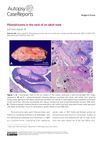
 This article describes a case of pilomatricoma in a 22-year-old male with successful surgical excision and no recurrence, highlighting its histopathological features and typical clinical presentation.
24 citations
,
March 2008 in “Neuroscience Research” This study revealed the complex three-dimensional innervation of touch domes in cat forepaw skin, highlighting the extensive branching and unmyelinated endings associated with Merkel cell–axon complexes.
18 citations
,
December 1992 in “Journal of Cutaneous Pathology” This study observed that lectin-binding patterns in skin appendage tumors reveal differences in sweat gland tumors compared to normal tissues, but pilosebaceous tumors maintained a similar lectin-binding pattern to their corresponding normal structures.
21 citations
,
December 1994 in “Journal of Investigative Dermatology” 35 citations
,
September 2006 in “American Journal Of Pathology” In this study, researchers found that overexpression of the Hedgehog signaling effector Gli2 in mice led to odontogenic keratocysts development, implicating GLI transcription factors in human keratocyst pathogenesis.
11 citations
,
January 1977 in “Archives of dermatological research” Mouse tail skin has different keratinization near hair follicles and scales.
 January 2018 in “Elsevier eBooks”
 Topical imiquimod is as effective as 5-fluorouracil for treating actinic keratosis, with about a 5% risk of it turning into squamous cell carcinoma.
 December 2024 in “Clinical Cosmetic and Investigational Dermatology”
 This case report presented a 64-year-old Thai woman diagnosed with late-onset eruptive clear cell syringoma, and the authors highlighted a potential link between this condition and glucose metabolism abnormalities, suggesting the need for metabolic screening in similar elderly patients.
January 2005 in “中华医学杂志:英文版” This study found that residual sweat glands in hypertrophic scar tissues may regenerate from adult epidermal stem cells or residual glands after burn injury.
38 citations
,
March 2019 in “International Wound Journal” In this study, a new cell-tissue technology using a patient's own skin to create a full-thickness skin autograft successfully treated a chronic wound larger than 200 cm², achieving complete functional skin coverage within 12 weeks and maintaining results at a 6-month follow-up.
10 citations
,
September 1994 in “International Journal of Dermatology” This case report describes three Iranian men with gradual reddish-brown pigmentation on their cheeks and preauricular areas since childhood, unresponsive to sunblocks and topical steroids.
 2 citations
,
November 2018 in “Cell Stem Cell”
2 citations
,
November 2018 in “Cell Stem Cell” This study reported that wound-resident mesenchymal cells can be reprogrammed to generate epithelial tissues, aiding in the closure of large, non-healing ulcers without signs of malignant transformation.
 4 citations
,
January 2025 in “Clinical Cosmetic and Investigational Dermatology”
4 citations
,
January 2025 in “Clinical Cosmetic and Investigational Dermatology” This article reviews the characteristics, differential diagnosis, and management options for papular acantholytic dyskeratosis of the vulva, illustrated by a case of a 21-year-old patient, but reports no new clinical results.