 176 citations
,
May 2020 in “Dermatologic Therapy”
176 citations
,
May 2020 in “Dermatologic Therapy” This review discusses the cutaneous symptoms associated with COVID-19 and their potential use in diagnosing and assessing the severity of the disease, but it reports no new clinical results.
176 citations
,
June 2019 in “Cells” This review discusses dermal cell heterogeneity in wound healing and scar formation, highlighting the varied roles of different fibroblasts and the potential of skin substitutes without presenting new clinical results.
 176 citations
,
August 2015 in “The journal of allergy and clinical immunology/Journal of allergy and clinical immunology/The journal of allergy and clinical immunology”
176 citations
,
August 2015 in “The journal of allergy and clinical immunology/Journal of allergy and clinical immunology/The journal of allergy and clinical immunology” This study identified a distinct cytokine activation signature in alopecia areata, involving TH2, TH1, IL-23, and IL-9/TH9 pathways, suggesting potential targeting strategies similar to those in psoriasis and atopic dermatitis.
176 citations
,
January 2013 in “Proceedings of the National Academy of Sciences” This study reveals an antagonistic competition between BMP and Wnt signaling within stem cells, influencing their fate towards hair germ characteristics based on the BMP/Wnt activity ratio.
 176 citations
,
April 2011 in “Science”
176 citations
,
April 2011 in “Science” This study found that in a population of hair follicles, regenerative cycling stages are regulated by both intrinsic and extrinsic signals, with WNT/BMP signaling mediating interactions among follicles for adaptability.
176 citations
,
February 2006 in “Cancer Research” This study found that loss of Ptch1 function in mouse skin's basal cells is sufficient to rapidly induce tumors resembling human basal cell carcinoma, suggesting Ptch1 as a key tumor suppressor.
 176 citations
,
August 1981 in “JAMA”
176 citations
,
August 1981 in “JAMA” This study reported that toxic shock syndrome, originally noted in children, is now predominantly associated with menstruating women, with some experiencing recurrence and complications like vocal cord paralysis and impaired finger sensation.
175 citations
,
January 2020 in “European Journal of Endocrinology” These guidelines recommend testing thyroid function in patients with obesity due to common hypothyroidism, and highlight that weight loss is crucial for addressing hormonal imbalances, with only modest weight loss benefits from treating endocrine disorders.
175 citations
,
August 1997 in “Nature Genetics” 175 citations
,
September 1998 in “British Journal of Dermatology” This study found that mutations in the K17 gene underlie both pachyonychia congenita type 2 and steatocystoma multiplex phenotypes, regardless of the specific mutation involved.
 174 citations
,
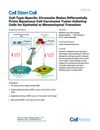
November 2016 in “Cell stem cell”
174 citations
,
November 2016 in “Cell stem cell” This study found that squamous cell carcinomas from hair follicle stem cells are more prone to epithelial to mesenchymal transition and metastasis than those from interfollicular epidermis, due to distinct chromatin landscapes.
174 citations
,
July 2003 in “The Journal of Clinical Endocrinology & Metabolism” This study investigated genetic and phenotypic characteristics of androgen insensitivity syndrome in individuals with a 46,XY karyotype, documenting a range from complete to partial insensitivity.
This article reviews challenges in interpreting observational COVID-19 data due to biases from non-random sampling, discussing strategies to address these biases but reporting no new results.
 173 citations
,
January 2014 in “Nature Cell Biology”
173 citations
,
January 2014 in “Nature Cell Biology” This study found that Wnt signalling activates hair follicle fate in hair follicle stem cells by relieving TCF3/4–TLE-mediated repression, with β-catenin being crucial for this process.
173 citations
,
July 2012 in “British Journal of Dermatology” This study found that the administration of the mutant BRAF inhibitor dabrafenib in patients with metastatic melanoma was associated with various skin lesions, including keratinocytic proliferation that sometimes showed low-grade malignancy features.
173 citations
,
July 1995 in “Biochemical and biophysical research communications” This study suggests that IGF-I may mediate androgen-induced hair growth in outer root sheath cells cocultured with beard dermal papilla cells.
172 citations
,
March 2019 in “The EMBO Journal” This study found that in Arabidopsis thaliana, the interaction between extracellular leucine-rich repeat extensins and the receptor-like kinase FERONIA helps control vacuolar expansion, crucial for cellular elongation.
 172 citations
,
November 1983 in “Journal of The American Academy of Dermatology”
172 citations
,
November 1983 in “Journal of The American Academy of Dermatology” This article discusses the cutaneous side effects of various chemotherapeutic agents but reports no new clinical results; the authors emphasize the importance of dermatologists recognizing drug-induced skin reactions to better patient care.
 171 citations
,
October 1990 in “Alcoholism/Alcoholism, clinical and experimental research”
171 citations
,
October 1990 in “Alcoholism/Alcoholism, clinical and experimental research” The document concludes that the exact way alcohol causes harm to fetal development is unknown, but it significantly affects nutrient transport to the fetus and a safe level of alcohol during pregnancy is not determined.
 170 citations
,
December 2009 in “Histopathology”
170 citations
,
December 2009 in “Histopathology” This review discusses the histopathological diagnosis of scarring and non-scarring alopecias, emphasizing the importance of adequate tissue sampling and clinical information; it reports no new empirical results.
170 citations
,
November 2007 in “The journal of investigative dermatology/Journal of investigative dermatology” This study found that in the absence of hair follicles, cutaneous wounds in mice showed delayed reepithelialization but eventually achieved normal wound closure after expanding the activated epidermis region.
169 citations
,
February 2018 in “Immunity” In this study, researchers found that quiescent stem cells resist immune attack due to downregulated antigen presentation, which may help explain the immune evasion of early cancer-initiating cells.
169 citations
,
January 2018 in “Cell Reports” In this study, researchers successfully derived skin organoids from mouse pluripotent stem cells that spontaneously produce hair follicles, potentially aiding in hair growth research and in vitro drug testing.
 169 citations
,
June 2010 in “Molecular & cellular proteomics”
169 citations
,
June 2010 in “Molecular & cellular proteomics” This study suggests that ethylene and lignoceric acid (C24:0) may promote cotton fiber and Arabidopsis root hair growth by activating the pectin biosynthesis network.
 169 citations
,
May 2006 in “Genes & Development”
169 citations
,
May 2006 in “Genes & Development” This study found that keratin 17 and TNFα play interdependent roles in regulating hair follicle cycling, with TNFα required for the anagen–catagen transition and its ablation partially rescuing hair cycling defects in K17-null mice.
 166 citations
,
April 2012 in “Journal of The American Academy of Dermatology”
166 citations
,
April 2012 in “Journal of The American Academy of Dermatology” This study reviewed clinical data from 60 patients with frontal fibrosing alopecia and found increasing prevalence and generally poor response to treatment, with the cause remaining unclear.
166 citations
,
September 2011 in “The Journal of Cell Biology” This study found that the p63 transcription factor plays a role in epidermal morphogenesis by regulating Satb1 expression, impacting chromatin architecture and gene expression in epidermal progenitor cells.
 166 citations
,
August 2011 in “Dermatologic Surgery”
166 citations
,
August 2011 in “Dermatologic Surgery” This study found that PRP combined with dalteparin and protamine microparticles may enhance hair growth by increasing hair thickness compared to PRP alone.
 166 citations
,
August 2010 in “Proceedings of the National Academy of Sciences of the United States of America”
166 citations
,
August 2010 in “Proceedings of the National Academy of Sciences of the United States of America” This study reports a less invasive method for detecting human clock gene expression using hair follicle cells, which accurately reflects individual behavioral rhythms and suggests a time lag issue for rotating shift workers.
166 citations
,
July 1999 in “American Journal Of Pathology” This study found that the loss of a functional hr gene in mice leads to premature and abnormal hair follicle regression, disrupting normal hair cycling and architecture.